


Long equipment lead times make protecting existing assets an increasingly important part of wildfire planning.
A transformer can be one of the least visible parts of an electric utility's system, until it fails. Then the question is how quickly the utility can obtain a replacement and restore the service that depends on it. For a utility facing wildfire exposure, that question now belongs in the mitigation plan, alongside ignition prevention, vegetation management and system hardening.
The problem reaches across two very different classes of equipment. Large power transformers (LPTs) move electricity through the high-voltage grid. Distribution transformers, including the familiar pole-top units, bring voltage down for local use. They differ greatly in size, cost and function, but they share a growing strategic consequence: losing one is harder to remedy when replacement equipment has a long lead time.
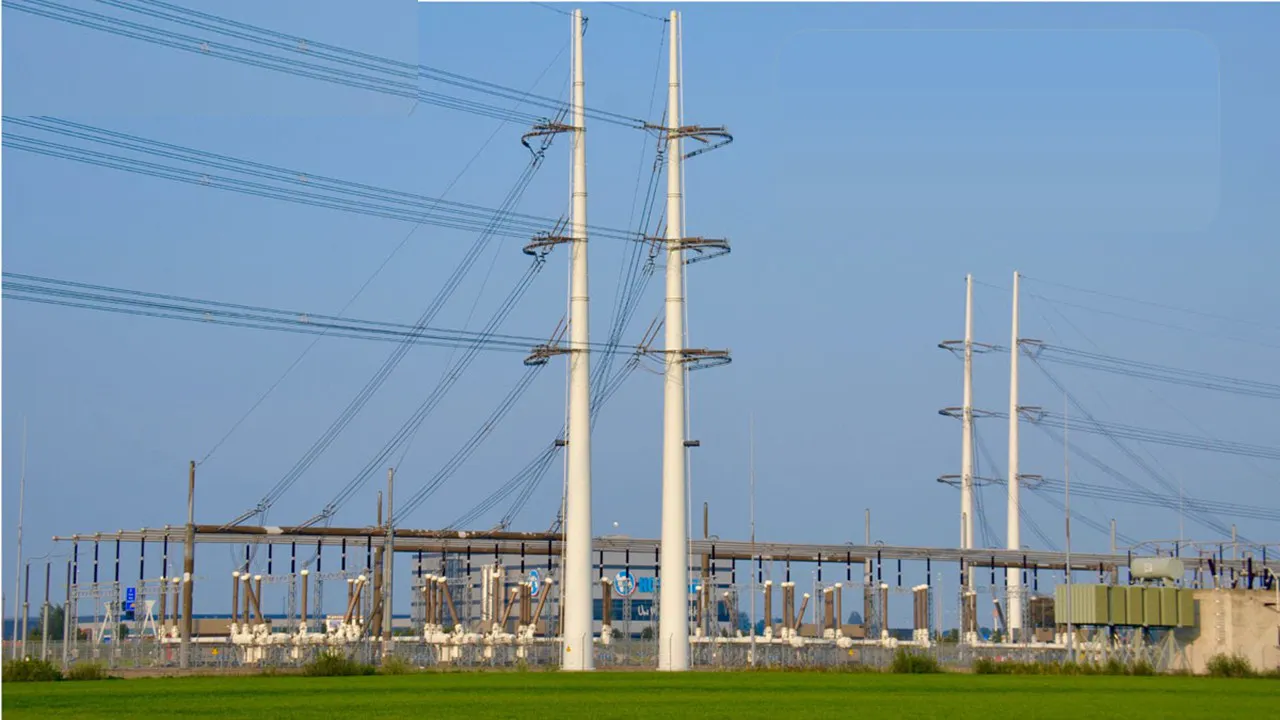
The pressure on the bulk grid is substantial. The U.S. Department of Energy reported in 2024 that more than 80% of newly installed large power transformers were imported, and that suppliers commonly quoted lead times of about 36 months. DOE's earlier estimate that installed LPTs averaged roughly 40 years of age is a useful indication of the grid's aging equipment, although it is not a current inventory or a fixed service life.
Distribution utilities face a related procurement problem closer to the customer. DOE continues to identify long lead times and component shortages in the distribution transformer market, and NERC reported that transformer lead times averaged 120 weeks in 2024. That systemwide figure shouldn't be applied to every unit a given utility orders. Specifications, supplier relationships and available inventory all matter.
For a municipal utility or electric cooperative, the practical effect is a loss of certainty. Engineers can identify a transformer that should be upgraded, relocated or held as a spare, yet still be unable to secure the right unit within the planning window. A utility with limited inventory has less room to absorb a loss while it waits. Procurement becomes part of the engineering decision rather than a step that follows it.
Two wildfire risks, not one
Wildfire makes that constraint more consequential. A utility must consider the chance that its equipment could ignite a fire. It must also consider the chance that an approaching fire could damage equipment needed to serve customers or restore power. Those are distinct risks, and both affect where the next mitigation dollar goes.
Consider a transformer serving a community at the end of a fire-prone corridor. Its exposure depends on surrounding fuels, terrain and likely fire paths. Its consequence depends on what happens if it is lost: how many customers it serves, whether the circuit can be reconfigured, whether a compatible spare exists and how long replacement might take. A modest-looking asset on a map can become a major resilience concern when several of those factors coincide.
Three questions to ask together
Rather than ranking assets by age or fire exposure alone, utilities can examine three questions side by side:
How likely is a fire to affect this location?
What service would be lost if the asset were damaged?
How difficult would restoration be, given the equipment and supply options actually available?
The answers can change the preferred treatment. In one location, vegetation work or a change in equipment placement may meaningfully reduce exposure before a planned replacement arrives. Elsewhere, a compatible spare may be worth more than accelerating a lower-consequence upgrade. A substation transformer with few operational substitutes calls for a different plan than a pole-top unit that can be replaced from stock. None of these decisions can be made well from a hazard map alone.
The supply constraint also changes how utilities evaluate time. A replacement ordered today may arrive after the next fire season. A treatment that can be completed sooner may protect an existing asset through a period when the utility cannot readily replace it. That doesn't make every protective measure worthwhile. It makes delivery time, restoration options and wildfire exposure necessary inputs to the same decision.
Doing this well depends on combining forward-looking wildfire risk information with the utility's own asset, circuit and service data, so engineers can see where fire exposure and operational consequence meet and compare practical options before committing scarce capital or scarce equipment.
America needs more transformer manufacturing capacity, and utilities need dependable access to replacements. Neither will happen within every utility's next wildfire planning cycle. In the meantime, the transformer already on a vulnerable circuit deserves attention for a simple reason: the cost of losing it now includes the uncertainty of getting it back.
How is your utility factoring equipment lead times into wildfire mitigation priorities? I'd welcome your perspective in the comments.
Author bio: Elizabeth Pearce in Business Development at Athena Intelligence, where she writes on wildfire risk and utility resilience. She writes on the impact of wildfires often, including “You Can’t Replace What You Can’t Buy” — Transformer Shortages and Wildfire Risk. Athena Intelligence has solutions to planning, mitigation and risk monitoring for WMPs, PSPS, insurance negotiations and other wildfire related challenges.