


In early January, Bloomberg News, through reporting by Naureen S. Malik, published a sobering assessment: nearly all US power grids are on track to lose critical reserve margins by 2030 as electricity demand surges, driven largely by artificial intelligence and data centers.
The analysis, grounded in insights from Goldman Sachs Group Inc., does not indulge in alarmism. It simply connects dots that many grid operators, engineers, and utilities have been staring at for years - and quietly worrying about.
Goldman’s Samantha Dart and Carly Davenport deserve credit for stating plainly what has too often been discussed euphemistically: the US is not adding usable grid capacity fast enough. And unless that changes, rising costs, declining reliability, and even global competitiveness risks will follow.
This Is Not Just a Generation Problem - It’s a Delivery Problem
Reserve margins, traditionally targeted at 15%, were designed for a world where electricity demand grew slowly and predictably, power plants were sited close to load, and transmission paths were ample. That world no longer exists.
Today’s demand growth is different in kind, not just magnitude. AI-driven data centers are arriving in dense clusters, often requiring hundreds of megawatts of firm, high-quality power - around the clock. Electrification of transportation, industry, and heating is accelerating at the same time. And all of this demand must move across a transmission grid largely built decades ago.
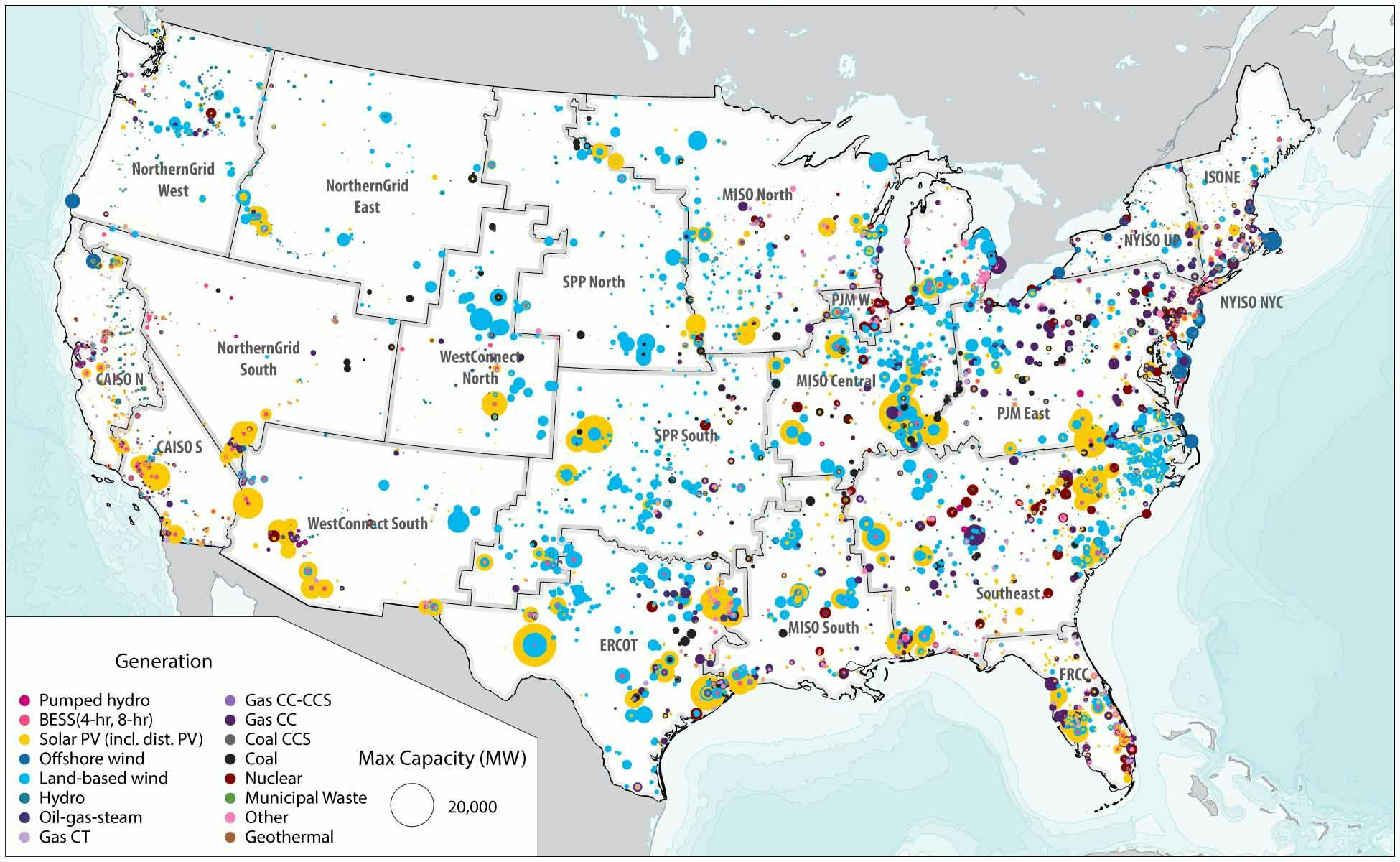
The uncomfortable truth is this: in many regions, generation capacity exists, but it cannot reliably reach where it is needed. Congestion, thermal limits, aging conductors, and long-distance transmission constraints have turned theoretical capacity into stranded capacity.
This is why reserve margins look acceptable on paper while operators quietly scramble during heat waves, cold snaps, wildfire events, and unplanned outages.
Two Decades of Drift Have Left the Grid Exposed
The Bloomberg article rightly points out that the US grid has experienced nearly two decades of stagnant infrastructure growth. During that period, planners optimized for efficiency under assumptions of flat demand and incremental change. Transmission expansion slowed. Reconductoring was deferred. Substations aged.
Meanwhile, climate stress intensified. Heat reduces conductor ampacity. Wildfires force deratings and outages. Extreme weather increases restoration costs and risk exposure. The result is a grid with less usable capacity precisely when it is needed most.
Unlike centrally coordinated systems such as China, the US grid is fragmented across thousands of utilities, regulators, and jurisdictions. That fragmentation makes large greenfield transmission projects slow, expensive, and politically difficult.
Which brings us to the most critical point missing from much of the national conversation.
The Grid Can Be Expanded Faster - If We Use the Right Tools
Modernizing the grid does not require waiting 10 to 15 years for entirely new transmission corridors. In fact, in many regions, the fastest and most cost-effective capacity gains come from fully utilizing the infrastructure already in the ground.
This is where Advanced Conductors and Grid-Enhancing Technologies change the equation.
High-performance Advanced Conductors can:
Double the capacity of existing transmission lines
Operate at higher temperatures with dramatically lower sag
Reduce losses, improve efficiency, and increase safety margins
Be installed on existing structures, minimizing permitting risk and timelines
Utilities deploying these technologies are unlocking large blocks of capacity in months or a few years - not decades.
Grid-enhancing technologies, from dynamic line ratings to advanced sensing and monitoring, further increase usable capacity by allowing operators to safely operate closer to real physical limits rather than conservative static assumptions designed for another era.
Together, these solutions directly address the bottlenecks highlighted by Goldman Sachs: not hypothetical future shortages, but real, localized constraints that threaten reliability, affordability, and economic growth today.
Rising Bills Are the Symptom - Grid Inaction Is the Cause
Goldman’s warning that rising utility bills will become a political flashpoint in 36 gubernatorial elections this year should not surprise anyone in the industry. Consumers are already paying for:
Deferred maintenance
Emergency hardening projects
Inefficient congestion costs
Volatile capacity pricing under tight reserve margins
What they are not yet paying for - at least not adequately - is systematic grid modernization at scale.
Ironically, delaying investment in high-impact upgrades like reconductoring and grid-enhancing technologies often increases long-term costs. Congestion worsens. Emergency interventions multiply. Reliability declines. And customers ultimately absorb those costs through higher rates and greater exposure to outages.
The AI Race Is Being Won - or Lost - on Transmission Capacity
Goldman’s observation that grid constraints could hand an advantage to China in the AI race may seem provocative, but it reflects a growing reality: compute follows power.
Data center developers and hyperscalers are increasingly selecting sites based not on ambition or incentives, but on how fast, how much, and how reliably electricity can be delivered. Regions that cannot unlock capacity quickly are being bypassed.
This is not a future risk. It is happening now.
A Clear Path Forward - If We Choose It
Bloomberg and Goldman Sachs have helped elevate an urgent issue into the public conversation. The next step is action.
The technology to expand grid capacity rapidly already exists. Advanced conductors, reconductoring strategies, and grid-enhancing technologies are not experimental. They are deployed, proven, and delivering results across voltage levels and geographies.
The choice facing utilities, regulators, and policymakers is not whether demand will grow. It will. The real question is whether the US will meet that growth with decades-old tools and timelines - or with modern solutions equal to the challenge.
If we fail to act, reserve margins will shrink, costs will rise, and reliability will erode.
If we act decisively, the grid can once again become an enabler - not a bottleneck - for economic growth, electrification, and global competitiveness.
The warning has been issued. The solutions are known. Now the industry must decide how seriously it takes both.
CTC Global thanks Bloomberg, Naureen Malik, and the Goldman Sachs research team for helping bring this critical issue into sharper focus. The conversation must now shift from warning to execution.