


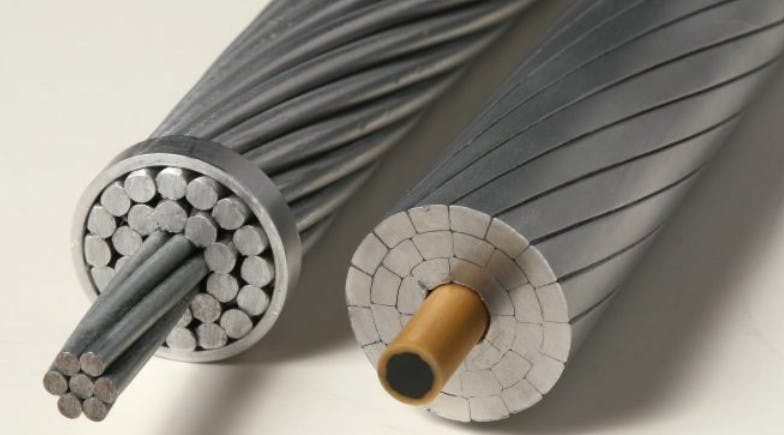
As a co-developer of CTC Global’s ACCC® Conductor and its specialized hardware components, I have often been asked a straightforward question: Why should a utility be willing to pay a premium for an Advanced Conductor when a larger or heavier ACSR or ACSS conductor appears, at least on the surface, to cost less?
It is a fair and reasonable question. Utilities operate under intense capital scrutiny. Every investment must withstand regulatory review, ratepayer sensitivity, and long-term performance expectations. I understand that pressure. I have spent more than two decades working alongside utilities, engineers, and grid operators who are tasked with expanding capacity while simultaneously controlling costs.
I would like to take this opportunity to explain my point of view - not as a salesman, but as someone who helped develop this technology, who has watched it evolve, and who has seen firsthand how it performs in real-world transmission corridors around the globe.
The short answer is this: ACCC® Conductor is not a premium indulgence. It is, quite simply, the most economically disciplined solution available when you evaluate transmission projects correctly. And in today’s environment - one defined by electrification mandates, accelerating load growth, and constrained construction timelines - it is increasingly the only viable path forward.
For decades, transmission procurement decisions have been heavily influenced by conductor cost per foot or per meter. On a materials spreadsheet, ACSR appears inexpensive. ACSS appears capable of carrying higher current because it can operate at elevated temperatures. But transmission lines are not financed by the foot. They are financed by the megawatt-hours they deliver over decades of service.
In most projects, the conductor itself represents only a small fraction - often less than 20 percent - of the total installed cost of a line. Structures, foundations, steel, labor, right-of-way acquisition, environmental compliance, engineering, and schedule exposure dominate the capital budget. Yet conductor selection directly influences all of those variables. It determines line capacity (and emergency ratings), sag performance, structural loads, span length, tower height, and long-term electrical efficiency.
When we focus narrowly on minimizing conductor invoice price, we risk increasing structural cost, installation complexity, and lifetime losses. That is not fiscal conservatism. It is short-term accounting that can produce long-term financial consequences.
Consider the common argument in favor of ACSS. It is true that ACSS can carry higher current than conventional ACSR by operating at temperatures in the 210 to 250 degree Celsius range. That capability is often presented as a primary advantage. However, what is less frequently emphasized is that higher operating temperature directly increases electrical resistance. As resistance rises, I²R losses rise as well. In simple terms, more of the energy you are transmitting is converted into heat before it ever reaches the load.
ACSS achieves higher ampacity by running very hot. ACCC® Conductor achieves its maximum rated capacity at substantially lower temperatures, typically between 180 and 200 degrees Celsius. That difference in operating temperature is not cosmetic. It is fundamental. Lower operating temperature means lower resistance under load and meaningfully lower electrical losses.
In practice, ACCC Conductor reduces line losses by approximately thirty percent compared to conventional steel-core conductor designs of the same diameter and weight under similar loading conditions. That reduction compounds hour after hour, year after year, across the lifetime of the line. When evaluated over twenty to thirty years - or more, those avoided losses represent real dollars - avoided generation costs, reduced congestion, and deferred capital elsewhere in the system.
Hotter does not mean more efficient. It means tolerating inefficiency.
This distinction becomes particularly important in reconductoring projects. Most utilities today are not building entirely new corridors; they are attempting to unlock more capacity from existing rights-of-way. Traditional high-temperature upgrades often involve replacing ACSR with ACSS and simply operating the line hotter. But running hotter increases sag and can increase structural loading. In many cases, that triggers structure reinforcement, foundation upgrades, or constrained operating limits to preserve clearance requirements.
The composite core of the ACCC Conductor virtually eliminates the long-term sag growth associated with steel cores and dramatically reduces thermal expansion. That allows utilities to increase ampacity substantially without imposing the same structural penalties. In many reconductoring projects, towers do not need to be replaced, foundations do not require strengthening, and right-of-way footprints remain unchanged. Installation schedules can be shorter. Permitting can be more straightforward. Avoiding steel, concrete, and extended outages often offsets the incremental conductor material cost several times over. When you then layer in approximately thirty percent lower losses, the economic advantage becomes even more pronounced.
On rebuilds within existing rights-of-way and on greenfield transmission lines, the same principles apply. Structures and foundations frequently account for forty to sixty percent of total project cost. Because ACCC Conductor exhibits low sag and high strength, engineers can often design longer spans and reduce structure density. Fewer structures mean less steel, less excavation, less foundation concrete, reduced environmental disturbance, and reduced construction timeframes. Even modest reductions in structure count can offset conductor price differentials entirely. Over the life of the asset, lower electrical losses further widen the economic gap.
When projects are evaluated on a true cost-per-delivered-megawatt-hour-per-mile basis - capital investment plus lifetime losses - ACCC Conductor consistently produces the lowest total cost outcome among available conductor options. ACSR appears inexpensive at the component level. ACSS appears attractive for its high-temperature rating. But neither delivers the lowest cost per usable (delivered) megawatt-hour over the life of the line.
It is also important to address maturity and credibility. There are academics and industry groups that thrive on testing. No doubt, ongoing validation is valuable. There are also a growing number of companies that now recognize the benefits of composite-core conductor technology and are entering the space. That, in itself, reflects a broader industry shift and recognition of the benefits of composite technology in this application.
However, field performance ultimately speaks louder than laboratory repetition. CTC Global is the leader in Advanced Conductor deployment - has been extensively tested, validated, and installed on more than 1,500 projects across more than 70 countries. It operates in extreme heat, extreme cold, coastal salt environments, wildfire-prone regions, and ultra-high-voltage backbones. It is not experimental. It is proven, refined, and globally deployed infrastructure. Also, CTC Global continues to raise the technical bar. The ACCC Conductor, its ULS, AZR, and InfoCore variants - and the most recently introduced GridVista™ System, underscore this statement. Check out CTC Global’s website for more information
We are now in a period where electrification timelines are not flexible. Transportation is moving toward electric platforms. Industrial processes are shifting toward electrified heat. Data center loads are expanding rapidly. The transmission grid must expand capacity faster than it has in generations, yet capital remains constrained and regulatory oversight remains intense.
If we continue to build and rebuild using heavier, higher-loss steel-core conductors simply because they appear cheaper on a materials invoice, we will slow progress and burden ratepayers with avoidable lifecycle costs. Delivering more capacity within existing corridors, reducing structural steel, lowering lifetime losses by approximately thirty percent, and maximizing energy delivered per mile is not a theoretical ambition. It is a practical necessity.
When I am asked why a utility should consider paying more per foot for ACCC Conductor, my response is consistent. You are not buying aluminum. You are buying delivered megawatt-hours over the next thirty to fifty+ years. When evaluated properly - capital cost, structural cost, lifecycle efficiency, and delivered capacity - ACCC Conductor repeatedly provides the lowest dollars-per-megawatt-hour-per-mile solution available today.
In my view, after more than twenty years working with utilities across the world, cheap conductors often produce expensive systems. Optimizing for true system economics rather than component price is not just good engineering. It is responsible stewardship of capital.
If we are serious about meeting electrification goals within the timeframe before us, then we must adopt solutions that maximize capacity, minimize losses, and control total installed cost. ACCC® Conductor checks every one of those boxes. And that is why I firmly believe it represents not only the superior technical solution, but the most financially viable one as well.