


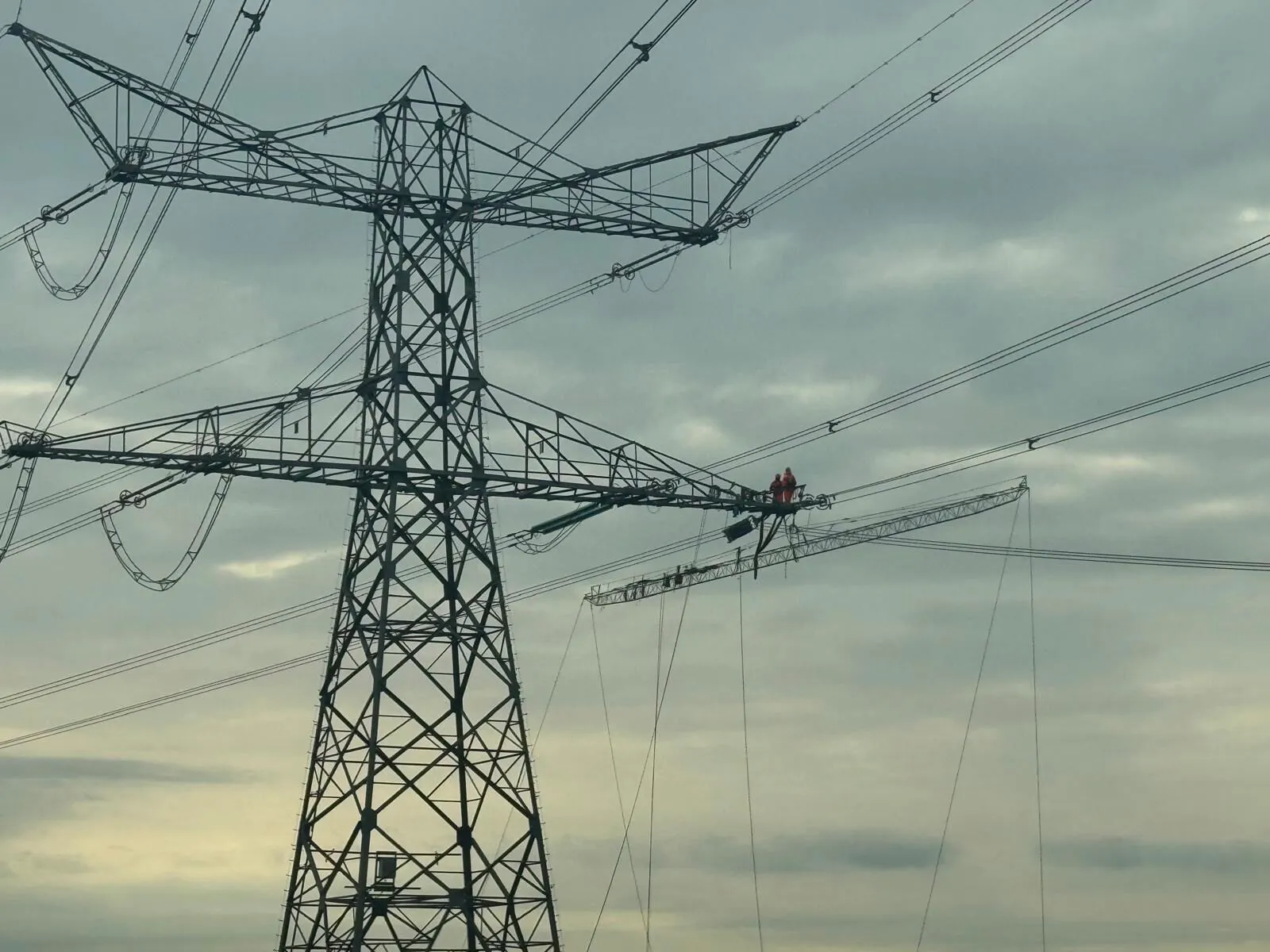
A recent LinkedIn post from Layla Sawyer, Secretary General at CurrENT, highlighted an important statement from MEP Tsvetelina Penkova, rapporteur for the TEN-E Regulation, during a plenary debate in Strasbourg:
“Europe cannot electrify its future with grids built for the past.”
Layla added an equally important point: we cannot build the grid of tomorrow with only yesterday’s technologies.
Both statements deserve attention well beyond Europe.
Across the world, electric power systems are being asked to do far more than they were originally designed to do. Electricity demand is rising after years of relatively modest growth in many regions. Renewable generation is expanding quickly, often far from load centers. Electrification of transportation, buildings, industry, ports, data centers, and other sectors is changing load profiles and increasing pressure on both transmission and distribution systems.
At the same time, utilities are being asked to improve reliability, reduce congestion, control costs, support decarbonization goals, and strengthen resilience against increasingly severe weather events. This is a very large set of expectations for infrastructure that, in many cases, was planned, permitted, and built for a different era.
The answer, of course, includes building new transmission. The grid will need more lines, more substations, more interregional transfer capability, and better regional planning. But new transmission projects can take many years to develop. Permitting, siting, cost allocation, public opposition, supply chain constraints, and construction challenges can all slow progress.
That reality makes one point increasingly clear: we must make better use of the grid we already have.
One of the most practical ways to do this is through reconductoring.
Reconductoring existing transmission lines with advanced conductors can unlock substantial additional capacity within existing rights-of-way. In many cases, utilities can replace older conventional conductors with higher-capacity, lower-sag, lower-loss conductors while reusing existing towers or poles. This can reduce the need for new corridors, accelerate project timelines, lower environmental impacts, and deliver meaningful capacity improvements where they are needed most.
This is where advanced conductor technologies deserve much greater attention.
For more than two decades, CTC Global has worked with utilities, transmission owners, conductor manufacturers, engineering firms, contractors, and other partners to deploy ACCC® Conductor on projects around the world. ACCC Conductor was developed to address several of the core challenges now facing the grid: limited capacity, thermal sag, electrical losses, structure loading, difficult permitting, and the need to move more power through existing corridors.
Unlike conventional steel-reinforced conductors, ACCC Conductor uses a lightweight, high-strength composite core. This enables the conductor to incorporate more conductive aluminum within a similar diameter and weight profile. The result is a conductor that can carry more current, reduce line losses, and exhibit significantly less thermal sag compared to traditional conductor designs.
These performance characteristics matter because transmission constraints are not theoretical. They show up as congestion costs, curtailment of renewable generation, interconnection delays, reliability concerns, emergency operating conditions, and higher costs for consumers. When an existing line can be upgraded to carry more power efficiently and safely, the benefits can extend well beyond the individual project.
Advanced reconductoring can help utilities add capacity faster than many traditional alternatives. It can reduce losses, which lowers the amount of generation needed to serve the same load. It can improve clearance margins under high-temperature operating conditions. It can reduce mechanical loading compared to some heavier conductor alternatives. It can also help utilities defer, reduce, or avoid more disruptive infrastructure investments where existing corridors can be optimized.
This does not mean advanced conductors are the answer to every grid challenge. They are not. New transmission corridors will still be essential. Grid-enhancing technologies, storage, advanced protection systems, improved planning processes, and market reforms all have important roles to play. But advanced conductors are among the technologies that can be deployed today, at scale, to help address real constraints on the existing system.
That is what makes this discussion so timely.
The electric power industry often talks about innovation as though it belongs mostly to the future. But many of the technologies needed to improve grid performance already exist. The larger challenge is accelerating adoption, aligning incentives, updating planning assumptions, and ensuring that utilities are encouraged to evaluate solutions based on long-term value rather than first cost alone.
This is especially important when evaluating transmission investments. A conductor is not simply a commodity item. Its performance affects capacity, losses, sag, structure requirements, reliability, operating flexibility, and lifecycle cost. In a grid that is becoming more heavily loaded, more dynamic, and more essential to every part of the economy, those differences matter.
CTC Global’s experience with ACCC Conductor reflects this broader industry shift. Since its commercial introduction, ACCC Conductor has been deployed on more than 1,600 projects in over 70 countries. These projects include capacity upgrades, river crossings, high-voltage transmission lines, sub-
transmission improvements, storm hardening efforts, renewable integration projects, and reconductoring projects where existing infrastructure needed to deliver substantially more power.
The underlying lesson is simple: grid modernization does not always require waiting for a blank-sheet solution. Sometimes the fastest path forward is to upgrade the infrastructure already in place with better-performing technology.
That lesson is increasingly relevant in Europe, North America, Asia, Africa, Latin America, and every region working to electrify its economy while maintaining affordability and reliability. Policymakers can set ambitious targets, developers can build new generation, and customers can electrify vehicles, homes, and industrial processes. But if the grid cannot move the power, progress slows.
This is why the statement from Strasbourg resonates so strongly.
Europe cannot electrify its future with grids built for the past. Neither can the United States. Neither can any region facing rapid load growth, renewable integration, aging infrastructure, or rising reliability concerns.
The grid of tomorrow will require new infrastructure, but it will also require better use of existing infrastructure. It will require new lines, but also smarter, faster, and more efficient upgrades to the lines already in service. It will require policy reform, regulatory support, and planning improvements, but it will also require proven technologies that utilities can deploy now.
Advanced conductors such as ACCC Conductor are part of that solution.
As the industry continues to debate how best to expand and modernize the grid, we should keep one practical question at the center of the discussion: are we giving utilities every available tool to move more power, reduce losses, improve reliability, and protect consumers?
If the answer is no, then the path forward should be clear.
The energy transition cannot wait for yesterday’s infrastructure to slowly become tomorrow’s grid. We need to modernize faster, use existing corridors more effectively, and deploy proven technologies that can help close the gap between ambition and execution.
The grid of tomorrow cannot be built with yesterday’s technologies.