


America’s Electric Grid Has Entered a New Era of Urgency
For decades, transmission planning evolved gradually. Utilities forecasted relatively predictable load growth, generation was added incrementally, and transmission infrastructure expanded over long planning horizons. That model no longer reflects the reality now confronting the power industry. Today, the grid sits at the center of a rapidly accelerating convergence of artificial intelligence, industrial reshoring, electrification, reliability concerns, and large-scale energy transformation.
The challenge is no longer simply generating enough electricity. Increasingly, it is whether enough transmission capacity can be deployed quickly enough to move power where and when it is needed.
Recent studies from the U.S. Department of Energy make this unmistakably clear. The DOE’s National Transmission Needs Study and National Transmission Planning Study both conclude that the United States will require massive transmission expansion to maintain reliability, support economic growth, reduce congestion, integrate new generation resources, and strengthen resilience across increasingly stressed electric systems.
At the same time, those same studies expose a growing disconnect between the scale of transmission expansion required and the speed at which traditional transmission development can realistically occur.
This is fundamentally a “Speed to Power” problem.
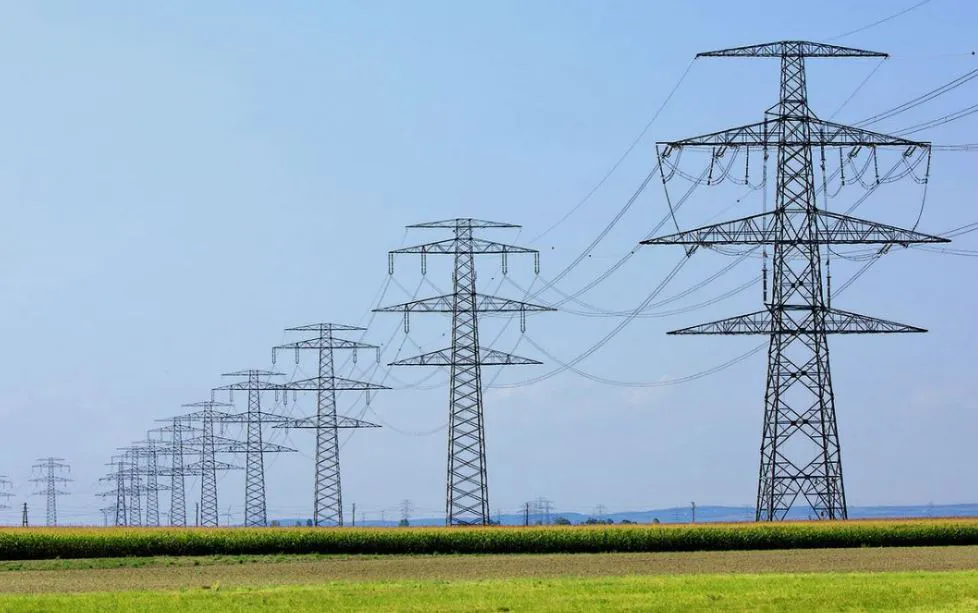
And while new greenfield transmission corridors, HVDC systems, grid-enhancing technologies, and broader regional coordination will all remain essential, one of the fastest and most practical opportunities available to the industry is already hanging above our heads: reconductoring existing transmission lines with advanced conductors.
DOE’s Message Is Clear: The Existing Pace of Transmission Expansion Is Insufficient
The DOE findings leave little ambiguity about the scale of the challenge ahead.
The National Transmission Needs Study identifies aging infrastructure, persistent congestion, constrained transfer capability, interconnection bottlenecks, and growing reliability concerns across nearly every region of the United States. More importantly, the study concludes that transmission needs are national in scope rather than isolated to a handful of fast-growing markets.
DOE’s analysis also demonstrates that transmission investment trends have not kept pace with future system requirements. Congestion costs remain substantial across multiple regions, and interregional transfer capability continues to lag far behind what future reliability and economic needs will absolutely require.
At the same time, electricity demand growth is accelerating again after years of relative stability.
Artificial intelligence is rapidly becoming a major driver of new load growth. Hyperscale data centers requiring hundreds of megawatts - and increasingly gigawatts - of highly reliable power are being announced across the country. Semiconductor manufacturing, industrial reshoring, hydrogen production, and transportation electrification are also reshaping utility demand forecasts.
The grid is no longer simply supporting economic growth. Increasingly, it is becoming one of the primary determinants of whether that growth can occur at all.
The DOE studies also emphasize that transmission has become increasingly important for resilience. Extreme weather events are exposing the limitations of constrained regional systems. During heat waves, winter storms, or wildfire-related disruptions, the ability to move power across broader geographic areas becomes one of the grid’s most valuable capabilities.
The numbers themselves are staggering. DOE modeling suggests that within-region transmission deployment may need to increase by roughly 64% by 2035 under moderate load and high clean-energy growth scenarios. Under higher-load futures, the required expansion becomes even more dramatic. Interregional transfer capability may need to more than double in many scenarios.
The message is straightforward: the grid is no longer growing incrementally. It is being rebuilt in real time.
The Industry’s Central Dilemma: New Transmission Alone Cannot Arrive Fast Enough
The transmission industry now faces an uncomfortable reality. The infrastructure America needs may not arrive quickly enough through conventional development pathways alone.
There is broad consensus that the nation requires substantial new transmission investment. Yet nearly everyone involved in transmission development also understands how extraordinarily difficult major greenfield transmission projects have become.
Permitting timelines routinely stretch beyond a decade. Siting challenges, environmental reviews, land acquisition, stakeholder opposition, cost allocation disputes, and regulatory fragmentation continue slowing transmission development across much of the country.
Meanwhile, the grid itself is changing far faster than those timelines allow.
Interconnection queues continue expanding as renewable generation, storage projects, and large industrial loads wait for transmission access. In fast-growing regions, transmission limitations are increasingly influencing where data centers, manufacturing facilities, and industrial development can realistically occur.
This is why “Speed to Power” is becoming more than an industry phrase. Access to transmission capacity is rapidly becoming an economic competitiveness issue.
The challenge is compounded by the fact that many of the same forces making transmission more valuable are also making new transmission harder to build. Public opposition to new infrastructure corridors has intensified. Environmental scrutiny has increased. Permitting processes remain fragmented across jurisdictions.
None of this means greenfield transmission should not be built. The United States absolutely needs new long-distance transmission corridors, expanded interregional capability, and stronger regional coordination.
But it does mean the industry must aggressively pursue solutions capable of delivering meaningful capacity improvements faster and within existing infrastructure footprints.
This is where reconductoring becomes strategically important.
The Haas Study Reframes Reconductoring as National Infrastructure Strategy
One of the most important recent contributions to this discussion comes from the Berkeley Haas paper, Accelerating Transmission Expansion by Using Advanced Conductors in Existing Right-of-Way.
What makes the study so significant is not merely that it validates advanced conductor technology. Utilities around the world have already demonstrated for years that advanced composite-core conductors can increase ampacity, reduce sag, improve thermal performance, and increase transmission efficiency.
The real significance of the Haas study is that it reframes reconductoring as a potentially national-scale transmission expansion strategy.
The study concludes that large-scale reconductoring with advanced composite-core conductors could help meet more than 80% of the new interzonal transmission required to achieve over 90% clean electricity by 2035 in scenarios where greenfield transmission development remains constrained. The authors also estimate approximately $180 billion in system cost savings by 2050.
Those findings elevate reconductoring from a targeted engineering upgrade to a strategic infrastructure solution.
The study’s logic is compelling because it directly addresses the industry’s most difficult constraint: time.
Traditional greenfield transmission development requires new corridors, extensive permitting, environmental review, stakeholder engagement, and years of regulatory negotiation. Reconductoring, by contrast, leverages infrastructure that already exists - towers, rights-of-way, easements, and established transmission pathways.
Advanced composite-core conductors replace the traditional steel core of conventional ACSR conductors with lighter and stronger composite materials. This allows more conductive aluminum within the same conductor diameter (without a weight penalty) while reducing thermal expansion and sag. In many cases, advanced conductors can approximately double the power-carrying capability of conventional conductors of equal diameter.
That distinction fundamentally changes deployment timelines.
The greatest obstacle facing much of the transmission industry today is not conductor technology itself. It is the difficulty of creating entirely new transmission corridors fast enough to keep pace with economic growth, renewable integration, and rising reliability expectations.
The Haas study effectively argues that the existing transmission network already contains enormous unrealized expansion potential if more corridors are upgraded with advanced conductors.
Why Utilities Are Reconsidering Advanced Conductors
Utilities are increasingly viewing advanced conductors not simply as specialty uprating tools, but as strategic infrastructure investments that remain valuable across a wide range of future scenarios.
That shift reflects the extraordinary uncertainty now shaping long-term grid planning.
Load forecasts continue moving upward. AI infrastructure development is accelerating. Electrification trends remain difficult to predict precisely. Renewable generation growth continues reshaping regional power flows. Reliability risks associated with extreme weather are increasing. And transmission development timelines continue stretching further into the future.
Under conditions like these, utilities are under growing pressure to make infrastructure investments that preserve flexibility while still delivering near-term operational value.
Advanced conductors fit unusually well within that framework.
If load growth accelerates faster than expected, higher transfer capability becomes valuable. If renewable penetration expands rapidly, higher-capacity existing corridors become valuable. If major greenfield projects are delayed, existing infrastructure upgraded with advanced conductors becomes even more valuable.
In many respects, reconductoring functions as both a near-term operational solution and a longer-term strategic bridge.
It allows utilities to unlock additional value from infrastructure they already own while larger transmission projects continue navigating lengthy development cycles. Because reconductoring leverages existing rights-of-way, it can often reduce many of the siting and land acquisition challenges that delay entirely new projects.
This is especially important in highly constrained regions where obtaining new transmission corridors has become politically or environmentally difficult.
Advanced conductors also align with another increasingly important industry reality: the grid must continue operating reliably while it is simultaneously being transformed.
Utilities cannot pause the electric system while rebuilding it. Reliability must be maintained continuously even as generation portfolios, load profiles, and transmission requirements evolve rapidly. Technologies capable of delivering meaningful incremental improvements relatively quickly therefore become strategically valuable.
That is precisely the role advanced conductors increasingly occupy.
Technology Alone Is Not Enough
Technology, however, will not solve America’s transmission challenge by itself.
The DOE studies repeatedly emphasize that planning reform, regulatory coordination, permitting modernization, and broader interregional planning will all remain essential.
Historically, much of the U.S. transmission system evolved through fragmented regional planning structures focused primarily on localized reliability needs. But the modern grid is becoming far more interconnected. Reliability events in one region increasingly affect neighboring systems. Renewable generation resources often depend on long-distance transmission access. Data center development and industrial electrification are creating new demand concentrations that require broader planning perspectives.
The Haas study suggests that reconductoring decisions should also be evaluated more systematically within broader transmission planning frameworks rather than treated solely as localized engineering upgrades.
That carries important policy implications.
If reconductoring can provide broad regional reliability, congestion relief, resilience, and renewable integration benefits, then planning and regulatory frameworks may need to evolve to better recognize those broader system values.
The same is true for permitting. Projects utilizing existing rights-of-way may warrant more streamlined regulatory treatment than entirely new transmission corridors. Faster evaluation pathways for uprating existing infrastructure could materially accelerate deployment timelines in many regions.
Ultimately, the challenge facing the industry is too large for any single solution.
America will still need new transmission corridors, HVDC systems, storage deployment, grid-enhancing technologies, and stronger interregional coordination.
But it will also need practical solutions capable of delivering meaningful capacity improvements on timelines that better match the speed of the challenge itself.
Build New. Upgrade Faster. Plan Smarter.
The DOE studies make clear that the United States must dramatically expand transmission capability to support reliability, resilience, economic growth, and energy transformation.
The Haas study helps illuminate one of the most practical opportunities available to accelerate that progress.
Its findings suggest that reconductoring existing transmission corridors with advanced composite-core conductors may represent one of the largest underutilized opportunities available to rapidly increase grid capacity while leveraging infrastructure already in place.
That does not eliminate the need for major new transmission development. But it does suggest the industry no longer has the luxury of relying on only one pathway to grid expansion.
America’s transmission future will require both large transformative projects and aggressive modernization of the infrastructure already in service. It will require building new corridors while also using existing ones far more efficiently.
For companies like CTC Global, the objective is not simply manufacturing advanced conductors. It is helping utilities modernize the grid in ways that align with the realities now confronting the industry: the need for more capacity, more efficiency, more resilience -
and above all, more speed.
Because ultimately, the future of the grid may depend less on whether America can build more transmission someday, and more on whether it can deliver enough transmission capacity in time.