


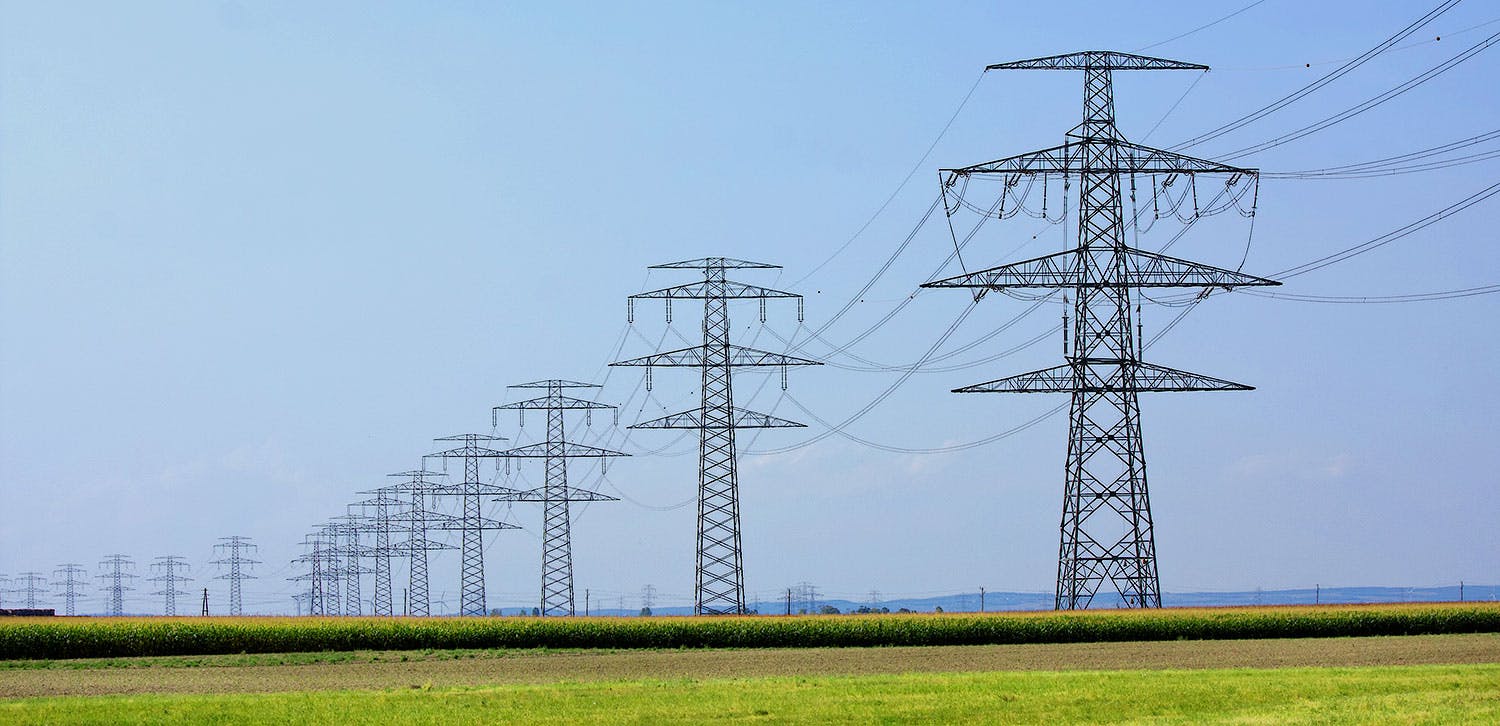
The International Energy Agency’s Electricity 2026 report arrives at an inflection point. For years, electricity sat in the background of global energy conversations - important but often treated as a derivative outcome of fuel markets and generation trends. That era is over. As the IEA rightly observes, the world has entered an “Age of Electricity,” marked by structural demand growth driven by electrification, digitalization, and new industrial loads. The implications are profound, and nowhere are they more visible - or more urgent - than in the transmission grid itself.
What makes Electricity 2026 particularly important is not simply its expanded five-year outlook or its detailed regional analysis. It is the clarity with which the report identifies grids as the central constraint on progress. This is a meaningful shift in institutional tone. The IEA is no longer treating transmission as an enabling backdrop that will somehow keep pace with generation. It is naming the grid bottleneck directly - and offering credible pathways to address it.
Demand growth is faster, broader, and more durable than before
The report’s demand outlook is stark. Global electricity consumption is forecast to grow at an average annual rate of 3.6% through 2030 - roughly 50% faster than the prior decade. More consequential still, electricity demand is now projected to grow significantly faster than global GDP, breaking a relationship that held for most of the past 30 years. This is not a temporary rebound driven by weather or post-crisis recovery. It is structural.
Artificial intelligence and data centers, electric vehicles, industrial electrification, cooling demand, and reshoring of manufacturing are all contributing to load growth that is both geographically dispersed and increasingly concentrated in time and place. Advanced economies, after more than a decade of stagnation, are seeing electricity demand rise again, while emerging economies continue to account for the majority of global growth. In practical terms, power systems are being asked to do more, everywhere, all at once.
The IEA’s analysis makes clear that meeting this demand will require far more than adding generation capacity. Variable renewables and nuclear are projected to supply all incremental demand through 2030 in aggregate, pushing low-emissions sources to around half of global generation. That is an encouraging signal. But it also sharpens the focus on system integration. Energy cannot decarbonize at scale if it cannot move efficiently from where it is produced to where it is needed.
The grid is now the system constraint
Here, Electricity 2026 is refreshingly candid. Grid investment has lagged far behind investment in generation for more than a decade. As a result, congestion is rising, curtailment is increasing, and interconnection queues are ballooning. The IEA estimates that more than 2,500 GW of projects - spanning renewables, storage, and large loads such as data centers - are currently stuck waiting for grid access worldwide.
This is not an abstract planning challenge. It is already shaping market outcomes, slowing decarbonization, increasing system costs, and undermining public confidence in the pace of the energy transition. In many regions, power systems are simultaneously curtailing clean generation and struggling to serve peak demand - an inefficiency that no amount of new generation alone can resolve.
Traditional grid expansion remains essential. New lines, new corridors, and cross-border interconnections will all be required to support long-term electrification and high renewable penetration. But the IEA is explicit about the limits of relying on conventional build-out alone. Permitting timelines are long, rights-of-way are scarce, supply chains are constrained, and skilled labor is in short supply. Even in jurisdictions with strong political support, major transmission projects routinely take a decade or more to deliver.
The unavoidable conclusion is that the grid must be upgraded not only at scale, but at speed.
Unlocking capacity through smarter use of existing infrastructure
One of the most consequential contributions of Electricity 2026 is its quantification of what can be achieved by making better use of the grid we already have. The report estimates that between 1,200 GW and 1,600 GW of advanced-stage projects could be enabled globally through a combination of regulatory reform, flexible connection agreements, and grid-enhancing technologies.
Of that total, roughly 450 GW to 700 GW could be unlocked through the deployment of technologies such as dynamic line rating, advanced power-flow control, reconductoring, and voltage uprating. Another 750 GW to 900 GW could be enabled via non-firm and flexible grid connections that allow faster access with defined operating constraints.
This matters because it reframes the transmission conversation. The question is no longer whether grid-enhancing technologies work - they do - but whether they will be adopted widely, systematically, and in time to matter. These solutions do not replace long-term grid expansion. They buy time. They relieve near-term congestion. And they allow utilities and system operators to deliver capacity increases measured in years rather than decades.
Advanced Conductors as force multipliers
Among the most impactful of these options are advanced transmission conductors like CTC Global's ACCC Conductor. Reconductoring existing lines with modern high-performance conductors allows utilities to significantly increase thermal capacity while maintaining existing towers, corridors, and rights-of-way. In an environment where new transmission siting is increasingly contentious and slow, that distinction is decisive.
Advanced conductors also offer operational advantages that align with the challenges highlighted in the IEA report. Higher capacity reduces congestion. Lower sag improves safety and clearance margins. Improved thermal performance supports dynamic line rating and more flexible system operation. Critically, reconductoring can often be executed with shorter outages and far fewer permitting hurdles than new construction, accelerating delivery precisely when it is most needed.
The IEA does not single out specific technologies or vendors, nor should it. But by explicitly including reconductoring and related upgrades in its quantified capacity-unlocking potential, the agency is signaling that these tools have moved from the margins into the mainstream of credible grid planning.
Urgency is no longer optional
The tone of Electricity 2026 is analytical, but the underlying message is urgent. Grid investment must increase by roughly 50% by 2030, reaching around USD 600 billion annually. Supply chains must scale. Regulatory frameworks must evolve. And operational practices must adapt to a system defined by variability, electrification, and concentrated loads.
What the report makes clear - implicitly but unmistakably - is that delay carries real costs. Congestion raises prices. Curtailment wastes capital. Reliability risks grow as infrastructure ages and loads intensify. And the longer transmission constraints persist, the harder it becomes to align climate ambition with practical outcomes.
The choice is not between building new lines and upgrading existing ones. It is between acting on all credible fronts now, or allowing the grid to become the transition’s dominant bottleneck.
From diagnosis to execution
The IEA has done the sector a service by sharpening the diagnosis. The Age of Electricity is here, demand is accelerating, and the grid is the limiting factor. Just as importantly, the tools to respond are known. Grid-enhancing technologies, advanced conductors, regulatory reform, and smarter operational frameworks are not future concepts. They are available today.
What remains is execution at scale.
Transmission has never been the most visible part of the power system, but it has always been the most consequential. As Electricity 2026 makes clear, the success of the energy transition will depend not only on how much electricity we generate, but on how efficiently, reliably, and quickly we can move it. The grid does not need reinvention. It needs urgent modernization - and the time for incrementalism has passed.