


The power transmission sector is facing a convergence of pressures unlike anything in its history. Electrification is accelerating. AI-driven data centers are demanding unprecedented speed-to-power. Renewable integration is increasing system variability. Wildfire risk and extreme weather events are raising reliability expectations. At the same time, utilities are capital-constrained and face long timelines to permit and build new infrastructure.
In this environment, simply building more transmission is no longer fast enough - or affordable enough. The grid must become smarter.
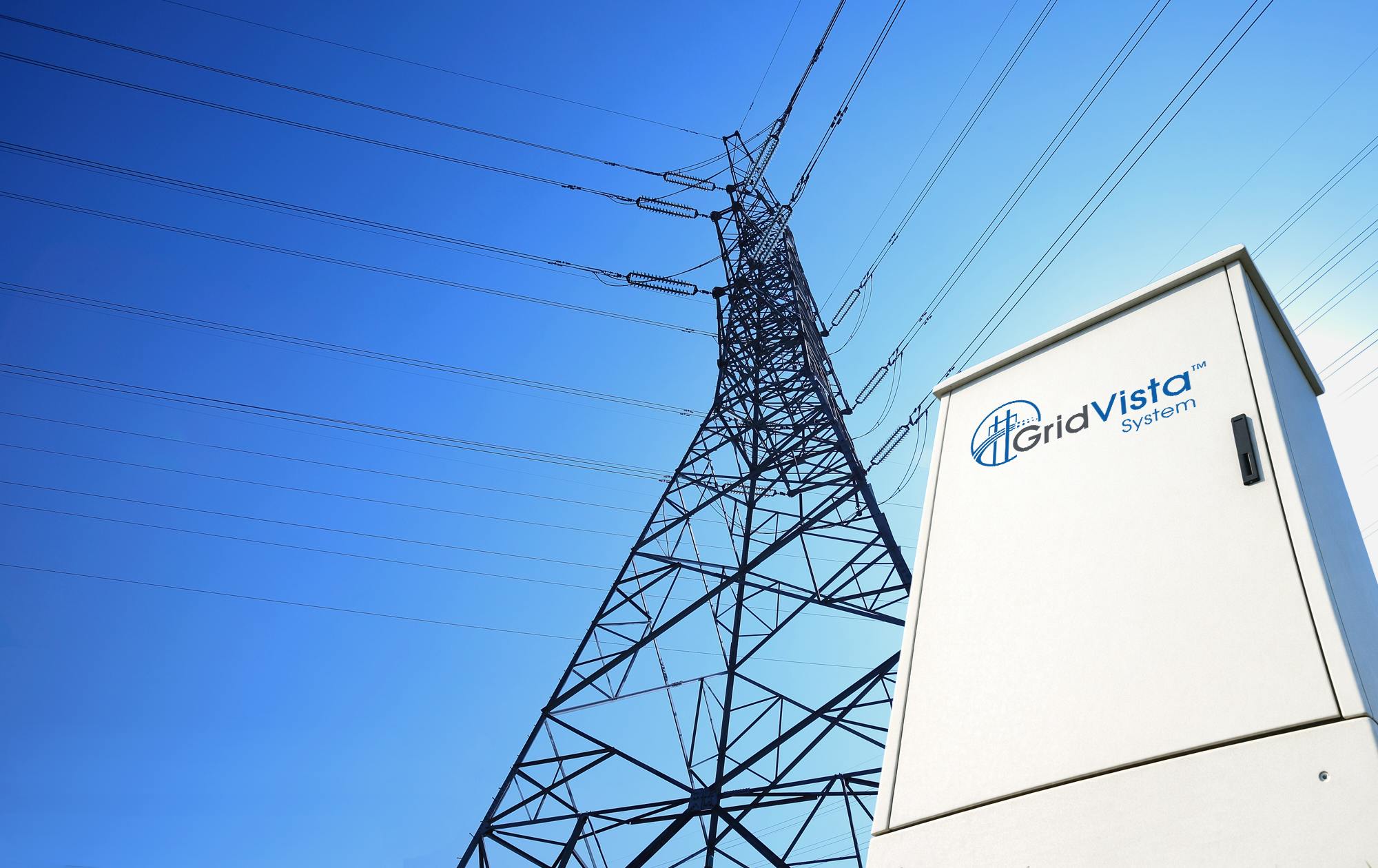
That is the premise behind CTC Global’s newly launched GridVista™ System: a technology designed to transform transmission lines from static infrastructure into intelligent, self-reporting assets. By combining advanced conductor technology with embedded fiber-optic sensing and cloud-based analytics, GridVista aims to give utilities something they have historically lacked - continuous, full-span visibility across the entire length of a transmission line.
The Problem with Blind Spots
For decades, utilities have relied on static line ratings, periodic inspections, and point-based sensors to assess line conditions. While dynamic line rating technologies have improved situational awareness, most still depend on discrete sensors installed at intervals along a line. Between those points, operators are often estimating conditions.
Those blind spots matter. Localized hot spots, excessive sag, mechanical strain, lightning strikes, or even physical disturbances such as falling branches can go undetected until they escalate into outages or wildfire ignition events. As load grows and systems operate closer to thermal limits, conservative assumptions are often used to maintain safety - leaving valuable transmission capacity untapped.
The result is a paradox: utilities face congestion and interconnection delays while operating lines below their true real-time capacity.
Intelligence Embedded in the Conductor
The GridVista™ System addresses this challenge by embedding high-temperature optical fiber directly inside the composite core of CTC Global’s ACCC® Conductor. Rather than attaching external sensors, the fiber runs continuously along the entire conductor span between substations.
Using technologies such as Brillouin Optical Time Domain Reflectometry (BOTDR) and Distributed Acoustic Sensing (DAS), the system measures temperature, strain, vibration, and acoustic events in real time - not at isolated points, but across the full length of the line.
According to CTC Global CEO J.D. Sitton, this enables “an entirely new level of detail and insight into the operating status of the transmission lines.” Instead of estimating conditions, utilities can see them - immediately and precisely - including the exact location of a disturbance or anomaly.
From Raw Data to Actionable Intelligence
Real-time sensing alone does not solve the problem. The value emerges when that data is transformed into operational insight.
GridVista runs on infrastructure provided through CTC’s strategic partnership with Google Cloud and integrates AI-powered capabilities developed alongside Tapestry, Alphabet’s grid-focused initiative. Through tools such as Vertex AI, BigQuery, environmental forecasting, and advanced imagery analytics, the platform converts high-resolution line data into dynamic ratings, anomaly detection, health indexing, and predictive analytics. Tapestry integrates this “ground-truth” operating data into its virtualized grid models, allowing planners and operators to simulate scenarios with far greater precision.
The implications extend beyond real-time monitoring. Utilities can better distinguish between theoretical constraints and actual thermal or mechanical limits. That enables more confident dispatch decisions during peak demand or contingency conditions and may reduce congestion without compromising safety.
Unlocking Capacity Without Waiting a Decade
One of the most compelling aspects of the GridVista approach is economic. Building new transmission infrastructure often requires a decade or more of planning, permitting, and capital deployment. In contrast, increasing the usable capacity of existing lines can deliver benefits much faster.
CTC Global reports that its advanced conductor technology has already been used in more than 1,400 projects worldwide to increase line capacity - in some cases doubling it - without requiring new rights-of-way. By layering embedded sensing and AI-driven analytics onto that platform, utilities may not only increase physical capacity but also operate assets more efficiently.
This combination could reduce congestion costs, defer capital expenditures, and lower operational risk. Precise event detection may also support wildfire mitigation strategies by identifying hot spots or faults before they escalate.
As data center growth accelerates and electrification increases system load, speed-to-power has become a defining industry metric. Grid operators are under pressure to interconnect large customers faster than traditional planning cycles allow. Extracting more value from existing infrastructure may be one of the few scalable near-term solutions.
A Shift in Utility Operations
Utilities are often described - sometimes fairly - as conservative institutions. Reliability obligations and regulatory oversight encourage caution. Yet the rapid growth of AI applications across industries is beginning to reshape how grid operators think about planning and dispatch.
With continuous, high-fidelity data feeding AI-enabled models, utilities can rethink how they schedule outages, plan interconnections, evaluate generator retirements, and respond to system disturbances. Rather than reacting to events, they can anticipate them.
Importantly, GridVista positions the transmission line itself as a data platform. The conductor is no longer simply a passive carrier of electrons; it becomes a source of intelligence that informs operations, planning, and potentially even market optimization.
The Bigger Picture
The broader significance of technologies like the GridVista System lies in their ability to bridge the gap between physical infrastructure and digital transformation. Transmission expansion will remain essential, but intelligence may be the fastest way to expand effective capacity in the near term.
As electrification accelerates and grid complexity increases, the industry’s challenge is not just to build more - but to operate smarter. By embedding sensing directly into the conductor and pairing it with AI-driven analytics, CTC Global and its partners are betting that the future grid will be defined as much by data as by steel and aluminum.
In a world where new infrastructure can take a decade, turning existing transmission lines into intelligent assets could prove to be one of the most consequential upgrades utilities can deploy.
Please see Business Wire Press Release