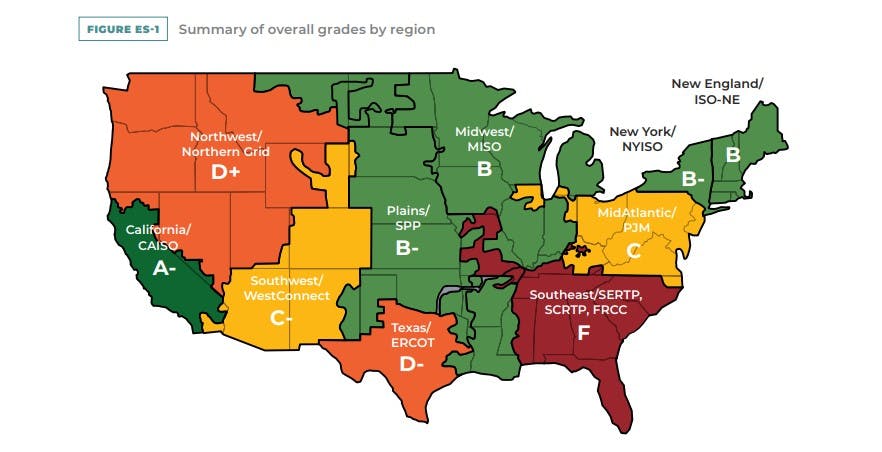
Let’s talk about this score card image:
The number of times I have heard or seen equipment running at 110%+ of it’s rated capacity or years past it’s life expectancy is appalling. Folks, I’m not just talking about security equipment. I have seen this on breakers, switches, transformers, cameras, and the list goes on. This leaves your infrastructure vulnerable and at risk!
Why does this happen? The answer is complex, and I would like to discuss a few of those reasons.
1. In the utility segment, if the equipment doesn’t supply or produce the product the corporation is in the business of, like a utility, then it may be viewed as non-vital. Such as power or energy.
2. Security equipment is like insurance. You want it in place in case of, or to prevent something bad from happening. Ex:You need evidence of an event or because a compliance standard mandates it. Just like buying insurance, do you want the seller of the solution to help justify the purchase? Maybe/maybe not….
3. “The existing equipment is still working and we need to save on operational and maintenance budgets.” This is short sighted and opens you up for increased expenditures in the future.
4. Nothing bad has happened to your system, so why invest in prevention/protections. This is a dangerous stance and not very risk adverse.
5. A compliance standard is not or does not mandate changes, updates etc. I always say that compliance is not excellence, it is just being compliant. This should be the base minimum starting point.
6. Redundancy or resiliency is a better approach! I can agree on this, however this one is far more difficult to justify from a Capitol Expenditure perspective. It doesn’t look as good from a cost perspective when you have to pay taxes on equipment not in service or sitting in a ready reserve status. Or its hard to explain to your customers why you are purchasing “extra” equipment that just sits.
BES transformers are on a 4 year back-log, and there doesn’t appear to be a resolution to this in the near future.
Typically break fixes fall into O&M. Preventive maintenance gets deferred due to cuts in O&M expenditures. Human resources are in short supply (people to test and fix the equipment). Creating a budget for lifecycle rotations are difficult to justify unless an outside source forces this to occur. There comes a point when the systems are just no longer reliable because redundancy and resiliency are overlooked as a viable option. We need to use a logical approach to solving these issues that use verifiable and quantifiable data with metrics to show were and how an organization can do a better job.