

For electric cooperatives and municipal power providers, wildfire is no longer a distant environmental concern or a once-a-decade emergency. It has become an everyday operating condition that shapes reliability planning, capital investment, insurance costs, and the trust relationship with members and ratepayers.
Climate volatility, accumulated fuel loads, community expansion into wildland areas, and stressed insurance markets have pushed wildfire into a year-round systemic issue. Wildfire is not just an ecological phenomenon but a financial one that influences insurability, creditworthiness, infrastructure planning, and the resilience of entire communities.
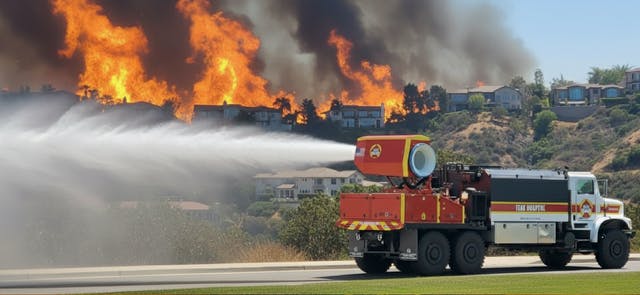
Where traditional wildfire models emphasize fire physics, spread modeling, or static historical layers, Athena treats wildfires as “harvest events,” analyzing where economic damage is most likely to occur over the next 12 months. Pairing Athena’s data with Team Wildfire’s proactive mitigation, in which firebreaks are created quickly and affordably using jet engine technology and non-toxic fire retardants, makes older reactive approaches look increasingly outdated.
These capabilities translate into services that are now affordable, even for rural communities. Firebreaks up to 1,200 feet wide can be created in days along highest-risk corridors, evacuation routes, and safety zones. They persist for months and remain effective even after rain.
As a result, critical infrastructure such as substations, telecom towers, water systems, hospitals, agricultural assets, and residential neighborhoods can be protected without breaking the bank. The resulting risk reduction can be measured and quantified, helping power company CFOs to address credit ratings, insurance costs, community needs and regulatory changes.
Community plans frequently stall at the implementation stage because of perceived high costs, especially when the benefits cannot be expressed in financial terms. Rural and smaller municipal systems feel this constraint most acutely.

