


I. Executive Summary
The European Union’s contemporary energy transition has reached a critical inflection point. For the past decade, climate policy has been dominated by fragmented national mandates, intermittent subsidy structures, and an oversimplified "technology-picking" approach that isolated individual energy vectors (wind, solar, nuclear, hydrogen) from one another. Today, amid severe macroeconomic pressures and volatile geopolitical realities, this fragmented paradigm is structurally failing Europe's heavy industrial core.
True industrial resilience requires a transition from isolated national efforts to highly interconnected, multi-vector energy corridors. This paper explores the strategic necessity of the V4-Nordic Energy Bridge—a techno-economic alliance linking the advanced technological innovation and low-carbon electron abundance of the Nordic-Baltic region with the heavy manufacturing infrastructure and scale of the Visegrád Four (V4) nations (Czechia, Hungary, Poland, and Slovakia). By analyzing the integration of Small Modular Reactors (SMRs), trans-continental hydrogen corridors, and circular supply chains, this study maps the systemic architecture required to secure central Europe’s industrial future.
II. Beyond "Technology-Picking": The Era of Systemic Architecture
For too long, European energy debates have been paralyzed by binary reductionism: baseload versus intermittency, nuclear versus renewables, electrons versus molecules.
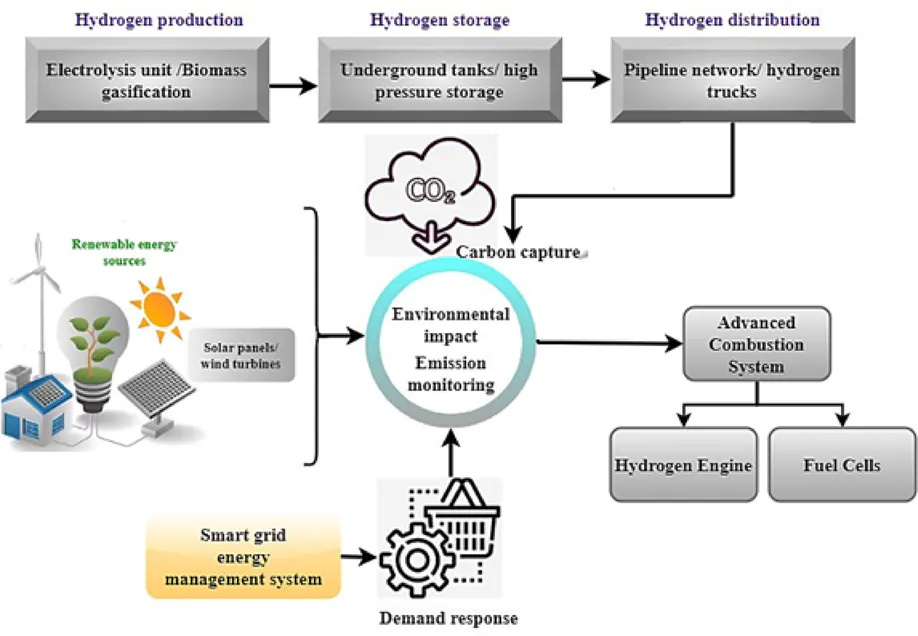
As the penetration of volatile renewable energy increases and industrial off-takers demand unbroken decarbonized streams, the limitation of this siloed approach is exposed. The issue is no longer whether to deploy wind turbines or nuclear reactors; it is how to manage the complex, real-time spatial and temporal correlation between generation assets and industrial demand centers.
The V4-Nordic axis serves as an ideal geographical and structural template for this new approach. The Nordic countries possess an structural oversupply of zero-emission electricity driven by vast hydropower reservoirs, expanding offshore wind assets, and stable nuclear baseloads. Conversely, the V4 region represents Europe’s industrial manufacturing core, characterized by high energy intensity, concentrated chemical and automotive clusters, and a critical need to phase out legacy coal infrastructure without triggering deindustrialization. Building a systemic bridge between these two regions transforms a geographical divide into a strategic advantage.
III. SMR Deployment: Accelerating Industrial Baseload Subsidiarity
The Visegrád Four region faces an acute baseload crisis as aging coal-fired power plants face mandatory environmental closures under EU taxonomy rules. Large-scale nuclear projects (such as Poland’s coastal Westinghouse deployment or Hungary’s Paks II) are essential for long-term grid stability, but their multi-decade construction timelines and extreme capital expenditure requirements leave a dangerous mid-term security gap for specific industrial clusters.
1. The Strategic Promise of Small Modular Reactors (SMRs)
SMRs (typically defined as reactors producing up to 300 MW per module) offer a fundamentally different economic and operational blueprint. Their factory-fabricated, modular nature reduces the initial Cost of Capital (CoC) and compresses construction timelines from twelve years down to three to five years.
For the V4 nations, SMRs are not merely grid-stabilizing assets; they are industrial co-location solutions. Industrial giants—such as Polish chemical producer Synthos or Czech utility ČEZ—are actively designing frameworks to deploy SMRs directly adjacent to high-heat, high-energy manufacturing facilities. This enables the direct utilization of high-temperature reactor heat for chemical processes and clean hydrogen cracking, bypassing the efficiency losses associated with electrical conversion.
2. Cross-Border Collaboration and Regulatory Convergence
This is where the Nordic bridge becomes critical. Nordic energy entities, such as Finland’s Fortum or Sweden's Vattenfall, possess deep institutional knowledge in nuclear asset optimization, deep-geological waste repository management, and advanced digital twin safety modeling.
To accelerate V4 deployments, a formal technological transfer corridor must be established. By forming corporate-state joint ventures, V4 operators can bypass the early-stage engineering learning curve, adopting pre-vetted Nordic safety and operational architectures to ensure that the first wave of European SMRs becomes operational before 2035.
IV. Integrated Hydrogen Supply Chains: The Trans-Baltic Vector
As established in contemporary European energy discourse, green hydrogen remains a highly localized luxury, concentrated heavily in peripheral zones with optimal microeconomic conditions. To turn hydrogen into a functioning continental commodity, the V4 nations must secure access to low-cost production zones via dedicated pipeline infrastructure.
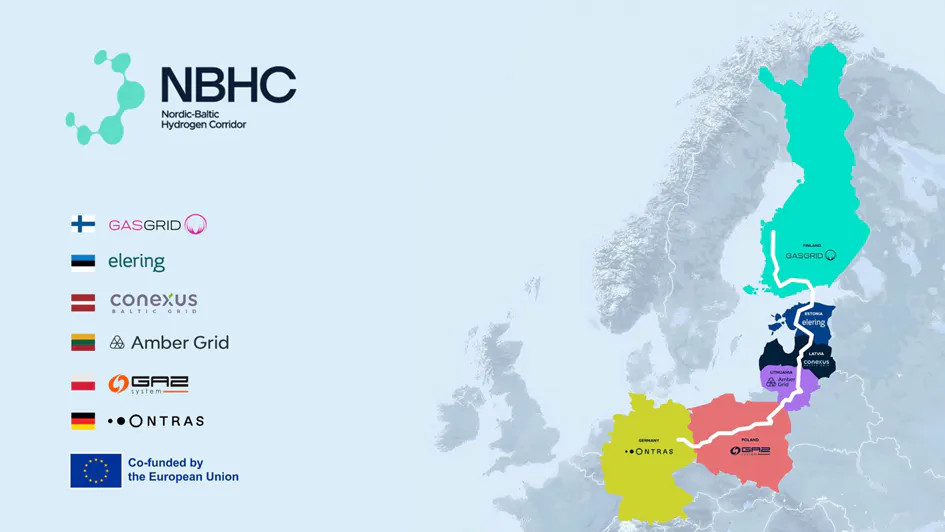
1. The Nordic-Baltic Hydrogen Corridor (NBHC)
The primary physical manifestation of this V4-Nordic bridge is the Nordic-Baltic Hydrogen Corridor (NBHC). Developed by a consortium of six gas transmission system operators (TSOs), this planned cross-border pipeline network is designed to transport green hydrogen produced via massive Finnish and Swedish wind assets through Estonia, Latvia, and Lithuania, directly into the Polish industrial network.
The economic implications for the V4 are transformative. Instead of relying on expensive domestic electrolysis powered by congested local grids, V4 chemical, steel, and fertilizer plants can tap into a continuous, piped supply of low-LCOH (Levelized Cost of Hydrogen) molecules from the North. This infrastructure secures the feedstock continuity required for hard-to-abate sectors while providing Nordic producers with an immediate, high-volume off-take market.
V. Permitting Velocity: Importing the Nordic Fast-Track Blueprint
The primary bottleneck threatening Europe’s industrial resilience is no longer a deficit of capital or technological maturity; it is the administrative inertia of regulatory permitting. In many V4 jurisdictions, securing environmental, grid connection, and spatial planning approvals for transmission lines, SMR sites, or large-scale energy storage assets can take up to seven years.
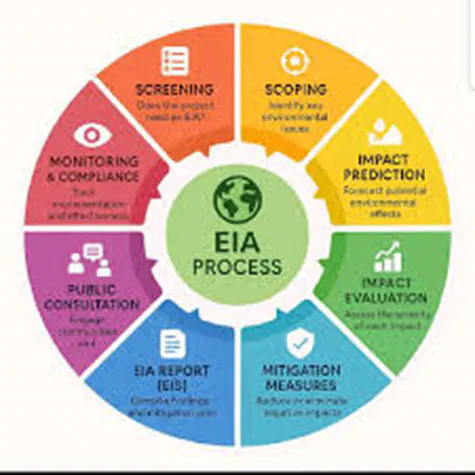
1. Digital Twins and Spatial Planning Streamlining
Nordic nations, particularly Denmark and Sweden, have pioneered streamlined regulatory frameworks. By utilizing fully digitized spatial planning tools, integrated environmental "one-stop-shops," and legal "fast-track zones" for projects of overarching national strategic importance, they have managed to compress permitting timelines by over 50%.
2. Overcoming the V4 Bottleneck
For the V4 nations to absorb incoming clean energy corridors, they must execute an administrative overhaul, directly importing these Nordic operational frameworks. This means creating unified, trans-national regulatory bodies that treat cross-border infrastructure (like the NBHC) as unified assets rather than fragmented national segments subject to local bureaucratic delays. Permitting speed must be recognized as a core metric of geopolitical and industrial competitiveness.
VI. Circular Economy and Supply Chain De-Risking
The transition to SMRs, advanced wind assets, and electrolyser fleets introduces a critical vulnerability: an intense dependence on Critical Raw Materials (CRMs) like neodymium, dysprosium, cobalt, and high-grade nickel. Replacing a reliance on Russian gas with a total dependence on highly centralized non-Western refining monopolies is a severe strategic liability.
1. The Nordic Extraction and Processing Frontier
The Nordic region holds the key to Europe’s domestic supply security. Discoveries of major rare earth element deposits in Sweden (such as the Per Geijer deposit in Kiruna) and advanced critical mineral processing facilities in Norway provide the EU with a unique opportunity to build an internal mine-to-market supply chain.
2. V4 Circular Integration: Urban Mining at Scale
The V4 region, with its dense automotive and industrial recycling networks, must serve as the downstream anchor for this supply chain. By integrating V4 manufacturing expertise with Nordic raw material security, the alliance can pioneer advanced circular economy models.
This involves creating automated "urban mining" hubs within V4 industrial parks to recycle end-of-life EV batteries, wind turbine magnets, and industrial electronics, returning high-purity minerals back to Nordic refiners. A closed-loop supply chain of this nature insulates both regions from geopolitical embargoes, localized logistics shocks, and resource nationalism.
VII. Author’s Perspective & Expert Commentary
(My Professional Opinion)
The Geopolitical Imperative of the Asymmetric Alliance
As an energy analyst observing the fragmentation of European energy policy, I am convinced that Europe's industrial survival cannot rely on uniform mandates issued from Brussels. The economic realities of a manufacturing state like Czechia or Poland are fundamentally decoupled from the services-driven models of Western Europe.
The V4-Nordic Energy Bridge represents the ultimate form of pragmatic regionalism. It is an asymmetric alliance born out of pure economic complementarity: one region possesses the clean energy generation capacity that it cannot fully consume internally, while the other possesses the industrial infrastructure that cannot survive without massive inputs of that exact energy.
However, the window for execution is rapidly closing. If the V4 nations do not aggressively reform their bureaucratic permitting architectures and fail to secure physical transport corridors like the NBHC, Western European industrial clusters will permanently outcompete them using localized green subsidies. The V4-Nordic bridge is not a visionary luxury; it is an industrial survival mechanism.
VIII. Professional Discussion Points & Provocative Questions
To initiate a rigorous professional debate within the Energy Central community, I propose the following core questions for our colleagues:
The Regulatory Convergence Dilemma: Given that Nordic countries heavily prioritize decentralized renewable networks while the V4 group relies on centralized nuclear and legacy fossil configurations, can a cross-border regulatory framework truly be harmonized without triggering severe friction over national energy sovereignty?
The Infrastructure Financing Gap: While the Nordic-Baltic Hydrogen Corridor (NBHC) is recognized as a Project of Common Interest (PCI), who should bear the primary financial burden of its construction—the peripheral Nordic producers looking for export markets, or the V4 industrial off-takers desperate for decarbonized feedstocks?
The SMR Timeline Reality Check: With industrial coal closures in Central Europe mandated to accelerate over the next decade, can modular nuclear tech (SMRs) realistically scale and clear regulatory hurdles quickly enough to prevent a structural, multi-year energy deficit in the V4 industrial core?
What is your perspective on this inter-regional paradigm? Let’s map out the realities in the comments below.