


𝗕𝘂𝘁 𝘄𝗵𝗮𝘁 𝗶𝗳 𝗶𝘁 𝘄𝗼𝗿𝗸𝘀?
A✌️462-word✌️2.5-minute✌️read
Regular readers of my posts know I firmly believe we need to rejuvenate our nuclear effort if we are to achieve our climate goals. Small modular reactors or SMRs offer hope that nuclear can be built in a timely and cost-effective fashion.
However, as I’m fond of saying, hope is not a strategy. The technology must prove itself in the market. For their part, climate advocates should stop viewing nuclear in historical terms, and support giving it a fair chance to succeed.
This is no longer your grandfathers nuclear. Most existing plants are 30 to 40 years old.
Think about that for a second.
What else in your daily life do you rely on that’s 30-years old? A second should be all the time you need because the answer is nothing.
𝗖𝗮𝘀𝗲 𝗶𝗻 𝗽𝗼𝗶𝗻𝘁 𝗼𝗻 𝘁𝗵𝗲 𝗻𝗲𝘄 𝘀𝘁𝗮𝘁𝗲 𝗼𝗳 𝗻𝘂𝗰𝗹𝗲𝗮𝗿:
A company called Deep Fission plans to install a nuclear reactor in Kansas.
What separates this reactor from your grandfather’s reactors?
It will reside one mile deep in the ground.
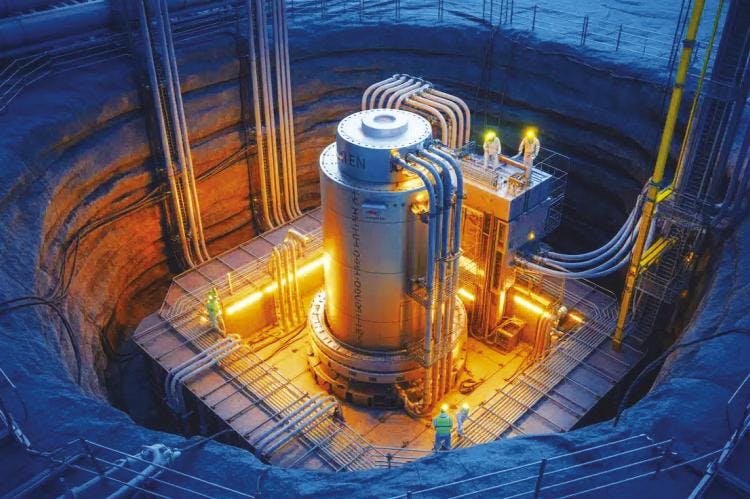
Founded in 2023, Deep Fission is an advanced nuclear reactor company. Its goal is to place small reactors at the bottom of 30-inch mile-deep holes.
Sound crazy?
Maybe it is, but I’d like to find out.
Another innovative aspect of the technology is that the radioactivity stays at the bottom of the hole. The only thing that rises to the surface is clean fresh water. The water is transformed into steam to run a turbine that generates electricity. It’s then cooled and sent back into the borehole.
The approach combines two of what I consider the most promising clean technologies: nuclear and geothermal.
The Kansas project is one of 11 selected to participate in President Trump’s nuclear pilot program. The goal of that program is to get at least three reactors operating at a state of steady fission before next July.
That probably isn’t going to happen, but I admire the stretch goal.
The Deep Fission design leverages the most common nuclear technology: pressurized water. The reactor will of course be small enough to fit in a 30-inch hole, and is expected to provide enough electricity to power 10,000 homes.
Here’s another interesting feature of the design: it’s “disposable.”
The reactors are designed to operate for two to seven years, after which, it will either be sealed or a new reactor can be installed on top of the old one.
Will it work?
I don’t think anyone can definitely answer that question.
Still, I like the creative thinking that went into the design. It’s the kind of thinking we need to achieve net-zero energy production, because intermittent solutions like wind and solar simply aren’t going to cut it in the long-term.
#nuclearenergy #nuclear #nuclearreactor #smr #advancednuclear
