


A✌️456-word✌️2.5-minute✌️read
The Canary Media headline read: Majority of Americans want a big power grid and more cheap, clean power.
I have a headline too: The majority of Americans want to win Powerball.
Both headlines have equivalent value: zero.
First, most Americans how no idea what the issues are with the grid or how to fix them. What they do know is that they want the lights to stay on want electricity to cost less.
Stop the presses!
The story summarized a survey by the Conservative Energy Network. As its name implies, CEN is comprised of conservatives. Its goal is to champion secure, reliable, affordable, clean American energy.
Conservatives championing clean energy? That’s more newsworthy than the survey’s findings.
Likely voters in Ohio and Pennsylvania (PJM territory) and Arkansas, Mississippi, and Missouri overseen by the Midcontinent Independent System Operator (MISO) were surveyed.
For those unfamiliar with PJM, it operates the grid for 13 mid-Atlantic states. It also seems to be one of the poorest managed grid operators which recently set record capacity prices, and has the most bloated interconnection backlog.
Here’s a sample of the survey’s questions and results:
𝗤𝘂𝗲𝘀𝘁𝗶𝗼𝗻: How concerned are you about the affordability of your utility bills and rising energy costs?
PJM states: 86.6% concerned
MISO states: 88.9% concerned
𝗤𝘂𝗲𝘀𝘁𝗶𝗼𝗻: Do you support or oppose making investments in America’s “electricity transmission grid” to improve reliability, reduce costs, unlock economic growth in communities, and meet future power needs?
PJM states: 77.7% support
MISO states: 75.2% support
𝗤𝘂𝗲𝘀𝘁𝗶𝗼𝗻: Do you agree or disagree with the following statement? Upgrading our electricity transmission grid is important for national security – it protects us from foreign cyber-attacks and blackouts.
PJM states: 71.9% agree
MISO states: 72.6% agree
Let’s stop there.
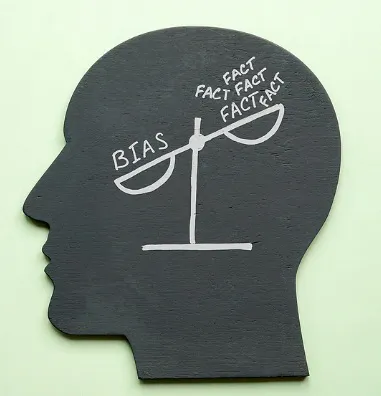
This is a classic example of a survey designed to achieve a predetermined conclusion. Of the three questions, only the one on affordability wasn’t leading the reader to a specific answer.
It didn’t have to. If you ask that question of anyone anywhere who pays an electric bill you’d get a similar answer.
The other questions were designed to elicit a specific answer.
Do you support grid investments that will make the grid more reliable and lower costs?
Really?
About the only thing insightful in that question is that 5% of those surveyed in MISO and 2.6% in PJM were opposed to improved reliability and reduced costs. I ‘d like to know what those people are thinking.
Being data-driven, this is a pet peeve of mine: distorted surveys/polls and/or cherry-picked results. This goes beyond the climate movement, although it is guilty of the practice.
The moral of the story: reader beware. Do your homework, and dig a little deeper into sources and design.
#electricgrid #electricityprices #gridreliability