


The Hidden Threats to BESS Reliability in Harsh Outdoor Environments 🔋🌬️
When discussing the reliability of Battery Energy Storage Systems (BESS), attention is often focused on cell chemistry, thermal management strategies, and fire protection systems. Yet in real-world operation, many long-term failures are not caused by the batteries themselves, but by a frequently underestimated factor: continuous environmental exposure.
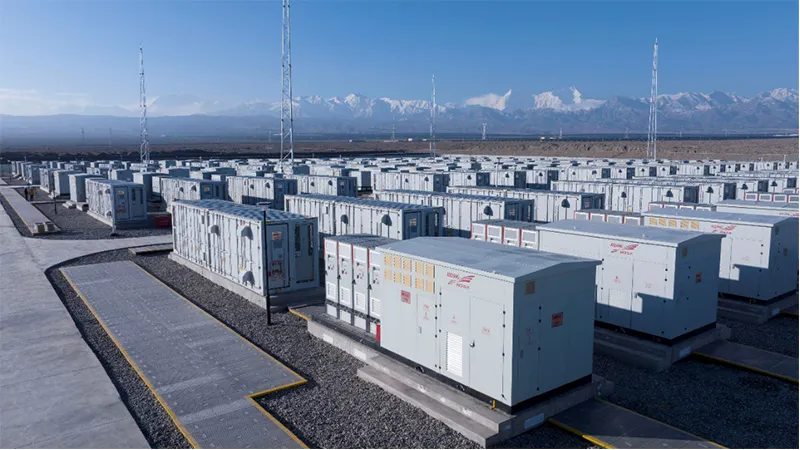
Kehua Xinjiang 300 MW / 1200 MWh grid-forming standalone energy storage project
For outdoor-deployed BESS, rain, dust, high humidity, and coastal salt spray are not occasional events—they are persistent operating conditions throughout the system’s entire lifecycle. Once these elements find their way inside the enclosure, they can trigger a chain reaction of degradation, including:
Gradual loss of insulation performance
Corrosion of metallic components and electrical interfaces
Reduced reliability of BMS and auxiliary electronics
Increased maintenance frequency and unexpected downtime
Conventional maintenance approaches typically address these issues after symptoms appear, through enclosure opening, cleaning, drying, or component replacement. However, for high-energy systems, frequent enclosure access introduces additional safety risks, labor costs, and operational uncertainty, making this approach unsustainable in the long term.
From a system-level perspective, the real challenge for BESS is not how to clean faster, but how to minimize the ingress of environmental contaminants in the first place.
This leads to a fundamental design contradiction:
BESS requires continuous airflow for thermal balance, yet every opening weakens environmental protection.
Without a purpose-designed ventilation strategy, airflow can actively draw moisture, dust, and salt particles into the enclosure over time, causing irreversible damage that accumulates year after year.
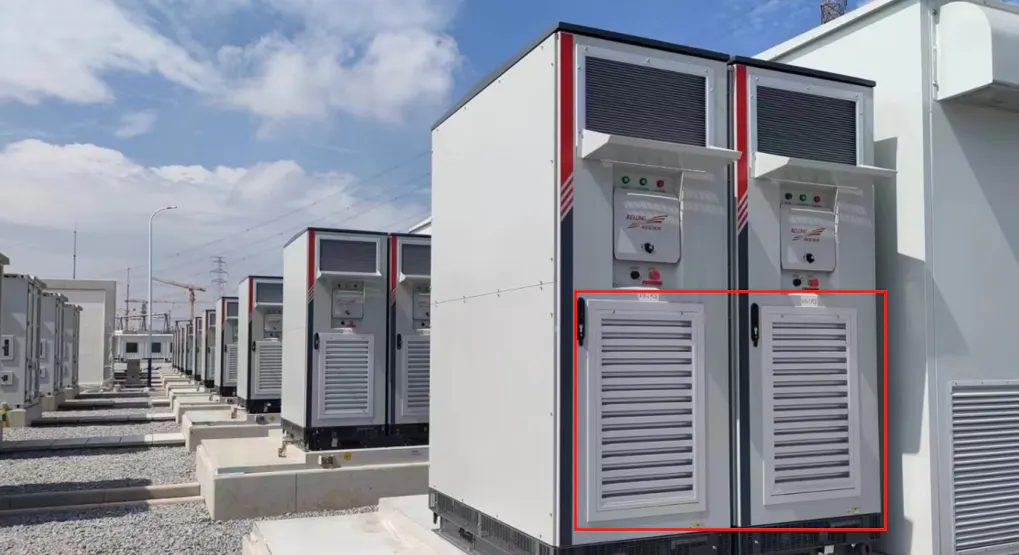
Waterproof and dustproof louvers supplied by Huaxia New Energy
As a result, more BESS projects are beginning to treat ventilation openings as functional components rather than simple cutouts. By engineering airflow paths, structural geometry, and filtration media as an integrated system, it is possible to maintain effective heat dissipation while significantly improving environmental isolation—achieving protection levels approaching IP65 without sacrificing airflow performance.
When protection is addressed at the design stage rather than deferred to maintenance, the operational profile of a BESS changes fundamentally:
Higher system stability
Longer and more predictable component lifetimes
Reduced on-site intervention and maintenance exposure
Over the full lifecycle, this approach delivers tangible benefits in safety, reliability, and total cost of ownership for modern energy storage systems.
Questions for Discussion ❓
🔹 Is your BESS designed around ideal environmental assumptions?
🔹 Will your ventilation strategy still protect the system after years of real-world exposure?
If you are re-evaluating BESS reliability in challenging outdoor environments, we welcome further discussion 🤝
Sometimes, improving the entire system starts with rethinking a single ventilation opening.