


Solar-Hydrogen Hybrid Systems as an Alternative to Batteries for Small-Scale Applications
The growing need for energy storage for intermittent renewable sources, such as solar, drives the search for alternatives to traditional lithium-ion batteries. This article explores the viability and applications of hybrid systems that combine photovoltaic solar energy with a hydrogen cycle—electrolysis, storage, and fuel cells—for small-scale applications. We analyze the technology, its advantages and disadvantages compared to batteries, costs, market trends, and practical use cases in sectors such as residential, telecommunications, and drones. We conclude that, although they face cost and efficiency challenges, solar-hydrogen systems offer a promising solution for long-duration and seasonal energy storage.

1. Introduction
The transition to a global energy matrix based on renewable sources is one of the pillars for mitigating climate change. However, the intermittency of sources such as solar and wind represents a significant challenge for electrical grid stability. Energy storage, therefore, emerges as a key component to ensure a continuous and reliable supply. For decades, batteries, especially lithium-ion ones, have dominated the storage landscape, but their limitations in terms of long-duration storage capacity, lifespan, energy density, and the environmental impact of material extraction have motivated the exploration of new technologies.
In this context, hybrid systems that integrate photovoltaic solar panels with a green hydrogen cycle are gaining prominence. These systems use excess solar energy to produce hydrogen through water electrolysis, store this hydrogen, and, when necessary, convert it back into electricity using a fuel cell. This approach offers a solution for seasonal energy storage—storing energy captured in the summer for use in the winter—a capacity where batteries are inherently limited.
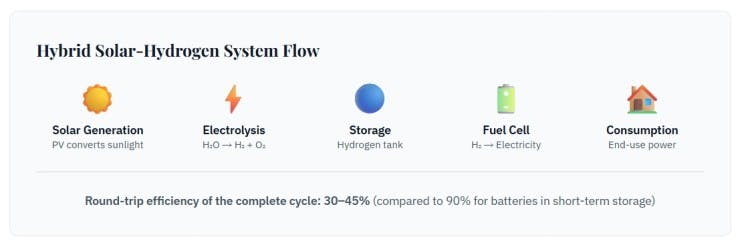
This article investigates the potential of this technology as a substitute or complement to batteries in small-scale applications, analyzing its technical architecture, economic viability, and emerging applications.
2. Technical Architecture of the Solar-Hydrogen System
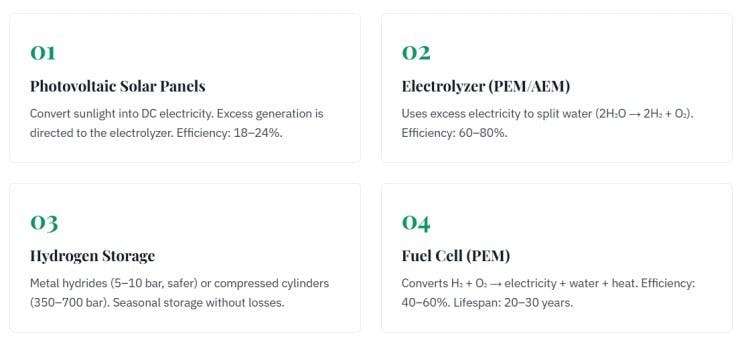
A solar-hydrogen hybrid system is composed of four main components that work together to generate, store, and supply energy autonomously. The synergy between these components enables overcoming the intermittency of solar generation, offering a stable energy source.
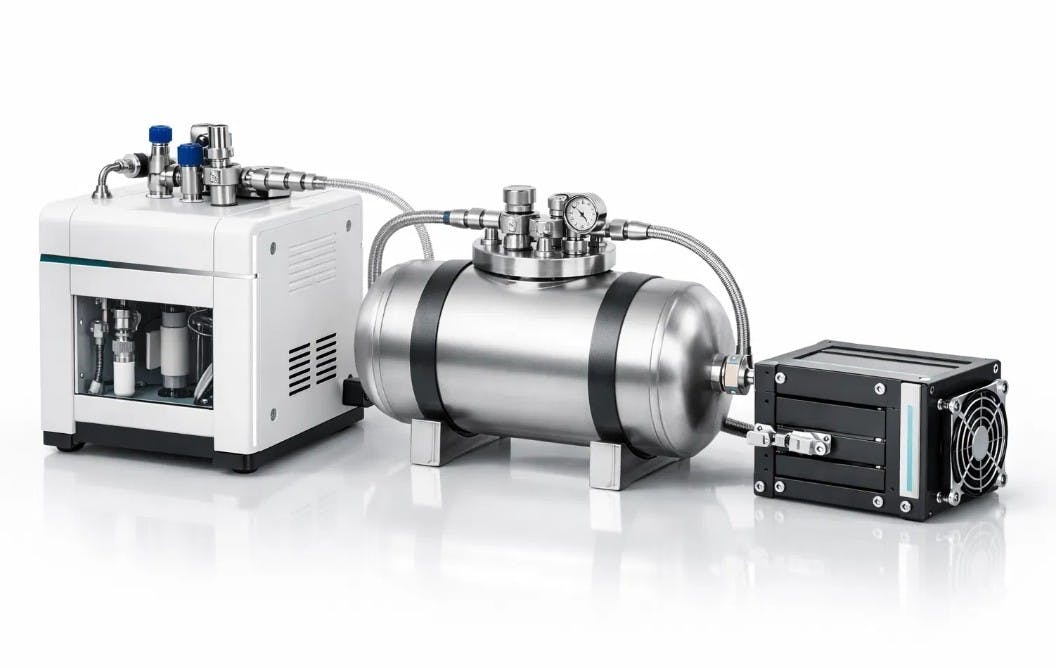
Compact small-scale system: AEM electrolyzer (left), metal hydride tank (center), and PEM fuel cell stack (right)
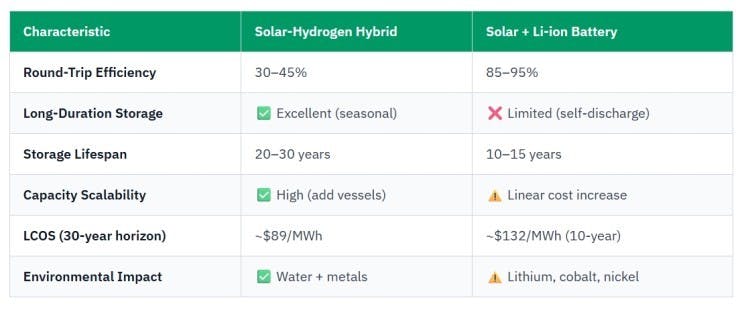
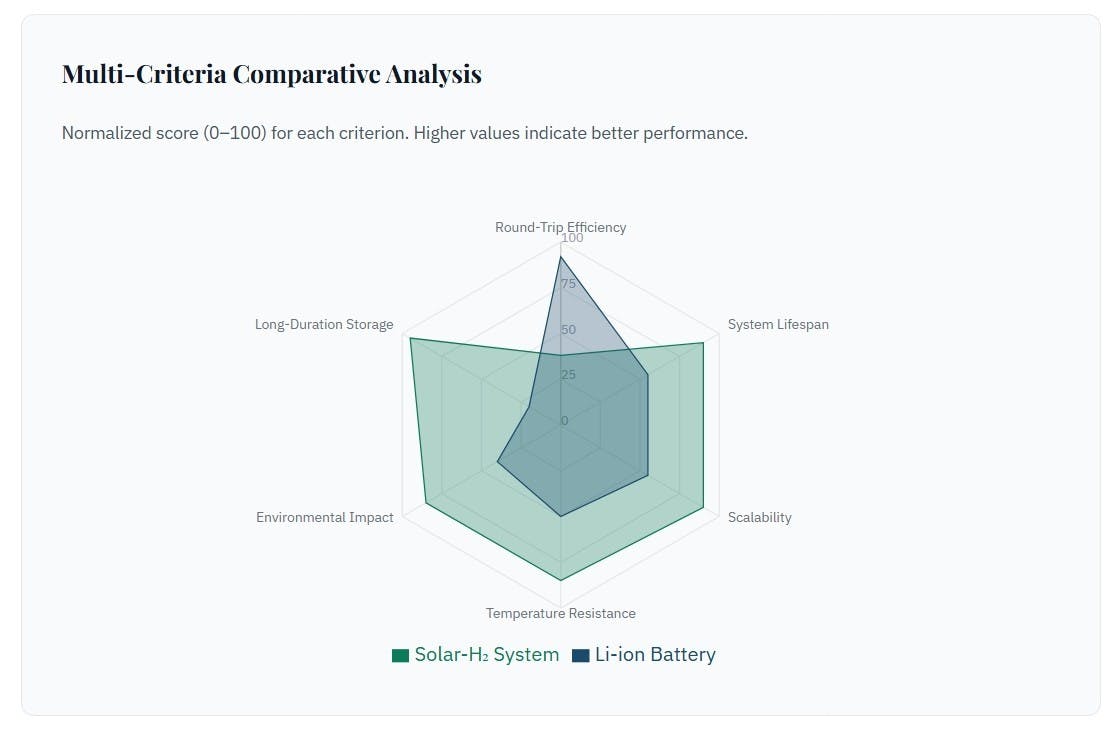
Technical Comparison: Solar-Hydrogen System vs. Lithium-Ion Battery
The table below presents an objective comparison between the two storage technologies, highlighting the advantages and disadvantages of each approach for different usage scenario
3. Small-Scale Applications and Use Cases
The flexibility and long-duration storage capacity of solar-hydrogen systems make them ideal for a variety of small-scale applications, especially in off-grid scenarios or those requiring high energy reliability.
🏠 3.1 Residential Applications and Energy Self-Sufficiency
For homes, the main appeal of hydrogen is the possibility of achieving 100% energy self-sufficiency, including seasonal storage. A pioneering project in the city of Novales, Spain, called PVHyP, demonstrated the viability of this approach in a social housing unit. The system uses photovoltaic panels and a hydrogen cycle to ensure complete independence from the electrical grid. Over 22 months of monitoring, the project completely eliminated electricity bills and associated CO₂ emissions, saving approximately 15,200 kWh of primary energy and avoiding 2,260 kg of CO₂. Companies like Enapter are developing modular AEM electrolyzers specifically designed for integration into residential systems, making on-site green hydrogen production an increasingly tangible reality.
📡3.2 Backup for Telecommunication Towers
The telecommunications sector relies on uninterrupted power to keep its networks operational. In remote locations or areas prone to grid failures, diesel generators and batteries have been the standard backup solution. Hydrogen fuel cells emerge as a superior alternative: greater reliability, lower maintenance requirements, silent operation, and zero on-site emissions. A field test conducted by PowerCell Group in partnership with telecom operator Telia demonstrated that a hybrid system with solar panels and fuel cells could provide up to 110 days of backup power for a mobile base station. Companies like Plug Power have already deployed more than 7,600 fuel cell systems for power backup at major telecommunications operators in the United States.
🚁3.3 Drones and Unmanned Aerial Vehicles (UAVs)
Flight autonomy is one of the biggest challenges for drones powered by lithium batteries. Hydrogen fuel cells offer significantly higher energy density, enabling substantially longer flight times. Innovative projects are combining lightweight solar panels, hydrogen storage, and fuel cells to create UAVs with extended autonomy, capable of performing long-duration missions such as large-area surveillance or infrastructure inspection. The collaboration between XSun and H3 Dynamics to develop a UAV with this hybrid technology exemplifies the potential to revolutionize the sector. Furthermore, mobile nanogrids, such as the one developed by Sesame Solar, can generate hydrogen on-site from sunlight to refuel drone fleets in the field.
4. Market Analysis and Costs
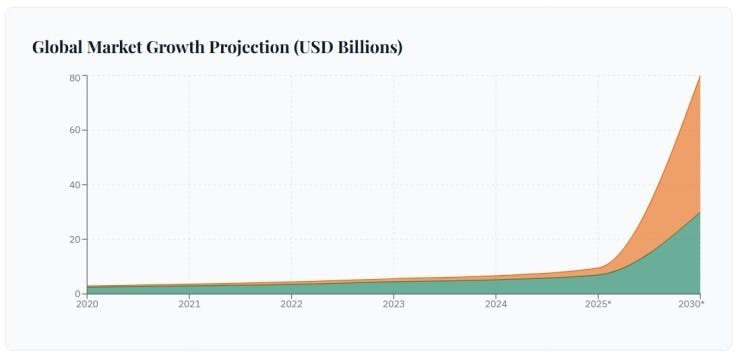
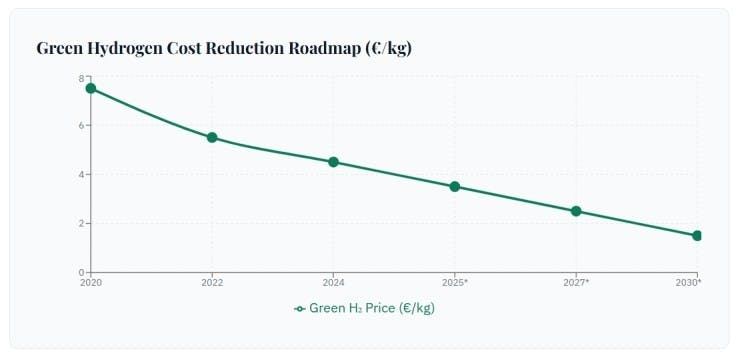
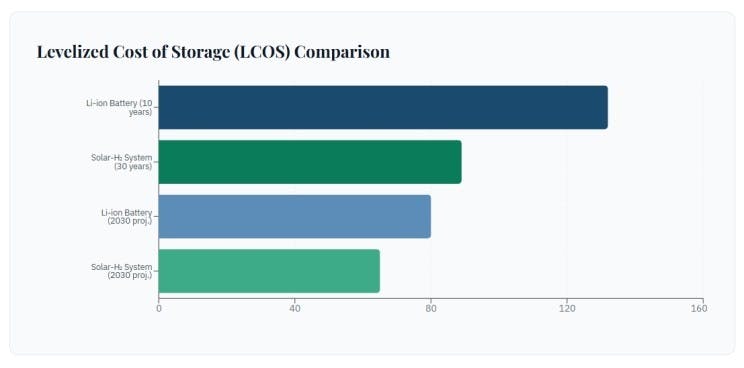
The growth of the green hydrogen and fuel cell market is a clear indicator of the technology's potential. Although initial costs remain a barrier, projections point to a rapid decline, making solar-hydrogen systems increasingly competitive.
5. Challenges and Barriers to Adoption
Despite its significant potential, the widespread adoption of solar-hydrogen systems faces technical and economic barriers that must be overcome for the technology to reach full commercial maturity.
5.1 Technical Challenges
Round-trip efficiency loss (30–45% vs 85–95% for batteries)
Hydrogen safety perception and regulatory frameworks
Electrolyzer and fuel cell durability in extreme climates
Water quality management for PEM systems
5.2 Economic Barriers
High capital costs: €25,000–40,000 for small systems
Payback period: 12–18 years (depending on electricity tariffs)
Limited supply chain maturity and certified installers
Spare parts availability concerns
5.3 Regulatory & Policy Barriers
Hydrogen safety codes vary significantly by country
Lack of unified international standards for hybrid systems
Inconsistent government subsidies and support programs
Grid connection requirements for hybrid systems
6. Conclusion
Solar-hydrogen hybrid systems represent a promising frontier in energy storage, offering a viable solution for the intermittency of renewable sources, especially in applications that demand long duration and self-sufficiency. Although lithium-ion batteries continue to dominate the short-term storage market due to their high efficiency and decreasing costs, they cannot effectively meet the need for seasonal storage.
It is in this niche that hydrogen stands out. For residential applications seeking total grid independence, for providing critical backup power in telecommunications, or to extend drone autonomy, the combination of solar energy and hydrogen already proves technically and economically advantageous in the long term. Real use cases demonstrate that the technology is mature and capable of providing clean and reliable energy.
Challenges related to cost and efficiency are still significant, but rapid market growth, investments in research and development, and government incentive policies are accelerating the learning curve and cost reduction. As the technology matures and production scale increases, solar-hydrogen systems are positioned not only to replace batteries in specific applications but to become a fundamental pillar of a decentralized, resilient, and 100% renewable energy future.
6.1 Market Trajectory
Green hydrogen costs will decline to €1–2/kg by 2030, improving system economics
Electrolyzer efficiency will reach 80–85%, reducing round-trip losses
Residential and small-scale deployments will accelerate as costs decrease
Telecommunications and UAV sectors will lead early adoption
6.2 Recommended Next Steps
Policy Support: Establish hydrogen safety standards and provide targeted subsidies
Technology Development: Investment in solid oxide electrolysis and high-temperature fuel cells
Supply Chain: Encourage manufacturing scale-up and installer training
Pilot Programs: Expand demonstration projects in diverse climates and applications
References
Buttler, A., & Spliethoff, H. (2018). Current status of water electrolysis for energy storage. Renewable Energy, 160, 629–652.
Saba, S. M., Müller, M., & Robinius, M. (2018). The investment costs of electrolysis. International Journal of Hydrogen Energy, 43(49), 21864–21883.
Staffell, I., et al. (2019). The role of hydrogen and fuel cells in the global energy system. Energy & Environmental Science, 12(2), 463–491.
Noussan, M., et al. (2021). The role of green and blue hydrogen in the energy transition. Sustainability, 13(1), 298.
Züttel, A., et al. (2010). Hydrogen: The future energy carrier. Philosophical Transactions of the Royal Society A, 368(1923), 3329–3342.
Enapter GmbH. (2024). AEM Electrolyzer for Green Hydrogen Production. Technical Specifications.
Plug Power Inc. (2024). Fuel Cell Systems for Telecommunications Backup Power. Case Studies.
International Renewable Energy Agency (IRENA). (2023). Green Hydrogen Cost Reduction: Scaling up Electrolysers.
Schmidt, O., et al. (2019). Projecting the future levelized cost of electricity storage technologies. Joule, 3(1), 81–100.
International Energy Agency (IEA). (2023). Global Hydrogen Review 2023.
Ballard Power Systems. (2024). Fuel Cells for Unmanned Aerial Vehicles. Product Portfolio.
PowerCell Group. (2024). Hydrogen Fuel Cells for Telecommunications. Field Trial Results.
#EnergyStorage #SolarHydrogen #GreenHydrogen #HydrogenEconomy #FuelCells #Electrolysis #Photovoltaic #SolarPower #RenewableEnergy #BatteryAlternatives #LongDurationStorage #SeasonalStorage #SmallScaleEnergy #OffGridSolutions #CleanTech #EnergyTransition #Decarbonization #GridStability #SustainableEnergy #PowerToGas #HybridEnergySystems #ResidentialEnergy #TelecomPower #DroneEnergy #EnergyIndependence #ClimateTech #FutureOfEnergy #InnovationInEnergy #EnergyResilience #GreenTechnology