


Summary
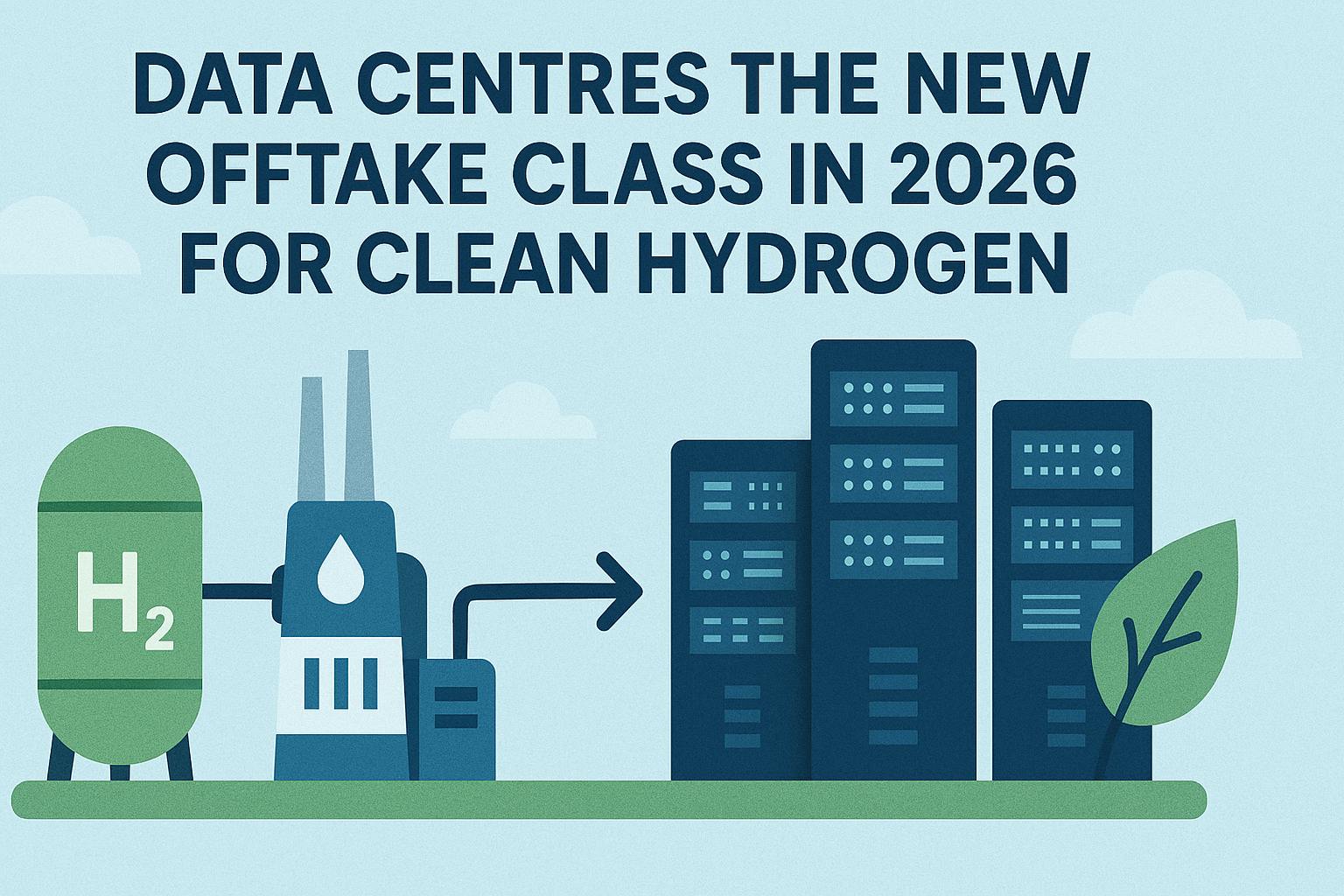
AI is driving explosive growth in data centres, creating unprecedented demand for reliable, zero‑emission backup power. Hydrogen is emerging as the strongest solution, replacing diesel with a clean, high‑power alternative that meets both operational and ESG requirements. Because data centres are expanding rapidly and require guaranteed uptime, they offer the hydrogen sector a rare, high‑certainty demand sink, large, predictable, and long‑term. As regulators tighten emissions rules and tech companies push for net‑zero operations, hydrogen is positioned to become the backbone of data‑centre resilience and a defining catalyst for the hydrogen economy’s next phase of commercial scale.
Hydrogen-powered backup systems for AI data centres represent one of the most reliable, scalable, and ESG‑aligned markets for hydrogen, creating a stable, high‑certainty demand that accelerates the sector’s commercial maturity.
The New Energy Challenge of the AI Era
Artificial intelligence is expanding at a pace that is reshaping global energy systems. Hyperscale and edge data centres are multiplying to support machine learning, cloud automation, and real‑time analytics, and with this growth comes a new strategic vulnerability: the digital infrastructure powering the AI revolution is only as resilient as the energy systems behind it. Ensuring uninterrupted, zero‑emission power has become one of the defining challenges of the decade.
Hydrogen is now emerging as the most credible solution to this challenge. Its role in data centre resilience is becoming increasingly clear, offering the reliability of traditional backup systems without the emissions, noise, or regulatory exposure associated with diesel. In a world where uptime is essential and sustainability commitments are under constant scrutiny, hydrogen provides a pathway that aligns operational necessity with environmental responsibility.
Why AI Data Centres Demand a New Approach
AI‑driven data centres are not ordinary power users. Their electrical loads rival those of small towns, and their tolerance for disruption is effectively zero. Training cycles can create rapid swings in demand, and the density of computing power requires a backup system capable of responding instantly and sustaining output for long durations. Diesel generators have historically filled this role, but they now sit uneasily within the ESG frameworks of the world’s largest technology companies. Net‑zero operations, 24/7 carbon‑free energy, and zero‑emission backup power are incompatible with diesel’s emissions profile and increasingly constrained by regulation.
Hydrogen, by contrast, fits the moment. It delivers high‑power, long‑duration backup without carbon emissions at the point of use. It integrates with existing generator architectures, responds quickly to load changes, and offers a future‑proof alternative that satisfies both operational and environmental demands. As governments tighten air‑quality rules and communities push back against diesel‑based infrastructure, hydrogen’s advantages become even more pronounced.
A Stable, Scalable Market for Hydrogen
What makes this shift particularly significant for the hydrogen sector is the nature of the demand. For years, hydrogen has struggled with fragmented early markets and uncertain offtake. Data centres change that equation entirely. Their growth is relentless, their energy needs are concentrated, and their willingness to invest in resilient, zero‑emission solutions is high. This creates a rare combination: a large, predictable, long‑term demand sink that can anchor investment and accelerate scale across the hydrogen value chain.
Hydrogen producers, electrolyser manufacturers, and infrastructure developers have long sought markets with this level of certainty. AI data centres offer exactly that—high‑volume, high‑certainty demand that can drive commercial maturity and cost reduction across the sector.
ESG and Regulatory Forces Accelerating the Shift
The ESG tailwinds behind this transition are strong. Investors are scrutinising the carbon footprint of digital infrastructure more closely than ever. Regulators are signalling that diesel’s days are numbered. Communities are demanding cleaner, quieter solutions. And technology companies—whose brands depend on climate leadership—are actively seeking alternatives that reinforce their sustainability commitments.
Hydrogen aligns with all of these pressures. It offers a solution that is technically robust, reputationally defensible, and aligned with the long‑term decarbonisation strategies of the world’s most influential companies. As the regulatory environment tightens, hydrogen’s position becomes even more compelling.
Hydrogen’s Strategic Role in the Digital Age
The rise of AI has effectively created a new category of critical infrastructure—one that must be both resilient and zero‑emission. Hydrogen is uniquely positioned to deliver on both fronts. By becoming the primary zero‑emission backup for AI‑driven data centres, it gains not just a market, but a strategic role in the digital and energy security of nations.
This is more than an incremental opportunity. It is a defining moment for hydrogen’s commercial maturity. The convergence of AI growth, ESG pressure, and energy‑system constraints has created a perfect alignment for hydrogen to step into a central, long‑term role.
Conclusion: The Backbone of Future Digital Resilience
As AI accelerates, the demand for clean, reliable backup power will only intensify. Hydrogen is poised to become the backbone of that resilience, transforming data centres into one of the most important catalysts for the hydrogen economy’s next phase of growth. The sector has long needed a stable, scalable, high‑certainty market. Data centre resilience may well be the opportunity that unlocks it.