


Smart Meters - How To Ensure Safety?
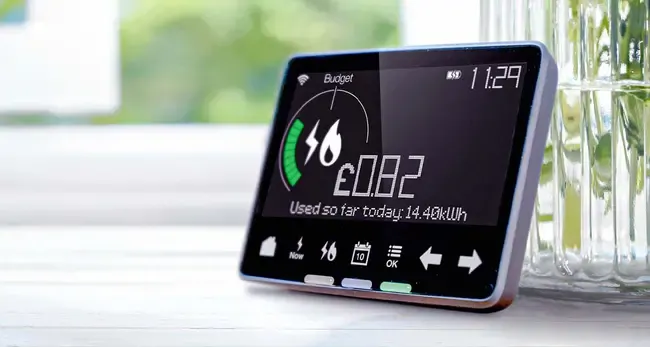
Utility providers want to make their job as easy as possible. Recently, smart meters have appeared in many homes. How are they different from the old ones? Meter manufacturers have identified the most basic differences:
1. The difference between the new meters is that it will not be necessary to take and transfer readings after their installation. The smart meter stores and transmits the data itself to the company, after which the consumer is invoiced for payment. The method of transferring information is determined by the provider - via cellular communication or a speedy Internet connection.
2. Consumers will be able to track readings online.
3. Smart meters record voltage level and frequency, allowing you to monitor power quality.
4. If a consumer delay paying bills, an intelligent metering system provides the service provider with the ability to remotely limit or suspend the supply of gas, water, and electricity.
5. Since smart meters' introduction, people will transmit reliable data on water, gas, and light consumption remotely in time, the number of disputes between service providers and consumers should decrease.
6. Installing smart meters helps to reduce the duration of services. The system transmits information about the cutoff of water, gas, or electricity and restores the supply of services.
What Are The Disadvantages Of A Smart Meter?
Modern equipment has the following disadvantages:
1. Stable internet coverage is required. Otherwise, the smart meter will start to malfunction. For example, the service provider will receive readings at the wrong time.
2. The high cost of smart metering devices.
3. Like any other electrical device, the meter needs a stable and high-quality supply of services. Otherwise, the device will fail.
Are Smart Meters A Security Risk?
The manufacturers assure us that these are secure smart meters. Your smart meter data collect on water, gas, light is strictly protected and securely encrypted. Also, you can control the counter and decide for yourself:
● how often your smart meter sends data to your service provider;
● whether you should share the data with other organizations. For example, with sites comparing prices for utilities;
● whether the supplier can use your meter readings for sales and marketing purposes.
However, not all people are confident in the performance and safety of smart meters. Many people find these meters to be easy to hack. According to Netanel Rubin, one of the founders of the security firm Vaultra, smart meters are insecure devices. He conducted research and found that the tool lacks security, and an experienced hacker can steal user data.
According to the UK Department of Business, Energy and Industrial Development, the roughly 250,000 meters that have already been installed do not work in smart mode. This is because people have become victims of the electric key meter hack. If you are a service provider and want people to trust you, the tips below will help make your instrument more secure.
Access Tests
Experts should carefully check the system for hacks. Essentially, white hackers will search for vulnerabilities and advise on how to fix them. It is necessary to entrust a penetration test to a reputable independent company because a poor-quality test is equivalent to its absence. With the help of such tests, experts can establish the smart meter security level.
Emphasis On Maintaining Security In The Service Contract
When concluding contracts for maintaining a smart system, it is essential to pay special attention to security support. The utility company must be held accountable for data breaches and must be ready at any time and as soon as possible to eliminate failures and vulnerabilities.
Timely Software Update
Outdated device firmware is one of the vulnerable points of smart meters. Firmware may become publicly available, where hackers will scrutinize it for vulnerabilities. Regular firmware updates close known vulnerabilities and significantly improve device security.
Prioritizing Privacy
The data sent within the smart meter should be anonymized as much as possible so that their leakage does not endanger the safety of specific individuals. Access to confidential data should be strictly limited.
Encryption and Sophisticated Authentication
Whenever possible, utility companies should encrypt all smart meter traffic. Services must protect each session of access to equipment with a token or session key. User access to intelligent services will be best protected by several authentication factors: biometrics, one-time passwords, and two-factor authentication.
Availability of "Manual Control"
Each information system must be capable of direct manual control in the event of a device failure. If the smart meter fails due to computer actions, it should be possible to transfer all control to a person.
How Often Are Smart Devices Hacked?
The smart home is fashionable and technologically advanced. But is a smart home that safe? The more intelligent the house, the closer the consequences of burglary to the apocalypse. If everything is smart, from doors and windows to thermostats and meters, lighting, and water heaters, burglary can be life-threatening.
For example, Samantha and Lamont Westmorelands in Milwaukee, Wisconsin, fell victim to hackers. The couple bought several smart devices - a thermostat, a doorbell, and a Google Nest security camera. The devices were poorly protected, and hackers were able to break into the system. The girl and the guy claimed to be in hell. The hackers turned on the music through the camera, then spoke with the victims through gadgets and raised the room temperature to 32 degrees.
There are a lot of such situations. More and more hackers will attack smart gadgets every year. In 2020, hackers attacked smart devices 20,000 times in 15 minutes. Hackers carried out attacks on the TCP service and tried to get to the remote administration systems.
The researchers identified 50 points where specialists have installed programs to collect attack data. According to research, these vulnerabilities, hackers attacked 105 million times from 276,000 unique IP addresses. Most of the attacks came from China - 30%. Brazil took second place - 19%, the third place was taken by Egypt - 12%. Australia - 11% took fourth place. The USA - 8% took fifth place.
Conclusion
Smart homes have a variety of sensors, control systems, networks, and applications. These technologies have been introduced primarily to improve workplace efficiency, reduce costs and reduce the environment's burden. However, these technologies have increased the area for potential hacker attacks to an appropriate extent. Before you start implementing services and smart devices in a private home for the sake of economy and comfort, find professional protection against cyber threats. Otherwise, you will become easy prey for a hacker.