


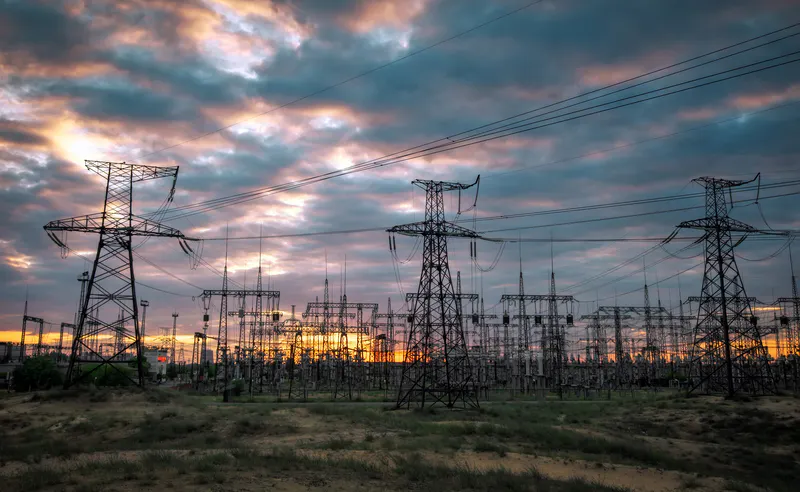
Today’s utility sector is facing a convergence of challenges unlike any it has experienced over its more than century of existence. In this challenging environment, utility engineers and operators are trying to manage and upgrade aging infrastructure while simultaneously building out to meet exploding demand due to domestic and industrial electrification and the massive power demands of data centers.
As a result, utilities face increased pressure to improve and accelerate substation design, as they serve as the junction and brain of the bulk electric grid. Originally designed for simple radial loads, the scale of demand and the incorporation complexity from distributed energy resources now require more efficient design processes that use less human time and decrease the risk of errors.
Fortunately, the call for these improvements has not gone unheeded. The era of intelligent, accessible 3D substation design has arrived.
A new era of efficiency and accuracy
Substation design has made small steps since the advent of computer assisted design decades ago, but challenges persist. Many design modifications require manual updates to multiple files, each consuming personnel time and resources. This process also opens the door to inaccuracies due to human error and challenges with data availability. These problems can quickly multiply since a design could require hundreds of changes in the design process. Intelligent 3D substation design is an opportunity to take a leap forward from the drawbacks of this design legacy.
Substation design through 3D workflows reduces the risk of error, as a single 3D model supplants multiple sheets of repetitive information. Taking this further, intuitive 3D substation design provides prebuilt component libraries which intelligently connect together with a simple mouse click, automatically ensuring they are compatible and seamless. This capability greatly accelerates substation development and makes designing in 3D design easier and much more accessible to engineers of all abilities. Another step is incorporating detailed technical information into the model, making the 3D substation design intelligent. Substation engineers can query for materials, work orders, and other information to surface data quickly.
These improvements result in cost savings by decreasing work time, and the improved accuracy reduces waste in materials usage and the risk of downstream errors.
Intelligent 3D tools also enable concurrent design. Team members can work together on the same project at the same time, instead of having to wait in line to take their turn with a design file that only one person can access at a time. Clearly, this innovative approach delivers substation design projects much faster.
Additionally, 3D design minimizes or eliminates the challenges of managing data and processes across multiple systems since the solution can be delivered on a single platform. Cloud-native digital twin platforms, either cloud-based or server-supported, provide a significant advantage in providing easy collaboration. Not only do they enhance the design processes themselves, but they also improve data quality and availability.
All stakeholders in the design process - including utility engineers, consultants, and contractors - benefit from this single project platform and intelligent 3D substation design.
New tools for a new world
Since the tools used for designing all aspects of infrastructure are rapidly evolving, substation designs tools must also evolve to help utilities meet the challenges ahead. The ability to design substations in 3D from the start shortens the cycle to enable all stakeholders to understand complex designs and quickly identify issues that might cause delays further in the process. Incorporating new data sources, such as drone-based and photogrammetry images, grants new levels of geospatial accuracy in the design process, providing full context of new or brownfield sites.
New frontiers in the intelligent 3D substation design world include components that are compatible across systems, data-rich symbols, and the integration of AI. Adding cloud-enabled AI to this mix of design capabilities brings even more possibilities for accelerating design and improving accuracy. Among these is “smart modeling” that applies intelligence to loading the design, verifying the design, generating 2D construction drawings, and automatically aligning the design with standards and other criteria.
Beyond design: Realizing further benefits
Intelligent 3D substation design is clearly emerging as a game changer for substation designers and engineers. While the core advantages demonstrated above are a leap forward for design, there are other benefits to consider for the rest of the substation lifecycle. Designing intelligently in 3D paves the way for a complete substation digital twin, which brings a much broader scope of benefits, including:
Leveraging new data sources. As Internet of Things (IoT) sensors and monitoring systems proliferate within substations and the grid, integrating these data sources into the 3D model can improve reliability and fault detection.
Insight into performance. Integrating intelligent models with IoT sensors enables engineers to visualize substation performance across electrical, thermal, and mechanical dynamics, ultimately enhancing safety and reliability.
Condition-based asset management. The richer data environment provides the framework for utilities to move towards predictive and prescriptive maintenance and operations, another opportunity to manage costs and improve reliability.
Scaling and flexibility. Cloud-based solutions enable seamless upgrades as technology improves, along with the ability to scale as projects grow and new models expand solution sets.
Land use optimization. By incorporating geospatial data and improved accuracy in the 3D model, developers can minimize land disturbance and environmental impacts.
A new approach to documentation and compliance. Digital design can generate full documentation for compliance, as well as provide data and records for audits and quality assurance.
From blueprint to build
Intelligent 3D design is transforming electric utility substations from blueprint to build with increased efficiency, improved reliability, and a world of new possibilities. As electric utilities continue to evolve and confront new challenges, adopting digital technologies in design processes is essential for building resilient and future-proof infrastructure. Across the substation lifecycle, from physical assets to protection and control to civil and structural engineering, the shift to intelligent 3D design enables utilities, their partners, and stakeholders to build the infrastructure for the 21st century energy landscape.
To meet the fast-evolving needs of utilities and engineers in this space and make intelligent 3D substation design a reality for new and brownfield projects, Bentley has introduced OpenUtilities Substation+. This is the next generation design solution, developed specifically to provide all the benefits we’ve just discussed, and is set to transform the way teams design, build, and operate substations. To learn more and register your interest for the next phase of early access to Substation+, click here, and we’ll be in touch soon.