


SPONSORED CONTENT
The electric grid is undergoing significant change. Distributed energy resources (DERs), inverter‑based technologies and customer‑driven load growth are reshaping how power moves across distribution systems. Yet amid the attention placed on substations, feeders and high‑voltage assets, the secondary distribution network, where customers connect and where many of these changes originate, has historically remained difficult to monitor using traditional tools. The growing need to secure the last mile is pushing utilities to rethink insight at the distribution transformer level and beyond.
Understanding the Role of Distribution Visibility
Distribution visibility is a methodology that uses field‑deployed sensors and integrated analytics to monitor voltage, loading, harmonics, power quality and disturbances in near real‑time. Modern distribution edge monitoring platforms are typically deployed at the transformer level, communicate through secure wireless networks and stream data into centralized analytics environments. The intent is straightforward: help utilities build a clearer understanding of what is happening between the substation and the meter, where new loads, reverse power flows and equipment behavior can be difficult to predict.
This visibility is increasingly important because utilities start from vastly different technological baselines. Some have advanced metering infrastructure (AMI) capable of delivering granular interval data, while others still rely on manual or AMR meter reading. Even with AMI, the operational data needed for planning, protection and asset health often resides deep within IT and customer information systems, making it difficult to access or contextualize. Insight at the secondary network level provides an operational pathway for accessing the measurements that matter most for grid planning and operations without requiring utilities to overhaul existing systems.
Outage Management
One of the strongest use cases for distribution monitoring is outage management. When transformers are equipped with sensors that continue reporting during loss of grid power, utilities can more quickly identify fault locations, isolate trouble spots and reduce time spent locating failed components. For utilities without widespread AMI coverage, this capability could represent a meaningful improvement in restoration speed and situational awareness.
Asset Management
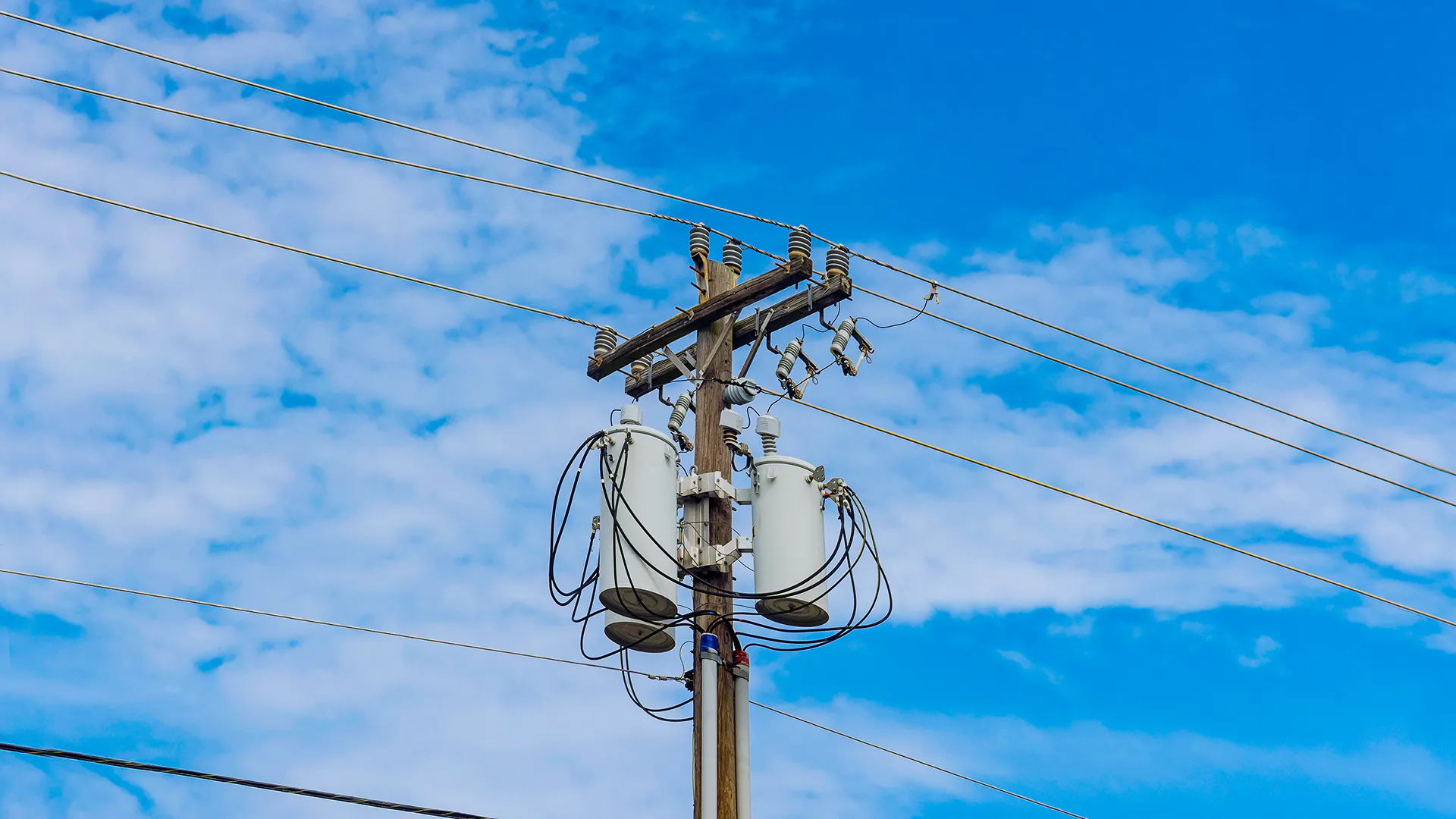
Once treated as low‑cost, long‑life commodities, distribution transformers are now exposed to stresses well beyond their original design assumptions. Electric vehicles, rooftop solar, battery storage and modern electronics introduce harmonic distortion, bidirectional flows and unpredictable loading patterns. Field data suggests these conditions can significantly shorten transformer life, in some cases by decades.
Premature transformer failure creates both operational and financial risk, particularly as replacement cycles tighten and asset strategies become more complex. Secondary network insight allows utilities to identify indicators of abnormal heating, phase imbalances or harmonic activity earlier, supporting planned replacements instead of emergency outages.
Distributed Energy Resources (DERs)
DER integration is a major driver of the need for distribution‑level insight. High solar penetration has already demonstrated the challenges that arise when power flows reverse through aging distribution equipment. Electric vehicle charging introduces large, fast‑changing loads that can overload transformers overnight, often with limited visibility into when and where those chargers are installed. Emerging electric end‑use technologies, such as heat pumps, are also shifting seasonal peak demand patterns, adding uncertainty to localized load behavior and forecasting.
Without near real‑time insight at the distribution transformer, utilities often rely on assumptions that can lead to inefficient investments or missed operational risk. Field‑level monitoring has supported more informed planning decisions by revealing actual hosting capacity and helping utilities better align planned upgrades with observed conditions.
Adapting Distribution Operations Over Time
Beyond immediate operational benefits, distribution visibility supports longer‑term grid evolution. The data can support improved phase balancing, inform feeder reconfiguration, contribute to voltage optimization and help evaluate non‑wires approaches, particularly in areas where managed charging or distributed storage can help mitigate overloads. It also strengthens capital planning by grounding investment decisions in observed network behavior and performance trends.
As new electric loads and technologies continue to scale, the distribution system’s last mile will only grow in complexity. Distribution visibility offers a practical and scalable approach to navigate that complexity, illuminating what was once unseen and enabling more informed and timely decisions across the grid.
Helping Utilities Secure the Last Mile
Wesco helps utilities secure the last mile by combining practical grid expertise, ongoing technology innovation and strong partner relationships. By working closely with utilities at every stage, from early evaluation through deployment and lifecycle support, Wesco helps translate secondary network insight into measurable operational understanding. This enables utilities to adopt new capabilities at their own pace, integrate them into existing environments and make distribution decisions grounded in real system behavior.
To explore how utilities are approaching distribution visibility in practice, Wesco recently hosted a discussion on securing the last mile and the role secondary‑side insight plays in supporting grid stability.