


As of mid-December 2025, the U.S. natural gas market is in the early-winter period, with colder-than-normal weather across much of the central and eastern United States. These conditions have increased heating demand and driven a sizable seasonal storage withdrawal, while domestic production remains near record levels despite this. At the same time, although U.S dry gas production has slightly lowered, U.S. LNG exports continue at a robust pace, reinforcing the global linkage between North American supply and overseas demand centers. As a result, European gas prices have softened amid relatively high storage levels and milder conditions in Western and Southern Europe, reducing near-term import urgency.
Storage Levels USA
As of December 5, 2025, U.S. working natural gas in underground storage stood at 3,746 Bcf, according to the EIA. This represents a net weekly withdrawal of 177 Bcf compared with 3,923 Bcf in the prior week. Inventories are 28 Bcf lower than last year at this time and stand 103 Bcf above the five-year average, highlighting a storage position that remains modestly above seasonal benchmarks.
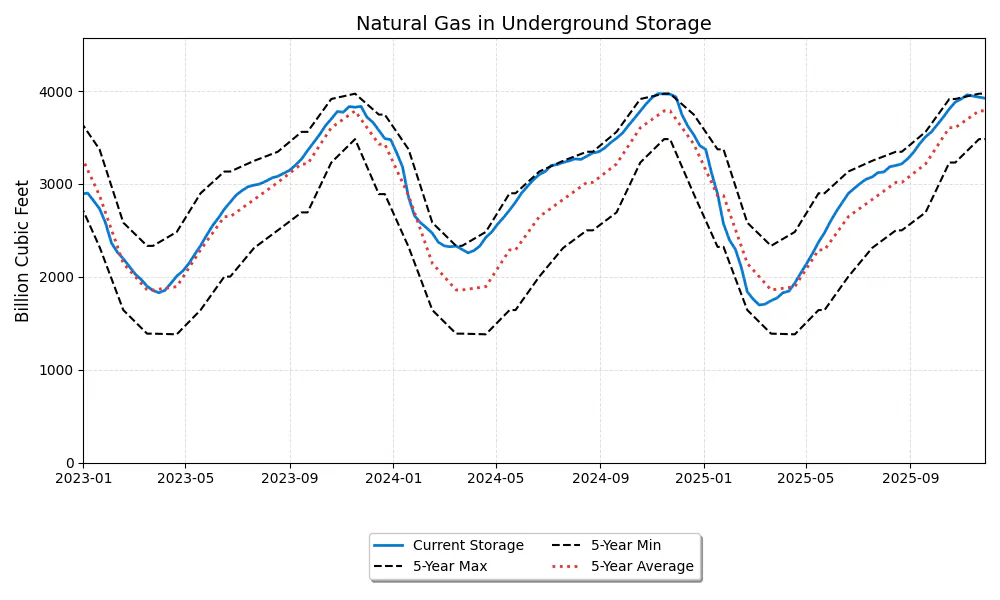
Picture 1 – Natural Gas in Underground Storage
Regionally, the East (–44 Bcf) and Midwest (–49 Bcf) recorded the largest weekly declines. The Pacific (–25 Bcf) and Mountain (–10 Bcf) regions also posted draws. The South Central region fell by 49 Bcf to 1,015 Bcf, driven by an 11 Bcf withdrawal from salt facilities and a 38 Bcf withdrawal from nonsalt stocks. Overall, these moves net to the 177 Bcf withdrawal across the Lower 48, and as shown in the accompanying chart, inventories remain above the five-year seasonal average.
Weather Conditions
Over the past week, the United States experienced a pronounced shift into early-winter conditions, driven by a deep Arctic air mass spilling southward across the central and eastern regions. Much of the Midwest, Great Lakes, and Mid-Atlantic endured daytime temperatures commonly in the 30s to low 40s°F (1–6°C), while nighttime readings frequently hovered near or below freezing, reinforced in places like Illinois by snowfall that intensified the cold. These values were markedly below seasonal norms, with widespread negative anomalies and several areas registering departures of more than 2°C below average. In contrast, the western states, including the West Coast and portions of the Southwest, maintained comparatively mild conditions with temperatures closer to or slightly above normal and only limited precipitation.
Farther south, cooler air pressed into Texas and the lower Mississippi Valley with morning freezes reported in several inland locations, while the Southeast trended chilly but remained somewhat more moderate than the northern tier. The overall synoptic pattern underscored a sharp thermal divide between the entrenched Arctic influence over the central and eastern U.S. and the steadier, near-normal regime in the West. With much of the nation’s population centers affected by below-normal temperatures, space-heating needs increased notably over the period.
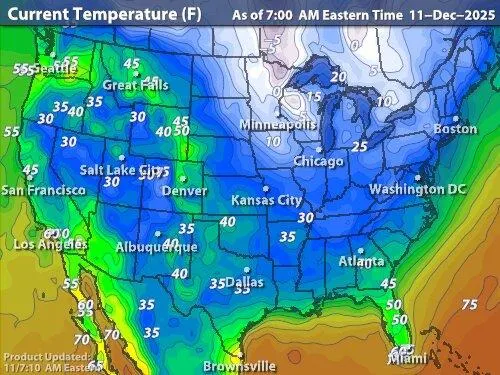
Picture 2 - United States Current Temperatures (F)
Source: https://www.wunderground.com/maps/temperature/us-current
During the period of December 19–25, 2025, the United States is forecast to experience predominantly above-normal temperatures across a broad majority of the country. The central and southern states, including the Plains, Midwest, and Southeast, show the strongest probability of warmer-than-average conditions, with the warm signal extending from Texas through the Mississippi Valley and into the Mid-Atlantic. The East Coast, from the Carolinas to New England, also leans warmer than normal, reflecting a gradual transition away from the mid-December Arctic outbreak toward a more zonal and temperate regime.
In contrast, below-normal temperatures are expected to persist across the northern tier, particularly the Pacific Northwest, northern Rockies, and parts of the Upper Midwest, where residual cold air may linger even as the broader pattern moderates. Alaska is projected to trend near to below seasonal norms, while Hawaii remains warmer than average under stable subtropical conditions. Overall, the outlook favors a national pattern with weakening cold anomalies and expanding warmth, suggesting a modest easing of heating intensity across many population centers, though demand will remain seasonally elevated in cooler northern regions.
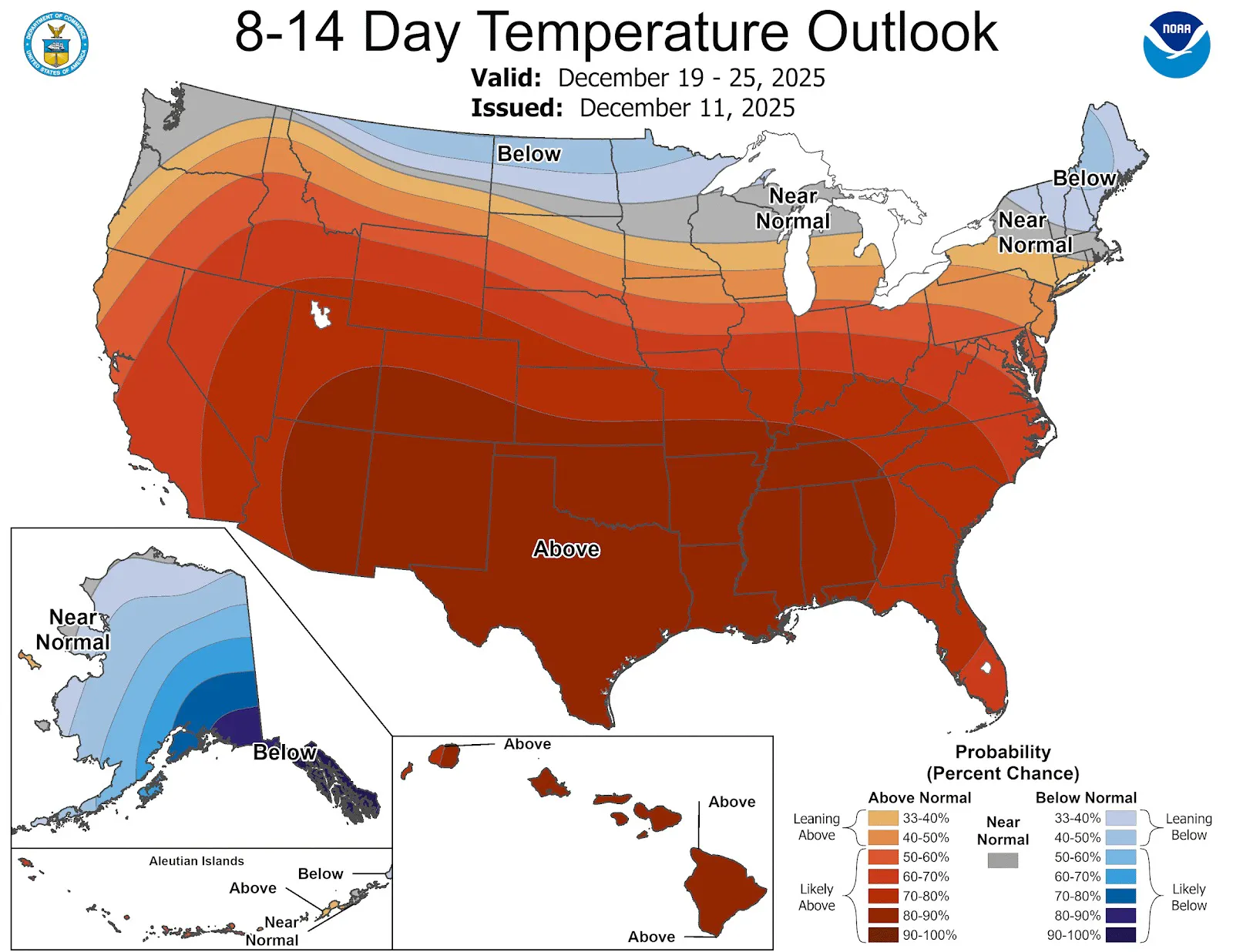
Picture 3 - Temperature outlook (F)
Source: https://www.cpc.ncep.noaa.gov/
During the week of December 4–10, 2025, population-weighted combined cooling and heating degree days (CDD+HDD) across the major U.S. demand centers increased notably, reflecting a decisive early-winter shift. The national weighted index rose steadily through the week, driven primarily by colder conditions expanding across the Midwest, Northeast, and northern Plains. This pattern marks a clear departure from late-November variability and highlights the strengthening influence of heating demand as Arctic air filtered into much of the central and eastern United States.
Among key states, New York and the broader Northeast posted the highest totals, consistent with sustained early-season heating needs. Texas and Louisiana registered moderate values as cooler air overspread the southern Plains, though readings remained well below historical winter peaks and reflected a mix of residual cooling and building heating influence. California and Florida stayed on the lower end of the distribution, supported by comparatively mild coastal and subtropical conditions that limited both heating and cooling requirements. Collectively, the state-level pattern underscores the ongoing transition toward a predominantly heating-driven demand regime as December progresses.
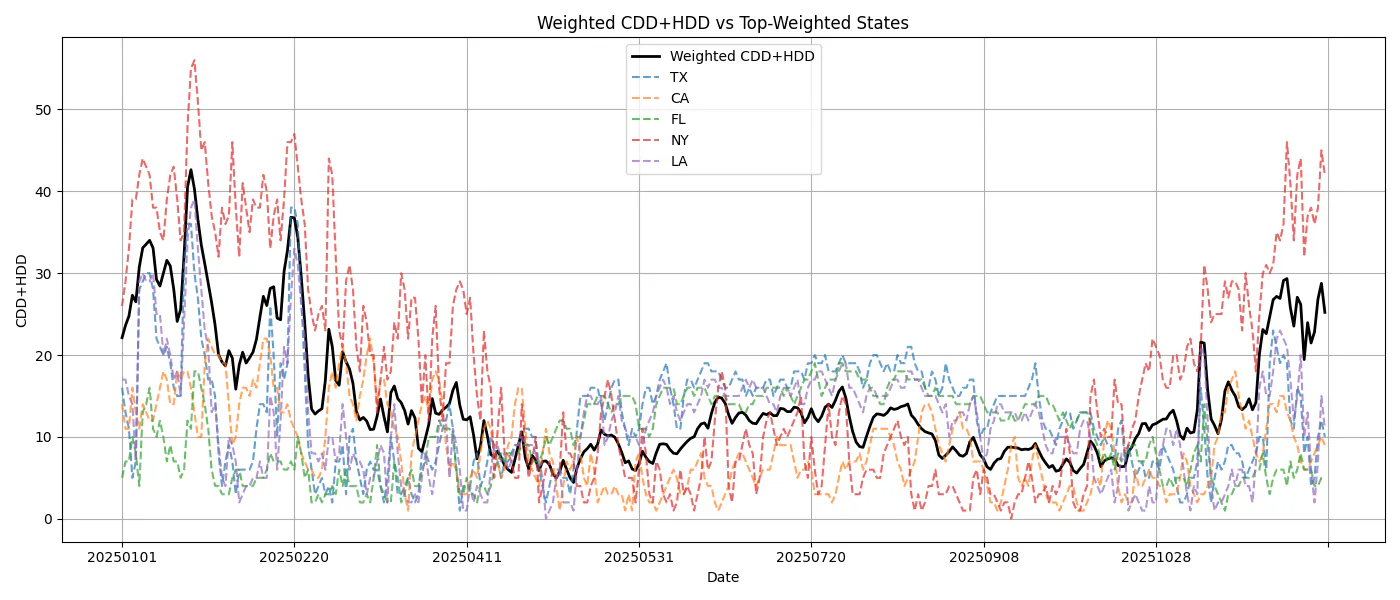
Picture 4 – Weighted CDD+HDD vs Top-Weighted States
Relative to climatological norms, actual weighted CDD+HDD tracked mostly above the normal baseline, rising into the upper portion of the expected range and at times brushing against the higher edge of the ±2σ band. The increase late in the period reflects the influence of persistent cold anomalies across major demand hubs, lifting national totals above what is typical for mid-December. Even so, values remained within the broader normal envelope, signaling a pattern of elevated but not extreme weather-driven demand for this time of year.
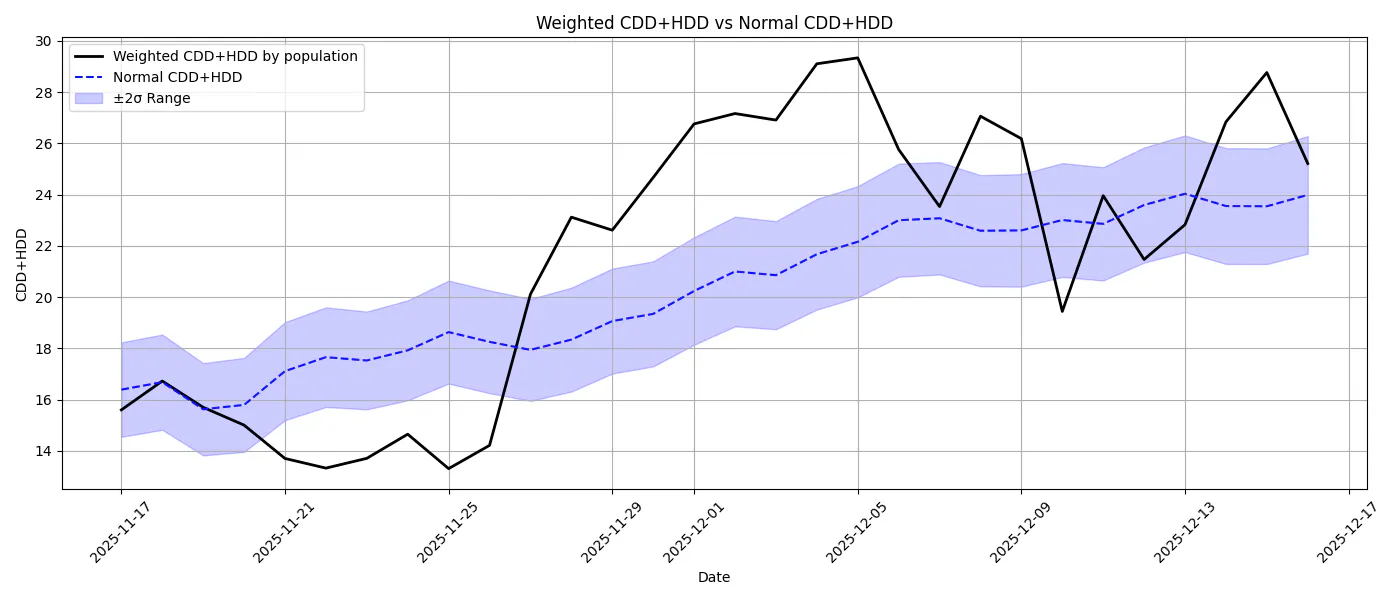
Picture 5 – Weighted CDD+HDD vs Normal CDD+HDD
Weather-sensitive natural gas demand strengthened over the week, supported by the rise in heating requirements across northern and eastern population centers. Cooling demand continues to fade across the South, leaving heating loads as the dominant driver of consumption heading into the second half of December.
Across Europe, average temperatures for November 30–December 6, 2025, showed a clear early-winter pattern, with the coldest conditions concentrated in Northern and Eastern Europe. Scandinavia, the Baltic states, Belarus, and parts of Ukraine recorded some of the lowest regional averages, reflecting the influence of persistent high-latitude air masses and ongoing snow cover in several areas. Central Europe, including Germany, Poland, and the Czech Republic, experienced intermediate temperatures that were cooler than those in the south but far milder than the deep cold established in the north and east.
In contrast, Western and Southern Europe remained notably milder. The Iberian Peninsula, France, Italy, and much of the Balkans saw average temperatures in a comfortable range for early December, supported by Atlantic moisture and intermittent subtropical influence. These areas continued to track above seasonal norms, maintaining a relatively moderate thermal regime compared with the rest of the continent.
This distribution underscores a marked north–south gradient, with colder conditions supporting elevated heating demand across Northern and Eastern Europe, while milder temperatures in Western and Southern regions keep requirements comparatively modest.
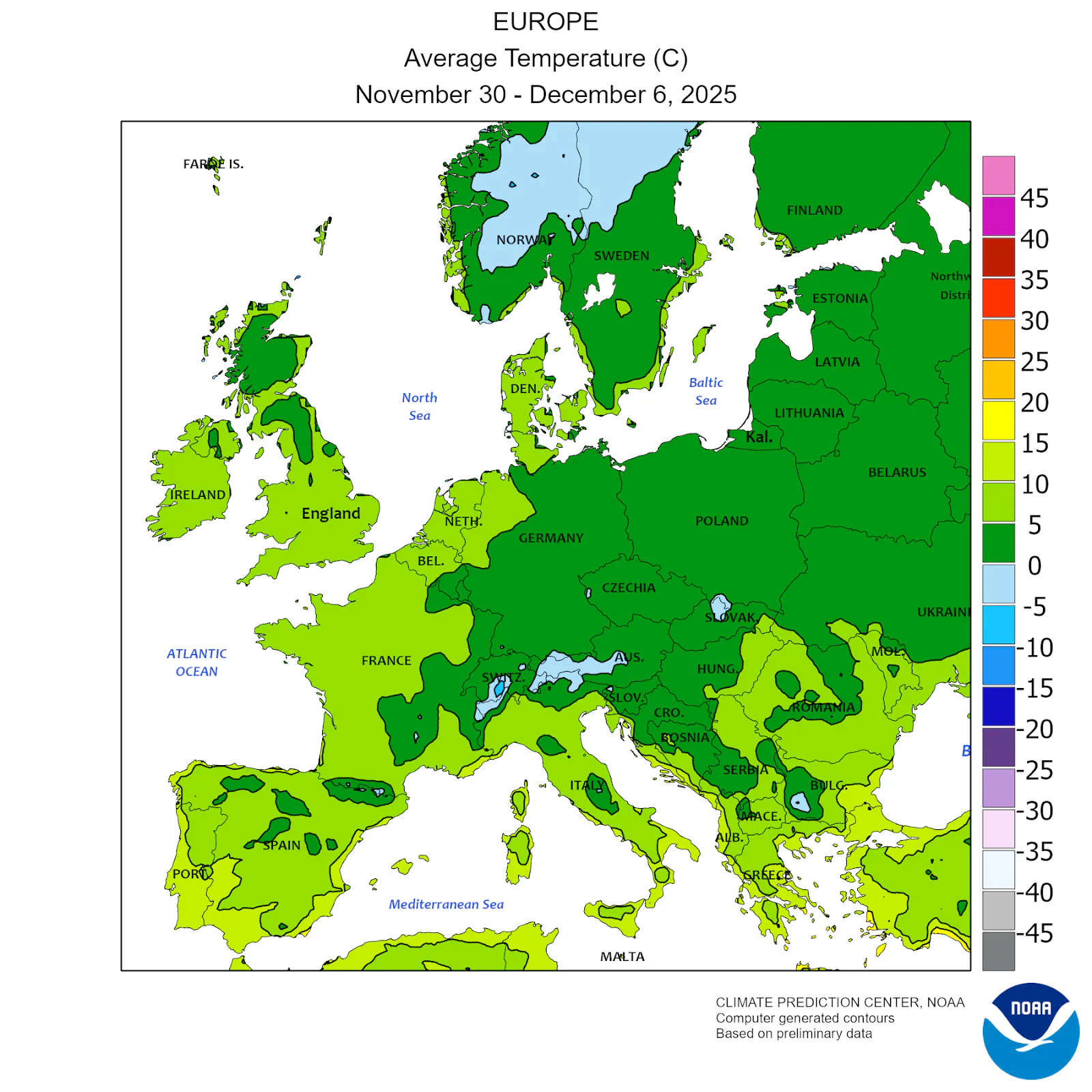
Picture 6 – Europe Average Temperature (°C)
Source:https://www.cpc.ncep.noaa.gov/products/JAWF_Monitoring/Europe/temperature.shtml
U.S. Production and LNG Exports
U.S. dry natural gas production averaged 113.0 Bcf/d for the week ending December 10, based on daily estimates from Bloomberg. This output represents a 0.6 Bcf/d (–0.5%) decline from the prior week’s average of 113.6 Bcf/d, but overall production remains near record seasonal levels as December heating demand strengthens.
According to Baker Hughes, for the week ending Tuesday, December 2, the natural gas rig count decreased by one to 129 rigs, driven by a one-rig reduction in the Eagle Ford. Oil-directed activity increased by six rigs to 413, and additions in unidentified regions lifted the total U.S. rig count to 549 rigs, 40 fewer than a year ago. The distribution indicates stable gas drilling alongside modest strengthening in oil-weighted basins.
Between December 4 and December 10, 40 LNG vessels with a combined carrying capacity of 151 Bcf departed U.S. export terminals. Departures included ten from Sabine Pass, eight from Plaquemines, six from Corpus Christi, five each from Cameron and Freeport, three from Calcasieu Pass, two from Cove Point, and one from Elba Island. The sustained level of liftings highlights firm international demand as global consumers secure winter supply.
European gas storage levels
As of early December 2025, European underground gas storage levels average roughly 71–72% full, based on the latest EU-wide trend data. This places current inventories well below the exceptionally strong benchmarks of 2023 (around 90%) and 2022 (near 88%), and also below 2020 and 2024, when storage exceeded 80% at the same point in the season. Relative to the past five years, 2025 now sits at the lower end of the historical range, reflecting a slower drawdown recovery following heavier early-season heating demand. The refill season progressed steadily through summer but reached a noticeably earlier plateau compared with the prior two years, narrowing the cushion available for winter. Overall, current storage levels indicate a more constrained position entering peak-season demand, though still sufficient to support baseline winter requirements under normal conditions.
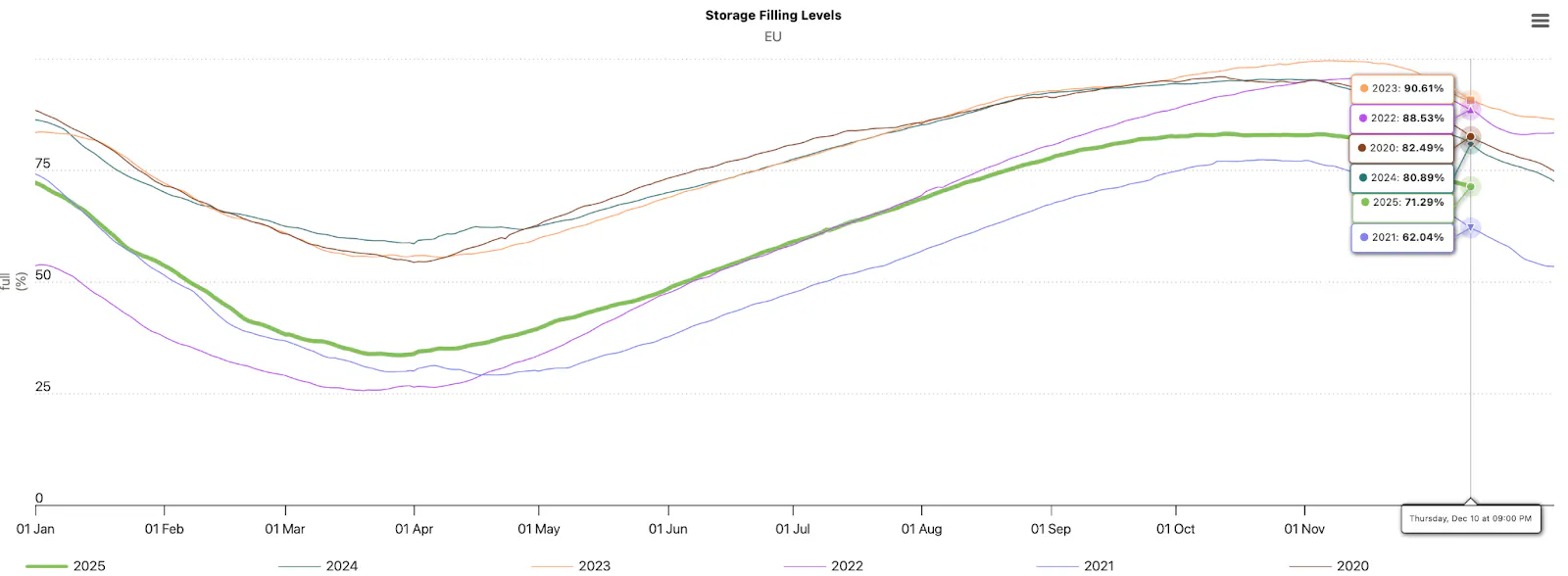
Picture 7 - Storage Filling Levels (EU)
Source: https://agsi.gie.eu/data-visualisation/filling-levels/EU
Across Europe, the regional distribution of storage reveals pronounced contrasts. Western and Southern Europe remain comparatively well supplied, with Spain, France, and Italy maintaining inventories generally in the 70–90% range, providing a solid buffer heading into the core winter period. Central Europe, including Germany, Austria, and Poland, also reports broadly healthy levels around the mid-70s to low-80s percent, supporting resilience in the EU’s central corridor. In Northern Europe, Sweden stands out with storage close to full capacity, while Denmark and several smaller markets in the Baltic and Eastern regions hold more moderate stocks in roughly the 40–60% range. The most notable outlier remains Ukraine, where storage is well below the European average and sits in the lowest band on the map. This east–west disparity underscores that while most EU member states retain a comfortable storage position, vulnerabilities persist in parts of Eastern Europe, heightening reliance on cross-border flows for winter balancing.
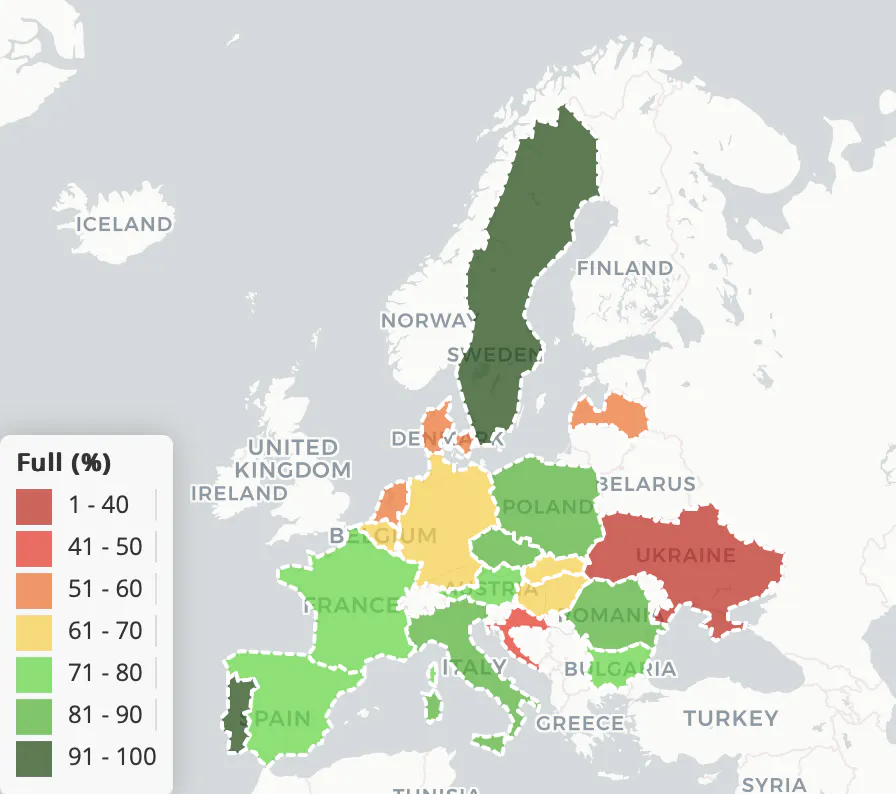
Picture 8 - Filling levels country map (EU)
Source: https://agsi.gie.eu/data-visualisation/filling-levels-country/map
Conclusion
Over the latest report week, U.S. natural gas prices softened as comfortable storage levels and easing weather-driven demand outweighed strong LNG export activity. The Henry Hub spot price declined $0.26, from $4.87/MMBtu last Wednesday to $4.61/MMBtu, while domestic fundamentals remained well supplied with dry gas production averaging around 113.0 Bcf/d and a sizable 177 Bcf withdrawal leaving inventories at 3,746 Bcf, still 103 Bcf above the five-year average. In Europe, Dutch TTF front-month futures traded near €26.8/MWh (≈€7.9/MMBtu, or about $9.1/MMBtu), reflecting high continental storage, moderated weather patterns, and steady Atlantic LNG arrivals, while Asian spot LNG benchmarks held a modest premium near $10.8–11/MMBtu. Overall, the combination of early-winter heating demand, strong U.S. LNG loadings (40 cargoes; 151 Bcf), and abundant inventories produced a balanced market backdrop across the Atlantic basin.
For the coming week, Henry Hub is expected to trade in the $3.90–$4.60/MMBtu range, with temperatures across the eastern half of the United States and LNG feedgas demand acting as the primary sources of volatility. Dutch TTF is likely to remain within the €25–30/MWh band (≈$8.5–10.2/MMBtu), shaped by ample EU storage, regional cold spells in Northern and Eastern Europe, and ongoing LNG inflows. Short-term pricing in both regions will continue to hinge on the interaction between weather-driven consumption, storage adequacy, and seaborne supply. Net-net, bearish factors—high inventories and periods of mild weather—remain counterbalanced by supportive LNG flows and seasonal heating demand, pointing to a broadly stable near-term price environment.