SightlineInstitute: "Drill, Baby, Drill!—for Thermal Energy."
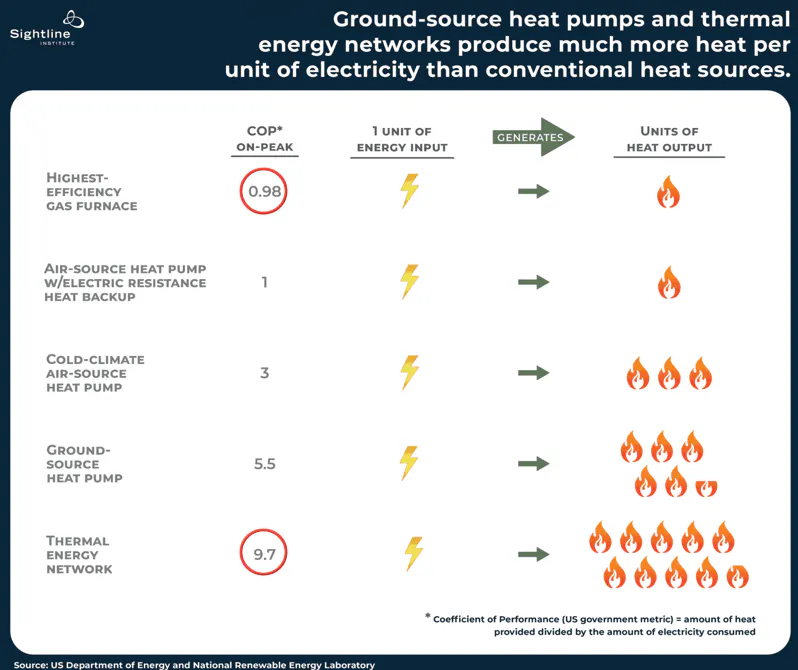
Claiming that electricity shortfalls are coming, utilities here in the Pacific Northwest are increasingly clamoring to roll back clean energy laws + build expensive, new gas-fired power plants, even though cheaper solutions are possible. To the rescue come "ground-source heat pumps... the most efficient heating and cooling technology available—even more so when they’re linked together in a neighborhood-scale thermal energy network (TEN)." In fact, if Northwest utilities took $2.2 billion that they recommend spending on new gas plants by 2045 to serve new heating loads and invest it in TENs, they could slash the region’s projected 2045 energy shortfall by as much as 10 gigawatts [GW].
"In 2025, consulting firm Energy + Environmental Economics (E3) released a high-profile study commissioned by Pacific Northwest utilities." The study forecast that the greater Northwest region faces a 9 GW resource adequacy shortfall by 2030 and a 26–46 GW shortfall by 2045.
Sightline has written about the study’s flaws, including its reliance on a single high-growth demand scenario; failure to evaluate data center flexibility and other lower-cost alternatives to building new gas plants; and overstatement of the region’s projected resource gap. Another flaw to the list: The study assumes that all buildings converting from fossil fuel to electric heating will install air-source heat pumps with inefficient electric resistance backup heaters that kick on during the coldest winter days. These 'toasters' account for as much as 30% of the power gap (8–12 GW) that the study’s authors estimate the region faces by 2045, depending on the pace of building electrification.
Frigid or sweltering weather doesn’t make ground-source heat pumps work harder. Instead, these systems harness the stable temperature of the earth, which, at just 10 ft below ground, remains at around 50°F year-round.
I often hear people boast that their methane or propane furnaces are 98% efficient. But a TEN is just that: 10 ft below ground + 10 times more efficient. And they don't convert a fossil fuel into greenhouse gases + other pollutants.