


Natural gas markets across the U.S. and Europe are entering December in a firm, but tightly balanced state as early-winter conditions deepen. In the U.S., the first storage withdrawal of the season—a 12 Bcf net draw to 3,923 Bcf—reflects rising heating demand driven by colder-than-normal temperatures across the Midwest and Northeast. Even so, inventories remain 191 Bcf above the five-year average, tempering the bullish impact of expanding degree-day demand. Production stability near 112–113 Bcf/d and strong LNG exports, with 34 vessels departing last week, further anchor the U.S. supply landscape. Europe faces a similar dynamic: colder northern and eastern regions are lifting heating demand, yet EU storage sits near 74% and remains a key stabilizer. High inventories in Western and Southern Europe offset weaker levels in parts of the East, keeping TTF prices firm but contained. Together, these conditions support a range-bound market shaped by winter demand and strong global supply buffers.
Storage Levels USA: First 12 Bcf Net Withdrawal of the Season
According to the EIA, as of November 28, 2025, U.S. working natural gas in underground storage stood at 3,923 Bcf. This represents a net weekly withdrawal of 12 Bcf compared with 3,935 Bcf in the prior week. Inventories are 18 Bcf lower than last year at this time and stand 191 Bcf above the five-year average, highlighting a storage position comfortably above seasonal benchmarks heading into early winter.
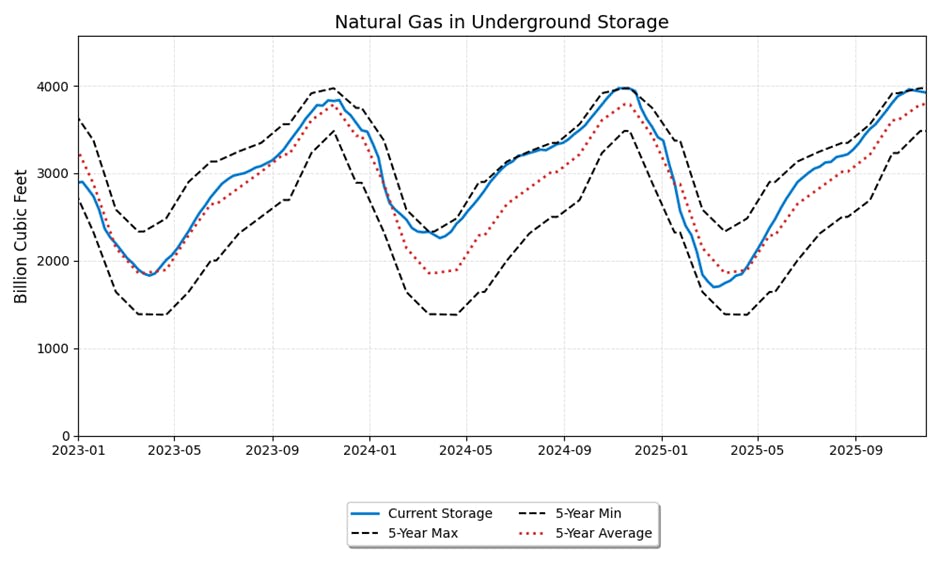
Picture 1 – Natural Gas in Underground Storage
Regionally, the Midwest (–15 Bcf), East (–4 Bcf), Mountain (–4 Bcf), and Pacific (–4 Bcf) all posted withdrawals, while the South Central region increased by 16 Bcf, driven by an 11 Bcf build in salt facilities and a 5 Bcf build in non-salt stocks. Overall, these moves net to the 12 Bcf withdrawal across the Lower 48, and as shown in the accompanying chart, inventories remain above the upper portion of the five-year range.
U.S. Weather Conditions: Early-December Cold Deepens in Midwest and Northeast
Over the past week, the United States experienced a notable shift toward colder weather as multiple Arctic air intrusions spread across the central and eastern regions. Much of the Midwest, Northeast, and interior Mid-Atlantic saw daytime temperatures holding in the teens to 30s°F, with overnight lows dropping below freezing in several locations—consistent with the pattern noted by experts regarding polar vortex activity and blocking highs driving temperatures 2–4°F below normal. These conditions marked a notable early-December cold shot, reinforcing broadly negative temperature anomalies across the northern and central states.
In contrast, the southern tier and parts of the Southeast retained comparatively milder conditions, with readings from the mid-40s to upper-60s°F, while the West Coast and Desert Southwest observed steady, seasonally moderate temperatures under persistent high pressure and a largely dry regime. The northern Rockies and northern Plains remained firmly entrenched in cold air, supporting widespread sub-freezing temperatures and reinforcing the nation’s sharp thermal gradient. Overall, this synoptic pattern highlighted the growing dominance of winterlike air masses across major population centers, supporting elevated space-heating demand for the period.

Picture 2 - United States Current Temperatures (F)
Source: https://www.wunderground.com/maps/temperature/us-current
During the period of December 11–17, 2025, the United States is forecasted to exhibit a pronounced west–east temperature divide. Much of the western and south-central states, including the Great Basin, Southwest, and central Rockies, show the highest probability of above-normal temperatures, with warmer-than-average conditions also extending into portions of the southern Plains. The central corridor from the High Plains into the mid-Mississippi Valley trends closer to seasonal norms, marking a transition zone between the warm West and the encroaching cold air to the east.
In contrast, below-normal temperatures are expected across the Midwest, Great Lakes, Northeast, and much of the interior Southeast, where the highest likelihood of colder conditions aligns with continued Arctic influence and expanding freeze risk. Florida and parts of the Gulf Coast trend near normal, while Alaska is forecasted to remain below seasonal averages, and Hawaii trends warmer than normal. Overall, the outlook highlights a stable, well-defined national pattern, with the main anomaly being sustained cold in the eastern half of the country. This setup favors elevated space-heating demand across the eastern and central regions as mid-December approaches.
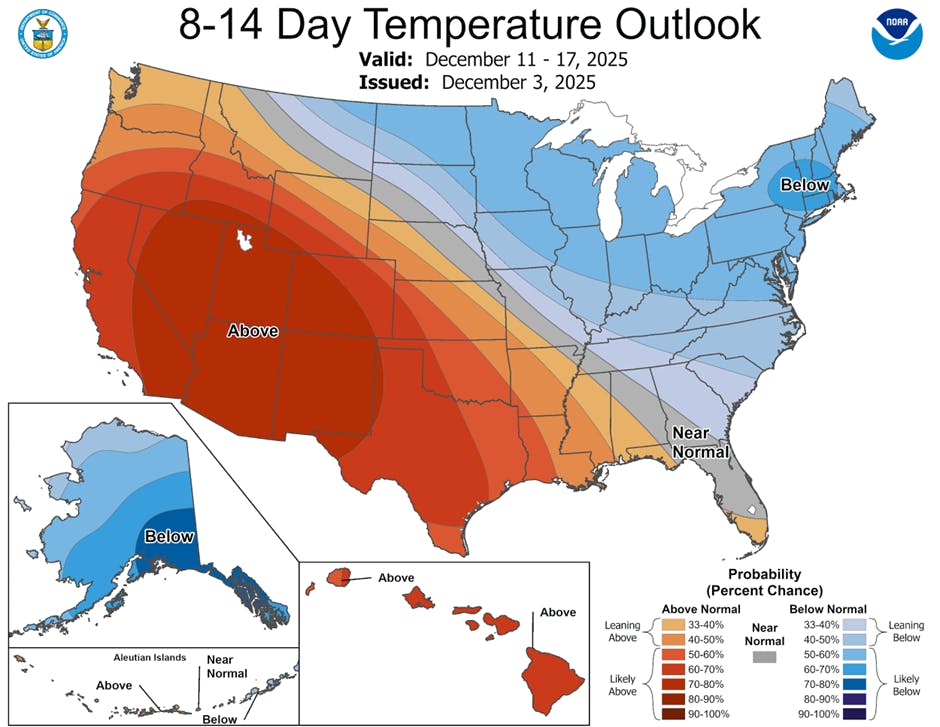
Picture 3 - Temperature outlook (F)
Source: https://www.cpc.ncep.noaa.gov/
During the latest week, population-weighted combined degree days (CDD+HDD) across major U.S. demand centers increased noticeably, reflecting a decisive shift toward early-winter heating influence. The national weighted index continued to rise through the period, rising from mid-teens to the mid-20s by week’s end, signaling a clear move away from the subdued levels observed earlier in the month. This firming in total degree-day demand underscores that the seasonal transition is now underway, as expanding cold coverage across the central and eastern states drives incremental heating needs.
Among key states, New York recorded some of the highest totals, with sustained readings above 40 degree days late in the week as strong cold anomalies settled over the Northeast. Texas and Louisiana registered more moderate values in the teens and low twenties, reflecting early but not yet peak heating requirements. Florida remained at the bottom of the range with single-digit to low-teens readings, consistent with limited cooling demand and only minimal heating load. California also stayed on the lower end, with teens and low-20s degree-day totals aligned with its seasonally mild conditions.
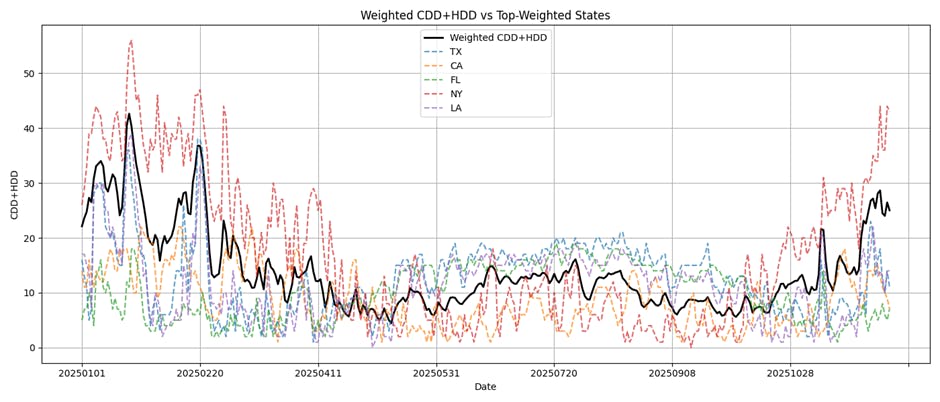
Picture 4 – Weighted CDD+HDD vs Top-Weighted States
Compared with climatological normals, weighted U.S. CDD+HDD values tracked mostly above the expected seasonal range, particularly toward the end of the period when actual values climbed toward the upper portion of the normal envelope. While readings generally remained within the ±2σ band, the steady rise in degree days over the past several days highlights a strengthening cold signal across the core demand regions. The relationship between actual and normal values indicates a transition into a more winter-leaning regime, with fewer interruptions from milder interludes.
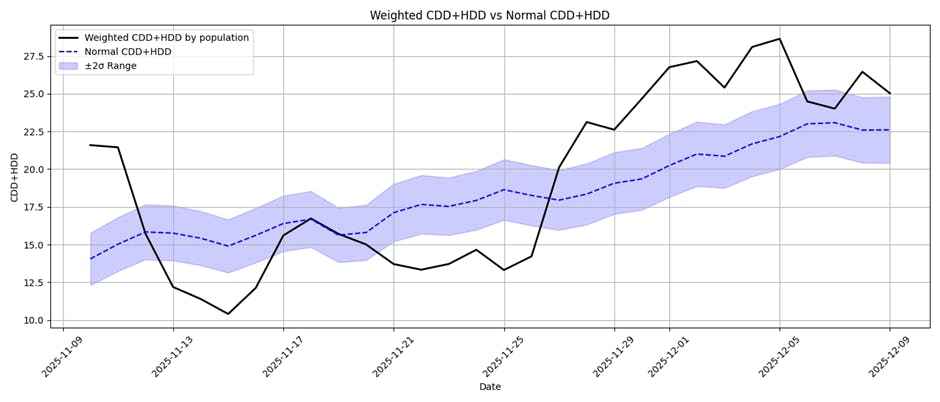
Picture 5 – Weighted CDD+HDD vs Normal CDD+HDD
For the natural gas market, the firming degree-day profile points to strengthening weather-driven demand as heating loads expand across major population centers. This setup supports higher residential and commercial consumption heading into mid-December, with weaker cooling influence from southern states offering little offset.
European Weather Conditions: Cold North–East Drives Higher Heating Demand
Across Europe, average temperatures during November 23–29, 2025, showed a clear division between the cooler northern and eastern regions and the comparatively milder western and southern ones. Scandinavia, the Baltic states, Belarus, and parts of Ukraine registered some of the lowest averages on the continent, consistent with ongoing Arctic intrusions and widespread early-winter chill across these areas. Central Europe, including Germany, Poland, and the Czech Republic, experienced intermediate but still seasonally cool conditions aligned with the broader negative anomalies reported for the region.
In contrast, Western and Southern Europe remained notably warmer. The Iberian Peninsula, southern France, Italy, and the Balkans observed mild to warm daytime averages, generally typical for late November and in some areas modestly above normal. These regions also retained relatively stable temperature profiles despite unsettled weather, supporting a more tempered thermal environment compared with the sharp cooling to the north and east.
This distribution underscores a strong north–south gradient across the continent: while northern and eastern Europe advance deeper into early-winter conditions, much of Western and Southern Europe maintains milder regimes, resulting in elevated heating demand primarily across the colder northern and eastern markets.
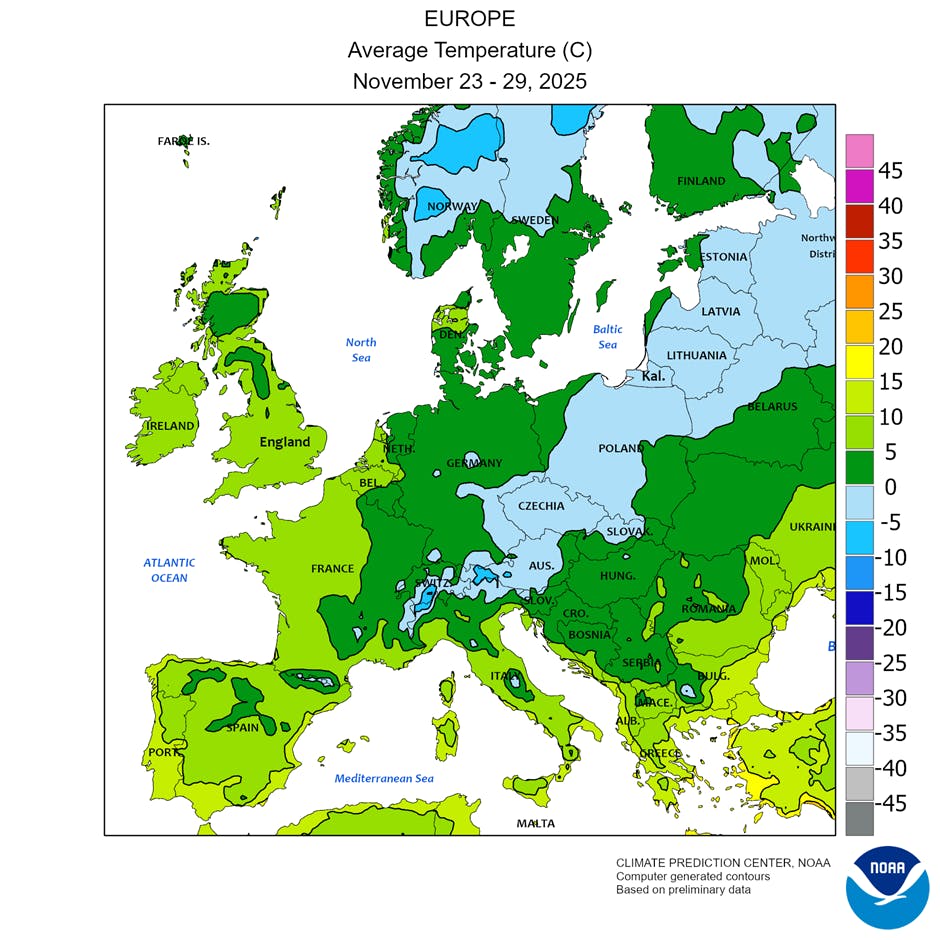
Picture 6 – Europe Average Temperature (°C)
Source: https://www.cpc.ncep.noaa.gov/products/JAWF_Monitoring/Europe/temperature.shtml
U.S. Production and LNG Exports: Output Softens, LNG Flows Stay Strong
U.S. natural gas production averaged about 112.7 Bcf/d during the latest reporting week, based on the provided daily output series. This represents a slight decline from late-November levels near 114 Bcf/d, leaving production modestly below the recent highs reached earlier in the autumn. Despite the week-over-week easing, output remains within the elevated range maintained through much of the past several months, indicating continued overall supply stability as the winter heating season progresses.
According to Baker Hughes, for the week ending Tuesday, November 11, the natural gas rig count decreased by three to 125 rigs. Regional movements included two declines in the Arkoma Woodford and one in the Permian, while oil-directed activity increased by three rigs to 417. The total U.S. rig count stands at 549, including seven miscellaneous rigs, 35 fewer than at this time last year, reflecting a modest year-over-year contraction despite recent additions on the oil side.
Between November 13 and November 19, 34 LNG vessels with a combined capacity of 129 Bcf departed U.S. export terminals. Departures included eight from Sabine Pass; six each from Plaquemines and Corpus Christi; five from Freeport; four from Cameron; three from Calcasieu Pass; and two from Cove Point. The sustained pace of shipments highlights firm international demand for U.S. LNG as global consumers continue to secure supplies for the winter period.
European Gas Storage Levels: Solid 74% EU Buffer, but Sharp Regional Imbalances Persist
As of early December 2025, European gas storage levels stand near 74% full, placing them below the exceptionally strong refill years of 2020, 2022, 2023, and 2024, but clearly above the weaker levels observed in 2021. The 2025 trajectory occupies a mid-range position relative to the recent historical curves shown, reflecting a refill season that was solid but not among the strongest of the past several years. Refill progress through summer and autumn was steady, with no early plateauing, and storage peaks were reached in line with recent seasonal patterns before the onset of withdrawals. Overall, the current level of inventories indicates that Europe enters the winter with a comfortable buffer capable of absorbing early cold events and short-term demand fluctuations.
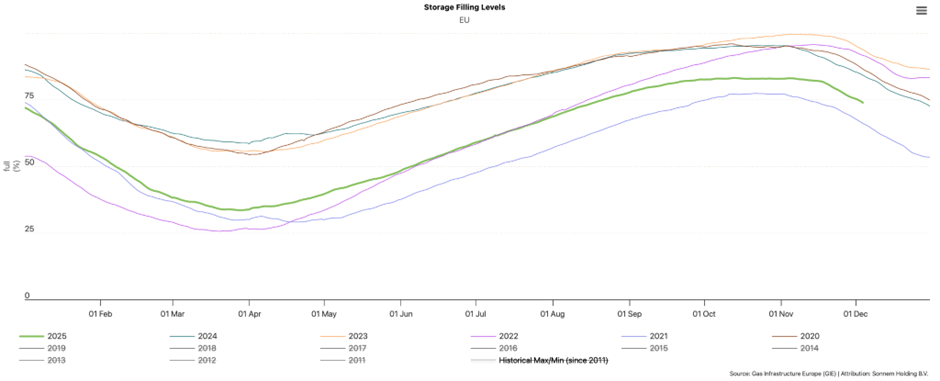
Picture 7 - Storage Filling Levels (EU)
Source: https://agsi.gie.eu/data-visualisation/filling-levels/EU
At the country level, the regional pattern shows a pronounced west–east divide. Western and Southern European countries—including France, Spain, Italy, and Belgium—maintain strong storage positions, generally in the 80–90%+ range, while Central Europe, such as Germany, Austria, and Poland, also holds healthy inventories that support system resilience. In contrast, Northern and Eastern Europe report noticeably lower levels: Sweden stands above 90%, but Denmark, Belarus, and others fall closer to the 40–60% band, and Ukraine remains the principal outlier with inventories below 40%. This uneven distribution highlights differences in winter readiness across the continent, with several eastern countries more exposed to supply volatility and therefore more dependent on stable cross-border flows.
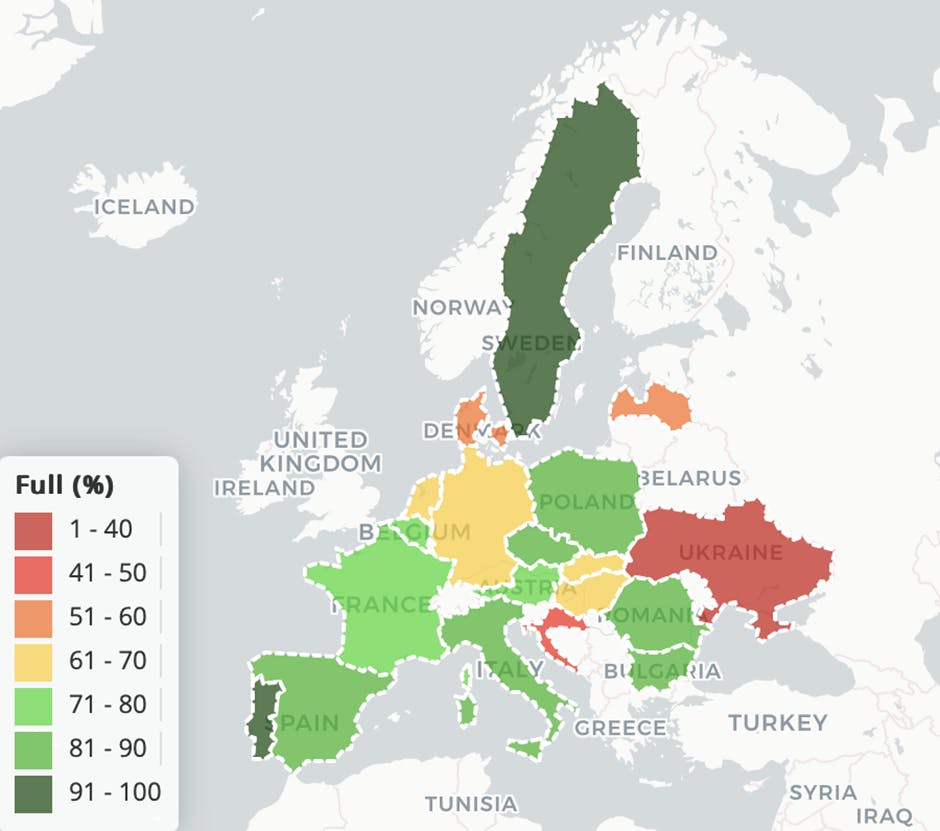
Picture 8 - Filling levels country map (EU)
Source: https://agsi.gie.eu/data-visualisation/filling-levels-country/map
Conclusion: Firm but Range-Bound Market into Mid-December
Over the latest report week, U.S. and European natural gas prices moved within a firmer range amid colder weather patterns and steady LNG export activity. The Henry Hub spot price increased from $3.60 to $3.93/MMBtu, supported by the first meaningful storage withdrawal of the heating season (–12 Bcf, with inventories at 3,923 Bcf, remaining 191 Bcf above the five-year average) and strong LNG departures (34 cargoes; 129 Bcf). Front-month NYMEX Henry Hub futures traded near $5.05/MMBtu, reflecting market expectations for sustained early-winter cold across major U.S. population centers.
In Europe, Dutch TTF front-month prices traded around €27/MWh (≈$8.6/MMBtu equivalent), easing from earlier levels as high storage, steady LNG inflows, and milder Western European temperatures tempered the impact of colder conditions in the north and east. Asian LNG benchmarks held near $11–11.5/MMBtu, indicating balanced but seasonally stronger winter demand across the global LNG market.
For the coming week, Henry Hub is expected to trade in the $4.80–$5.40/MMBtu range, guided by persistent cold in the Midwest and Northeast, expanding HDDs, and firm LNG loadings, while ample storage and high domestic production help cap upside pressure. TTF is likely to hold in the €25–30/MWh range (≈$8.1–$9.7/MMBtu), shaped by strong European inventory levels, regional temperature gradients, and ongoing Atlantic LNG arrivals. Overall, near-term pricing is set to reflect a balance between bearish forces—comfortable storage and broadly sufficient supply—and bullish support from winter heating demand and robust LNG trade, resulting in a firm but orderly trading environment.