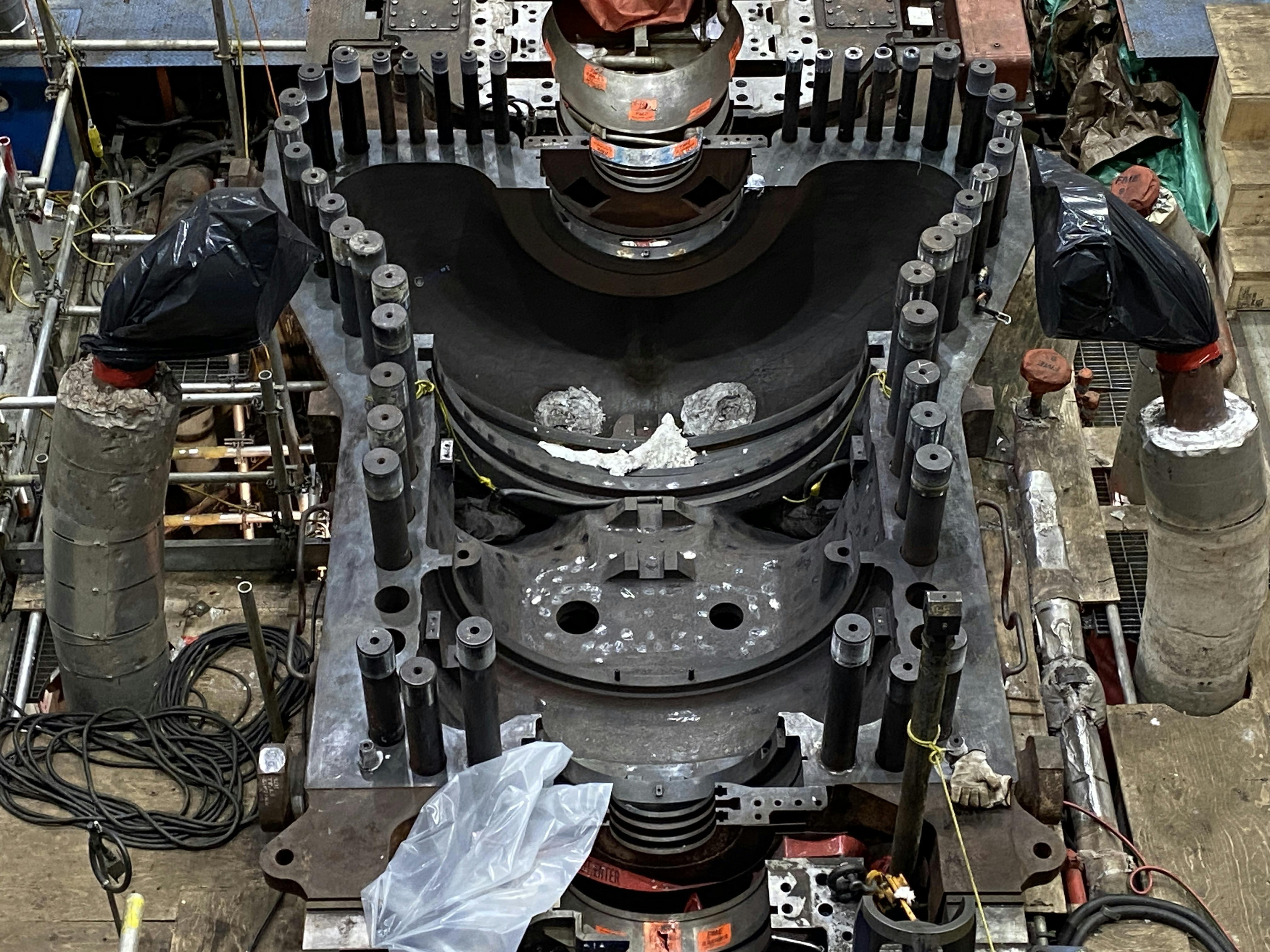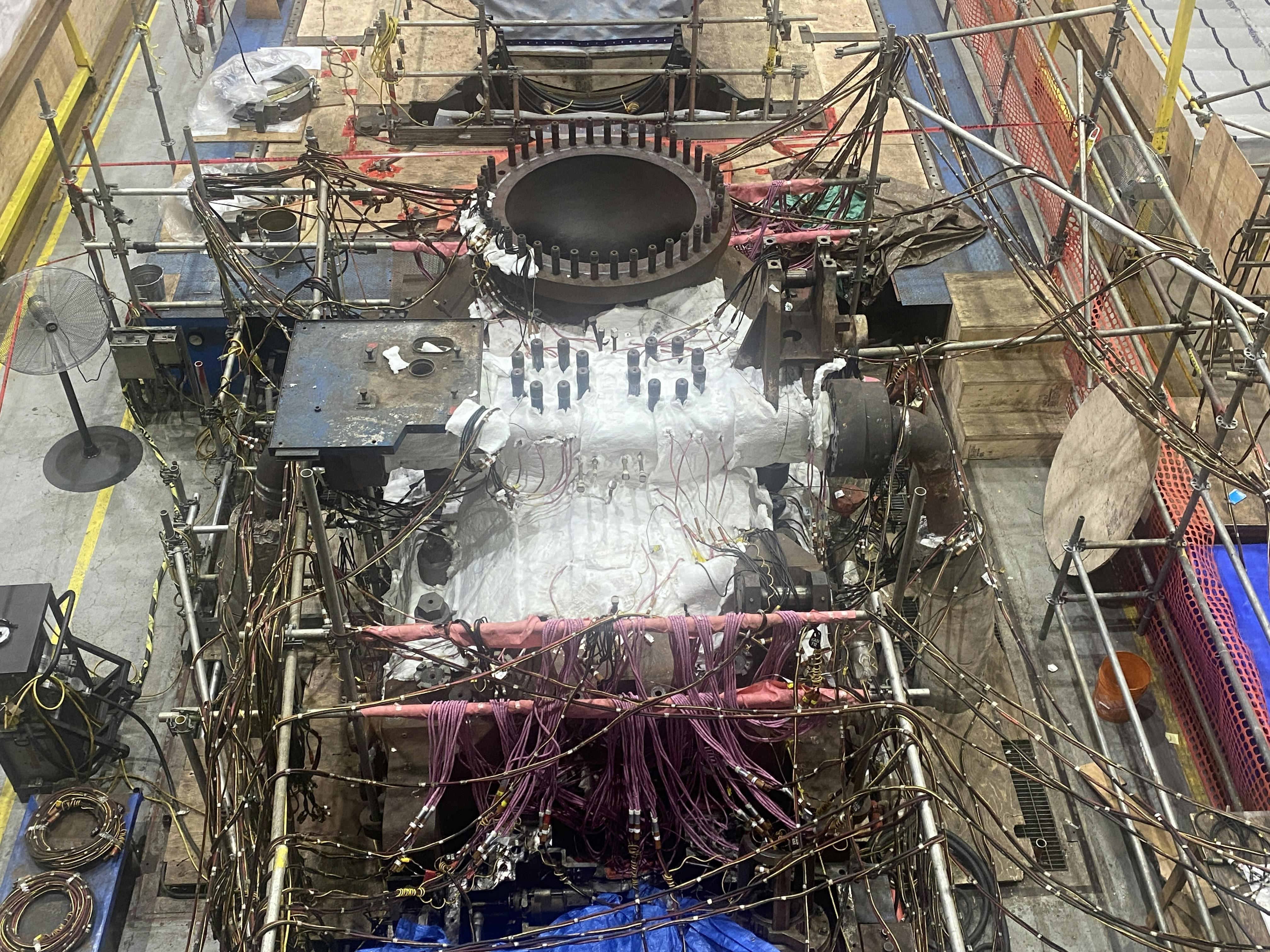
In the power generation industry, turbine reliability is non-negotiable. When a critical component like the HPIP outer shell of a steam turbine shows signs of cracking or deformation, utilities must act decisively to prevent operational disruptions and ensure long-term performance. Mechanical Dynamics & Analysis (MD&A) has completed HPIP Outer Shell Valve Chest Weld Restoration onsite with (2) 66” long cracks on a Hitachi® 150MW steam turbine. This repair was performed in conjunction with Mitsubishi Power® performing the machining, as well as the unit open and close.
The HPIP section features six high-pressure impulse stages and six intermediate-pressure reheat stages in an opposed flow configuration. Over time, thermal cycling, mechanical stresses, and environmental conditions had contributed to severe cracking in the integral valve chest of the lower half shell, along with additional minor and moderate indications throughout the upper and lower shells.
Comprehensive Scope of Work
MD&A’s experts began by preparing a detailed “as-found” inspection of the HPIP outer shells. This initial assessment revealed not only the originally defined severe cracking in the valve chest but also several additional minor and moderate internal and external shell indications. The scope quickly expanded to include:
Excavation and weld restoration of the original valve chest severe cracks.
Grinding, blending, and welding of newly discovered moderate indications across both shell halves.
Employing proven and proprietary distortion control measures during the welding.
Post weld heat treatment (PWHT) to relieve residual stresses and restore metallurgical integrity.
Final nondestructive surface and subsurface examinations (NDE) and hardness testing to validate the repairs.
Dimensional inspections to assess shell geometry and fit-up conditions.
Reinstallation and welding of small bore piping, removed to gain access for the major weld repairs.
This multi-phase repair required precise coordination, advanced welding techniques, and rigorous quality control to meet OEM specifications and ensure safe and reliable operation.
The lower half shell presented the most significant challenges. In addition to the original valve chest severe cracking, MD&A identified eight minor internal indications and four moderate external indications. While the minor indications were accepted and documented for future evaluation, the moderate ones were excavated and prepared for weld restoration.
The valve chest indications were excavated and prepped for welding. The welding was performed utilizing a GTAW welding process for the root passes and a SMAW welding process for the subsequent layers. In-kind weld filler materials were selected for their compatibility and mechanical properties. Each weld layer was cleaned, inspected using a hot magnetic particle testing process, and control measures were employed to minimize distortion. The team applied approximately 350# of weld between the two sides of the valve chest.
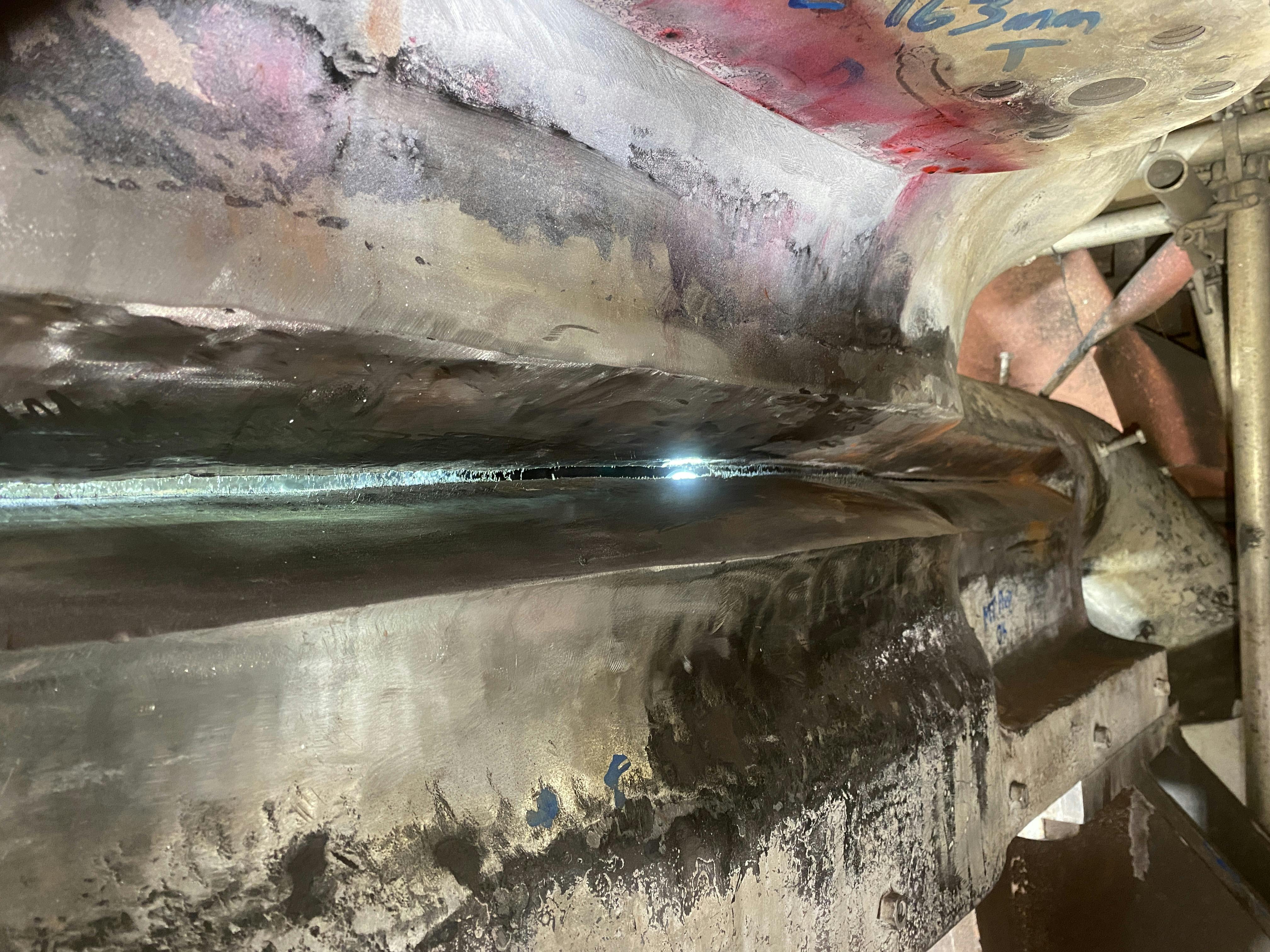
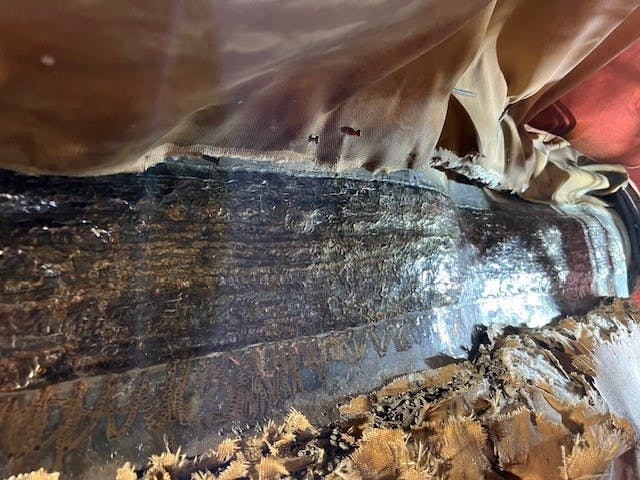
Once welding was complete, the shells were wrapped and insulated for PWHT. The heat treatment cycle included a ramp-up to 1225°F, soak at temperature, and a controlled cool-down. This step was essential to relieve residual stresses and restore the mechanical integrity of the repaired areas.
The upper half shell also revealed additional indications during inspection—one internal and three external. These were addressed through localized grinding and blending to clear the indications, and in one case, weld restoration using GTAW with local flame preheat. Per ASME code, no PWHT was required for this minor repair, but all locations were subjected to final NDE to confirm the absence of defects.
Following the repairs and heat treatment, MD&A conducted comprehensive dimensional inspections. These revealed improvements in shell flatness and roundness, particularly in the lower half shell. However, the lower half valve chest flange face, bonnet bores, and seat bores remained out of specification due to the legacy distortions from previous weld repairs.
MD&A provided detailed recommendations for machining and alignment to correct these conditions, including boring bar sweeps and machining of valve seat bores, bonnet bores, gasket pockets, and flange faces. These steps were critical to ensure proper fit-up and alignment during reassembly, and the final machining was performed by Mitsubishi.
In conclusion, this project underscores why MD&A is a trusted partner for utilities facing complex turbine repair challenges. With decades of experience in turbine-generator systems, MD&A brings unmatched technical expertise, agility in the field, and a commitment to quality that ensures successful outcomes, even when unexpected issues arise.
Their ability to adapt to evolving site conditions, execute precision repairs, and deliver comprehensive documentation gives plant operators confidence in the long-term reliability of their assets. Whether it’s a planned outage or an emergent repair, MD&A’s team is equipped to respond with speed and precision.
MD&A is truly a one-stop shop! Call MD&A about your next outage today at (518) 399-3616.
Also be sure to sign up for our MD&A Insight e-newsletter delivered quarterly. Fill in sign up form and SUBSCRIBE!