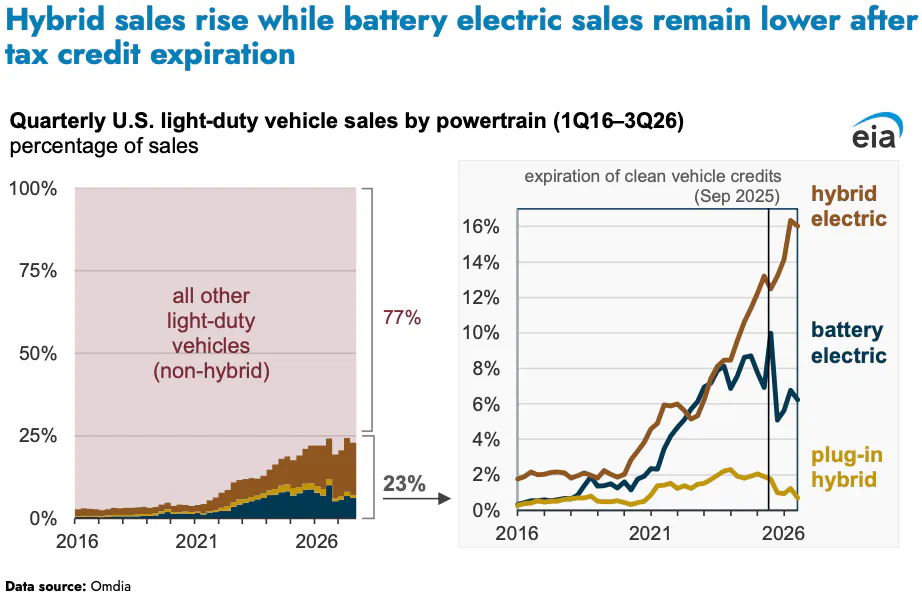
EIA: "Hybrid sales rise while battery electric sales remain lower after tax credit expiration."
"In the third quarter of 2026 (3Q26), 23% of new light-duty vehicles sold in the United States were hybrid electric, battery electric [BEV], or plug-in hybrid electric vehicles [PHEV], down slightly from 24% in 3Q25." Between 3Q25 + 3Q26, hybrid electric vehicles continued to gain market share, reaching 16% of light-duty vehicle sales.
"Growth of hybrid electric vehicle sales has slowed this quarter as the average transaction price for a new vehicle passed $50,000—the first time this price has been reached so far this year, according to Kelley Blue Book." In 3Q26, battery electric vehicle sales were 6% of new light-duty vehicles sold, down from 10% in 3Q25; plug-in hybrid electric vehicle sales fell from 1.8% to 0.7% over the same period.
"These vehicle types affect the broader energy sector in different ways. BEV + PHEV vehicles consume electricity from the grid, which affects electricity demand." By comparison, hybrid electric vehicles consume liquid fuels and do not connect to the grid. Hybrid vehicles were not eligible for any of the federal tax credits that expired in September 2025.
Argument has been made that BEV + PHEV sales were accelerated in anticipation of the loss of the tax credits, though I project re-initiation of electric vehicle sales growth when the lifecycle savings are appreciated more.
Personally, this is my 13th year of driving a BEV. Aside from tire rotation every 5,000 miles, I will need no actual maintenance until it reaches 90,000 miles. Beat that with a fossil fuel burner.
Globally, EV sales have surged—unlike in the US—largely because of the war in Iran.