


Epsilon Cable


CORECHECK: Turning composite core conductors into verifiable assets for modern transmission networks
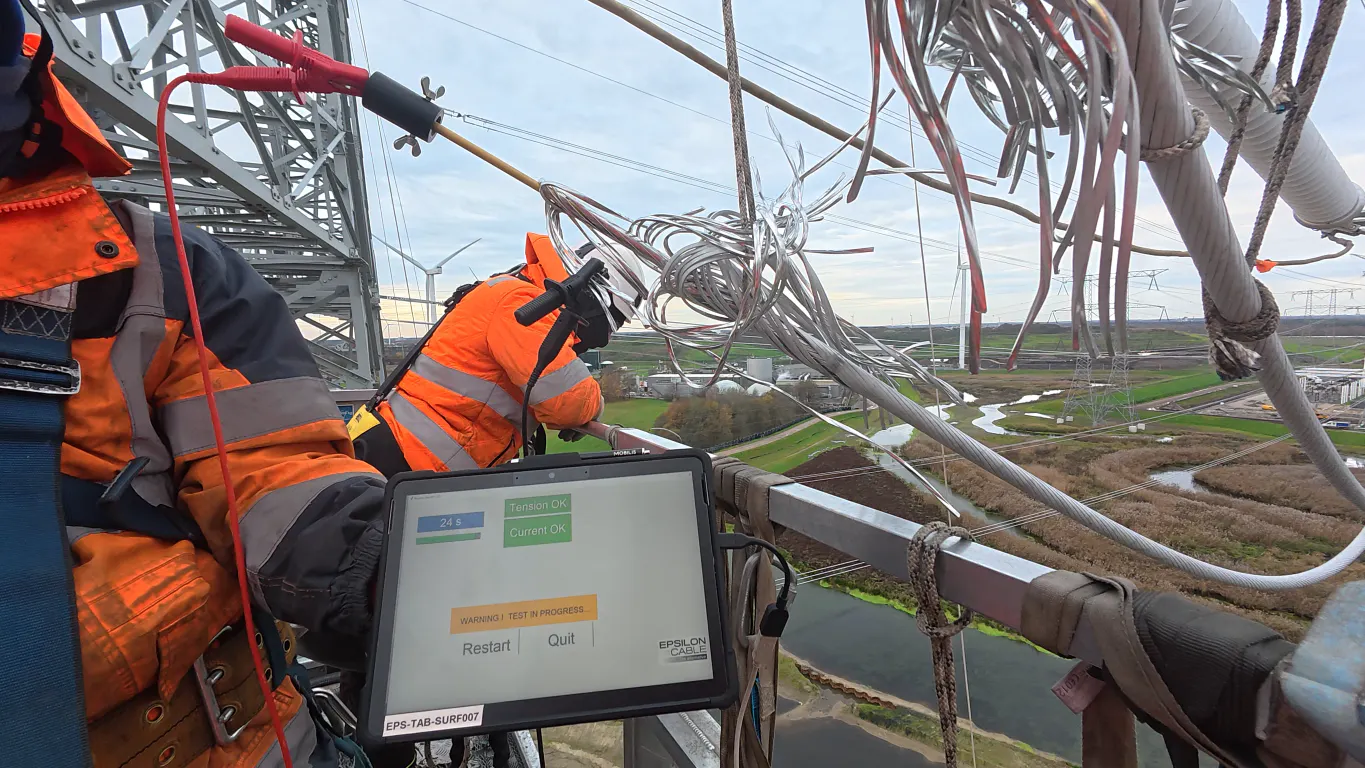
CORECHECK brings a proven and familiar cable testing mindset to composite core conductor and turns the composite core from a passive strength member into a verifiable asset. It uses dielectric non-destructive testing with off the shelf dielectric testing equipment to interrogate the core for structural integrity and to record a clear pass or fail, geomarked, and timestamped report. Field crews and utility managers get certainty in minutes. Utility engineers get a defensible record. Asset owners get a repeatable process that fits commissioning and lifecycle maintenance. And everyone involved gets peace of mind.
A continuous glass dielectric layer beneath the aluminum strands provides electrical isolation between the aluminum and the composite carbon core. CORECHECK places one sensor on the aluminum and one on the carbon path, then applies a controlled dielectric stimulus. When the glass layer is continuous and intact, it remains electrically insulating. Any cracked or delaminated region shows reduced insulation resistance, and the instrument flags it. This method provides a full 360-degree radial assessment of the dielectric isolation layer that separates the carbon composite from the outer aluminum strands and prevents galvanic interaction.
It does not require embedding foreign sensors into the composite: instead, it leverages the core’s intrinsic structure to create a reliable test article. That choice preserves mechanical performance while enabling a reliable verification (with clear, objective pass or fail criteria), and it keeps the toolbox familiar for transmission and distribution organizations that already use dielectric checks in other contexts.
The workflow is designed for utility practice. Crews connect the two leads, run the defined procedure, and the instrument limits test current and exposure by design. The outcome is binary green or red signal, so there is no need for subjective interpretation in the field. The device captures time and location, associates the reading with the span or termination, and pushes the result to a secure log. Supervisors can watch installation progress from a desk and receive confirmation as each section is completed.
CORECHECK supports the entire project lifecycle. You can test on the composite core reel after pultrusion manufacturing. You can test again on the conductor reel after stranding and onsite before stringing, and finally test the conductor after installation. The sequence gives owners a chain of evidence that the asset was healthy at hand off and remained healthy after installation, which simplifies acceptance, supports warranty processes, and shortens investigations.
For risk management, the impact is substantial. Recorded pass or fail results support a safe entry into service, as well as wildfire mitigation plans by proving that energized circuits returned to service with verified structural integrity. The same records aid insurers and regulators by replacing assumptions with objective data.
Adoption is supported by experience. Epsilon’s four decades in introducing composites for critical applications (aerospace, deep offshore oil & gas, OHL..) shape the test protocol, the stimulus parameters, and the procedures that distinguish a lab concept from a field proven solution. The goal is not to infer health from indirect clues but to inspect the conductor core directly and to confirm structural integrity in a way that stands up to technical review. This is why the outputs are binary and the method is designed to be repeated.
CORECHECK is not a substitute for every laboratory test and it does not replace good installation practice. It is a focused integrity check for the composite core and thus the health of the asset. In that role it changes how lines are accepted at delivery, how they are commissioned after stringing, and how they are managed after external events. It brings an underground style assurance step to overhead lines and it does so in a format that fits real crews on real projects.
The result is a new standard of confidence for composite core conductor installation. Utilities can state that critical components have been tested and verified with objective evidence and without field interpretation or human error. Project owners can reduce disputes and schedule risk. Insurers and regulators can anchor decisions in data. The public will see the benefits as safer, more affordable, and more reliable service.
The Evolution of Overhead Conductors
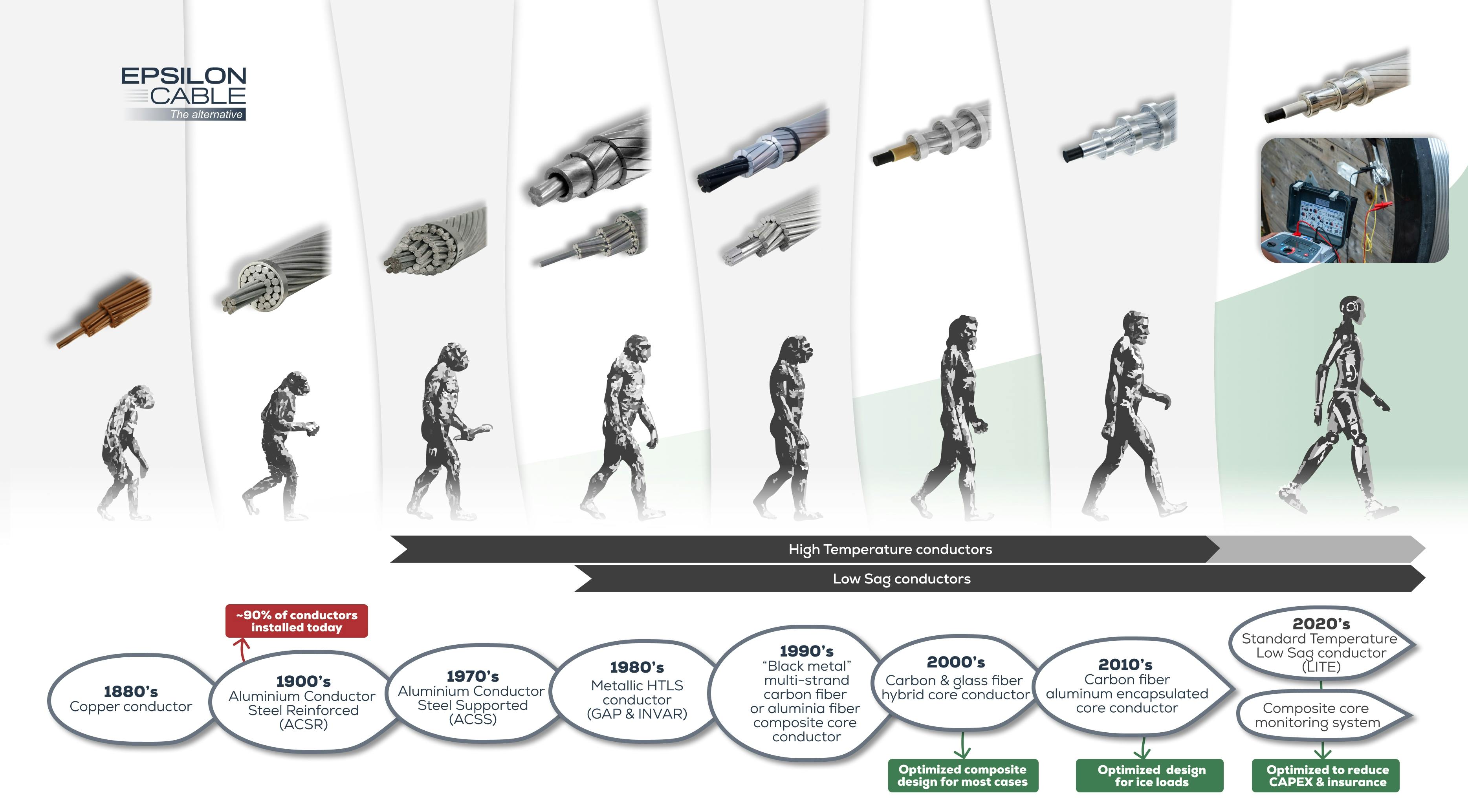
The evolution of overhead conductors follows a familiar arc: start with what is practical, then refine, optimize, and instrument. Early OHL conductors were all copper. The Panic of 1907 exposed copper’s price volatility and supply risk, accelerating the move to Aluminum Conductor Steel Reinforced (ACSR) designs. ACSR paired a steel strength member with hard-drawn aluminum and enabled the first great grid buildout. It was the right tool for the time, but modern requirements around thermal behavior, clearance control, and lifecycle assurance demand more than a century-old baseline.
In the 1970s, ACSS advanced the idea of separating roles by letting aluminum run fully annealed at elevated temperature while steel carried much of the mechanical load. The first High Temperature conductors were born. Capacity rose without new corridors, yet steel’s fundamentals remained: it is heavy, it elongates with heat, it corrodes, and asset owners must trade losses against mass.
The 1980s pushed further with Invar and GAP designs, the first true HTLS conductors. Invar offered lower thermal elongation, but achieving that benefit in service required much higher initial stringing tensions, which significantly increased mechanical loads on structures and reduced compliance during dynamic events such as galloping or ice shedding. Invar conductors also carry a substantially higher material and manufacturing cost (typically several times that of comparable ACSR designs) further limiting their suitability mainly to new corridors engineered for these elevated tensions.
GAP conductors introduced a greased annulus separating the strength member from the conductive layers, enabling higher operating temperatures while maintaining aluminum properties. However, the design brought notable drawbacks: specialized and more complex terminations, demanding installation procedures, sensitivity to handling, grease migration, and limited inspectability once in service.
As with Invar, GAP conductors found their place in specific applications, but each came with meaningful operational trade-offs.
Composites opened the next chapter by enabling real High Temperature Low Sag conductors, with recorded thermal elongation approximately one-tenth that of steel. Early 1990s programs first trialed open-mold, multi-strand carbon composite (as well as alumina fiber composite) while preserving “black metal” geometry for perceived redundancy. Such geometry is not ideal for fiber-reinforced systems, where performance improves as load paths are consolidated and filaments are fully engaged. The step change arrived in the early 2000s with pultruded, monolithic, filament-rich composite core; most commonly carbon-glass fiber hybrids with the glass fiber layer providing integral galvanic separation from the aluminum. This type of composite core is also available as an extra high stiffness variant (also called ultra-low sag / ULS), made from carbon fibers with a higher modulus of elasticity, which is more suitable for long crossings and heavy ice loads. More than a hundred thousand miles of this core type have been energized worldwide, delivering low mass, high strength, thermal capability, and much better clearance control than steel, with useful compliance after ice shedding.
Ten years later, Epsilon and Nexans co-developed and commercially deployed the world’s first all-carbon, aluminum-encapsulated composite core. By fully enclosing the carbon in a sealed aluminum encapsulation, electrolytes cannot reach the fibers and galvanic concerns are removed. In addition, axial/bending stiffness rises without adding weight, which is a valuable benefit in severe radial-ice climates and in high-ice regions where clearance control and peak-to-peak events drive specification.
A critical design note: because the composite is enclosed, the conductor is intentionally limited to ~165°C; above this regime resin volatilization can generate off-gases with no escape path, risking internal “aneurysm” bulges, local composite damage, or thermally accelerated aging within the encapsulation. In practice, that limitation aligns with many cold-climate corridors (lines that see three inches of radial ice rarely require 180°C capability) so the encapsulated design remains a strong fit where stiffness and ice performance dominate. Additives that alter resin stoichiometry or offgassing behavior to push these limits are generally cost-prohibitive for this application, so testing is imperative (including DSC/TGA and Arrhenius-based aging) to confirm ratings and set operating practice.
As composite cores moved from early deployment in the 2010s into broader use, emphasis in the 2020s has shifted toward two questions: how to improve resin systems to right-size thermal capability, and how to verify structural integrity so performance is demonstrated rather than assumed.
The market for resin is moving beyond a single “premium” matrix aimed at continuous 180°C and 200°C emergency service for 2× capacity versus 90°C ACSR. Asset owners can now choose from a calibrated ladder of chemistries. At the top are higher-temperature formulations for persistently overloaded corridors where ampacity is the primary driver. At the other end are standard-temperature systems tuned around ~100°C operation (Epsilon LITE) that deliver the mechanical advantages of a composite core at roughly 1.5× ACSR wire cost rather than the historical ~2.5–3×. This tiering allows engineers and planners to match matrix capability to operational performance and capital plan instead of buying ampacity they do not need, especially for greenfield projects. If a corridor’s constraint is thermal, a higher-temperature resin unlocks ratings without re-tensioning structures. If the main constraint is initial cost, topology, or clearances rather than load, a standard-temperature resin paired with a low-CTE composite core can meet the mechanical need at a far lower material premium. The result is a cleaner business case: fewer tons in steel and concrete where spans or heights can be optimized, and the option to invest saved mass into more aluminum when loss reduction pays back.
The second advance is CORECHECK, a dielectric, binary field test that turns the core from a passive strength member into a verifiable asset. The method applies a controlled electrical stimulus between the aluminum and the carbon path and reads the interlayer as an insulator. An intact barrier yields a pass; a damaged barrier yields a failure. Crews get an unambiguous result in minutes, with geo-stamped and time-stamped records that can flow into commissioning files, compliance packets, and post-event diagnostic reporting. Because the toolchain uses established dielectric practice with conservative limits, it fits utility safety culture and can be trained quickly. Testing can be leveraged at all stages as well. At factory acceptance it documents that reels left in known good condition. After stranding and stringing it confirms that tensioning, clipping, and termination methodologies respected the core’s structural integrity. After storms, faults, or contact events it triages spans so crews spend time and use equipment where it matters. The data reduces disputes, shortens punch lists, and gives wildfire or other insurers and regulators objective evidence rather than inference.
Together, resin tiering and CORECHECK convert composite performance into bankable project value and operational certainty. Owners can specify exactly the temperature capability they need at a price point that clears CAPEX gates, and they can instrument the asset so its condition is known rather than assumed. That is why the current decade is different: composites are no longer a single, risky, expensive option; they are a field proven configurable platform with built-in verification that meets today’s affordability, reliability, and safety requirements.
Today’s market is crowded with “advanced” bare conductor designs, but the term itself has no agreed technical meaning. What matters for utilities is understanding the underlying architecture and materials, not the label. The design path is increasingly clear: match conductor architecture to corridor constraints; tune resin and fiber systems to the required thermal window and capital plan; and interrogate the asset so condition is measured, not assumed. Epsilon’s LITE conductor brings standard-temperature, low-sag performance within typical CAPEX constraints, while CORECHECK delivers overhead asset assurance in an underground-style, field-ready format, with further capability in development. A grid serving data centers, electrified transport, and sustained load growth cannot rely on materials optimized for the last century; qualified composite engineering, proven over 20 years and expanding today, is the platform for what comes next.
Epsilon Composite and Toray Carbon Fibers Europe: A 15-year partnership driving the energy transition
Epsilon Composite, a global leader in carbon fiber pultrusion, and Toray Carbon Fibers Europe, a subsidiary of Toray Industries and the world’s leading carbon fiber manufacturer, have been working together for 15 years to promote the use of carbon fiber in electrical infrastructure. Our composite core cables are designed to modernize and reinforce high-voltage power lines.
This collaboration has culminated in numerous projects worldwide and a major framework agreement recently signed in the Netherlands.
An innovative technology essential for modernizing power grids
Since the qualification of Epsilon Composite’s HVCRC® technology in 2010, which incorporates Torayca® carbon fiber, the two French companies have played a key role in modernizing and strengthening power grids globally.
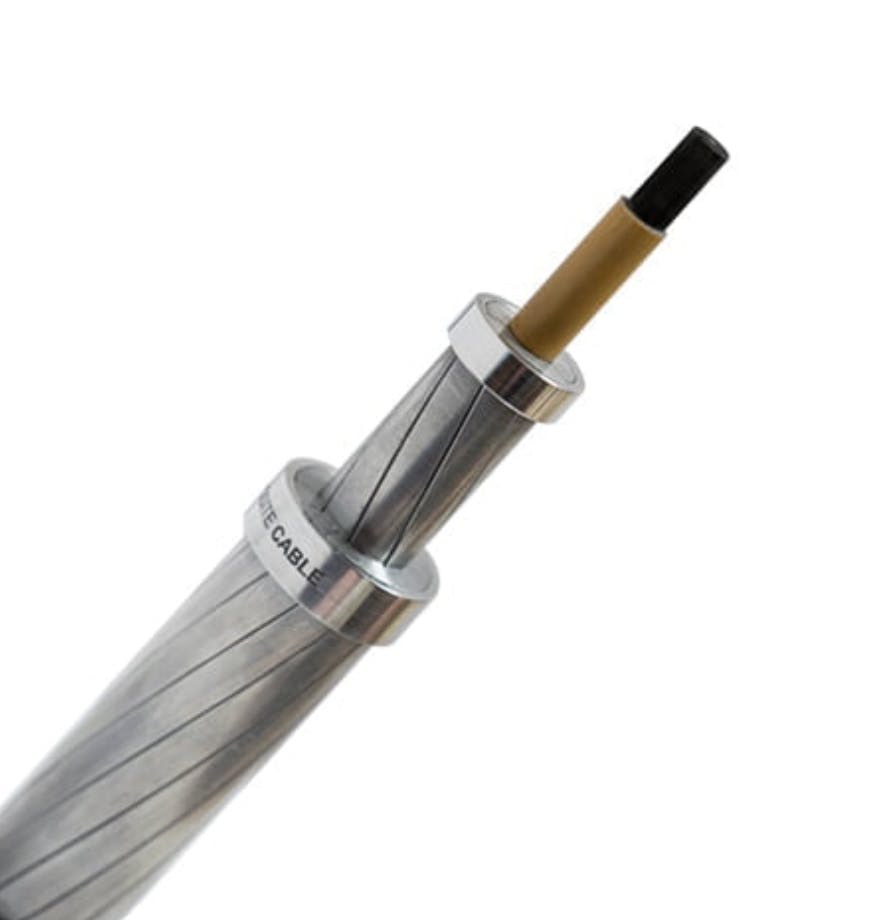
Thanks to the light weight, strength, and exceptional thermal stability of carbon fiber, HVCRC® cables can effectively replace traditional metal cables, which are based on technology from the early 20th century. These cables can double the capacity of existing power lines quickly and cost-effectively. In contrast, building new traditional lines typically takes over a decade and requires significant investment, often at the expense of the environment and landscape.
Increasing transmission capacity is essential to meet the growing global demand for electricity and to connect new renewable energy sources (such as solar and wind) in support of decarbonization efforts. These advanced cables also offer numerous benefits, including a 30% reduction in electrical losses, enhanced grid resilience to extreme weather events, and a reduced risk of wildfires.
Today, this technology is recognized worldwide as a benchmark for modernizing transmission and distribution lines, with several thousand kilometers of cables installed across Asia-Pacific, Africa, Europe, and the Americas.
With composite core conductors increasingly adopted by European grid operators, Epsilon Composite’s technology has recently been selected for several major contracts in Europe, ensuring a sustained industrial activity for years to come.
Framework agreement signed for modernizing the Dutch high voltage grid
Like many European grid operators, TenneT (Netherlands) recently selected the HVCRC® technology through a framework agreement to modernize the whole Dutch 400 kV high voltage grid until 2030.
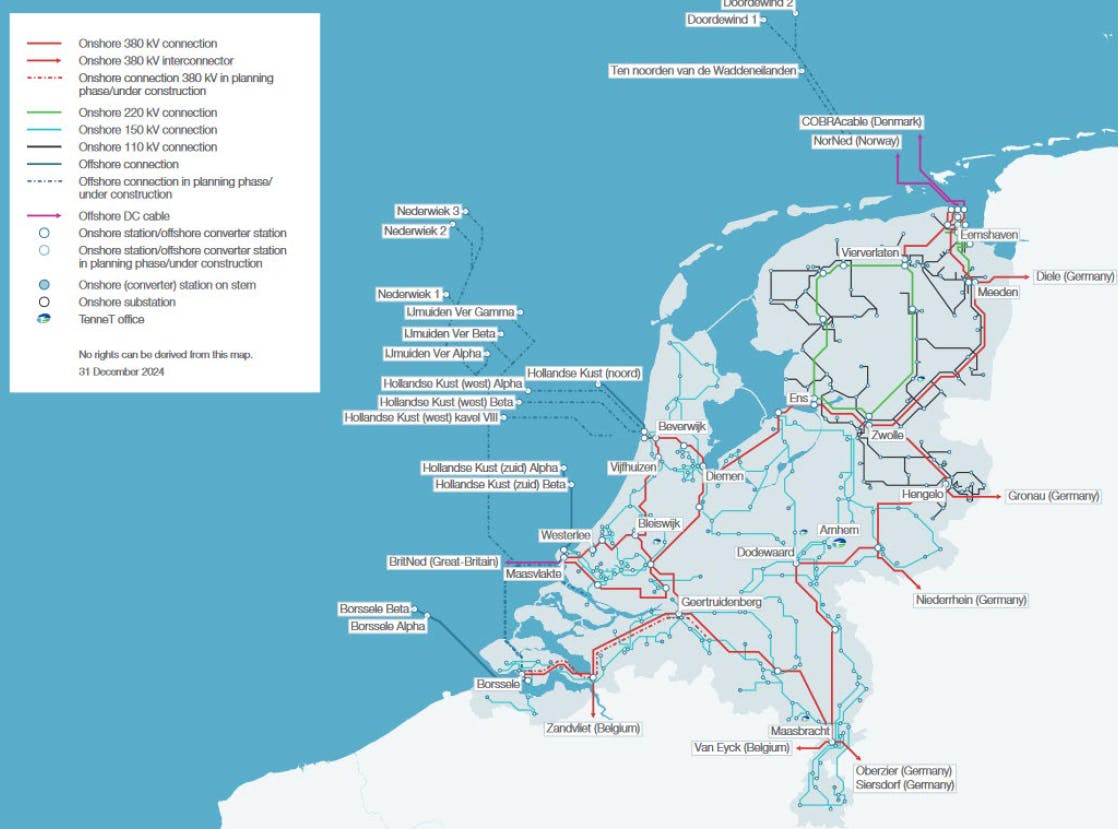
Following a tender launched in 2024, TenneT selected two European cable manufacturers partnered with Epsilon Composite—Nexans and DeAngeli Prodotti—to produce HVCRC® conductors.
For this tender, the Dutch grid operator challenged suppliers to optimize not only their products but also their supply chains and operations to minimize electrical losses and greenhouse gas emissions throughout the product lifecycle. TenneT also required a life cycle analysis to assess the environmental impact of the products, integrating this data into the evaluation process.
Epsilon Composite’s proactive efforts over the years to assess and optimize the environmental impact of its production and supply chain contributed significantly to this process.
Implementation of the framework agreement has already begun, with two pilot projects underway to qualify HVCRC® cables manufactured by Nexans and DeAngeli Prodotti, as well as Epsilon’s Corecheck® technology, which ensures the integrity of the composite core at every stage of manufacturing and installation.
The project is expected to continue until all remaining metallic conductors on TenneT’s 400kV lines are replaced.
Composite core conductors: an industrial success story from France
This industrial success highlights the excellence of a pioneering and export-oriented French sector, firmly rooted in France and the Nouvelle-Aquitaine region, known for its proactive industrial policies.
In Lacq (Pyrénées-Atlantiques), Toray Carbon Fibers Europe operates one of the world’s largest carbon fiber production plants, while Epsilon Composite, a family-owned company founded in 1987, is headquartered in Gaillan-en-Médoc (near Bordeaux), where it manufactures all its products.
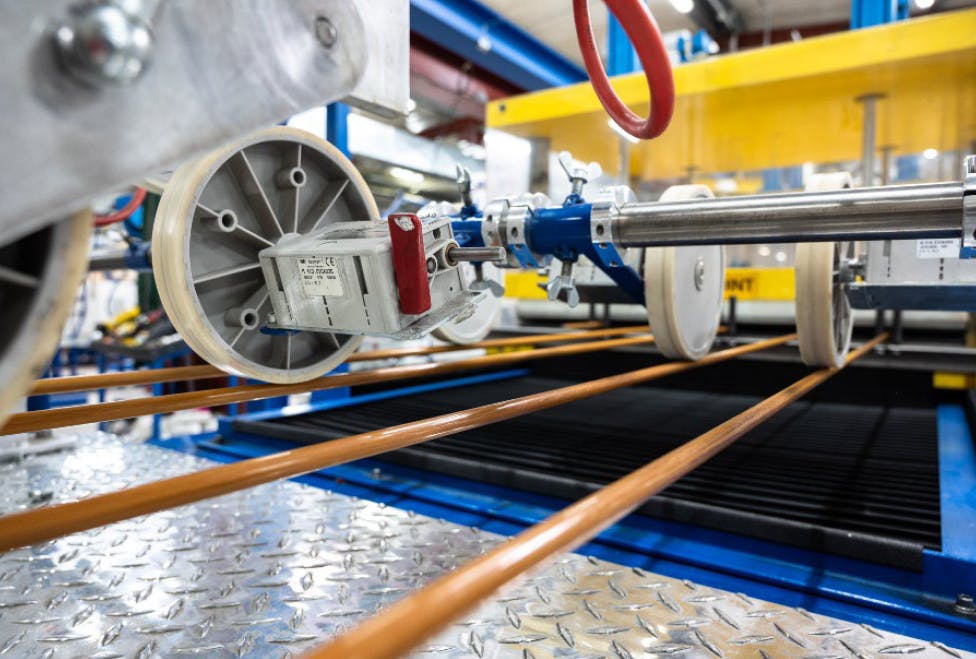
Both companies continue to invest in R&D and production capacities to support market growth. Toray Carbon Fibers Europe is completing the construction of a sixth carbon fiber production line, set to be operational by the end of 2025. This new carbon fiber line will further strengthen the company’s position as the leading supplier of the European market and guarantee a national supply of this strategic material.
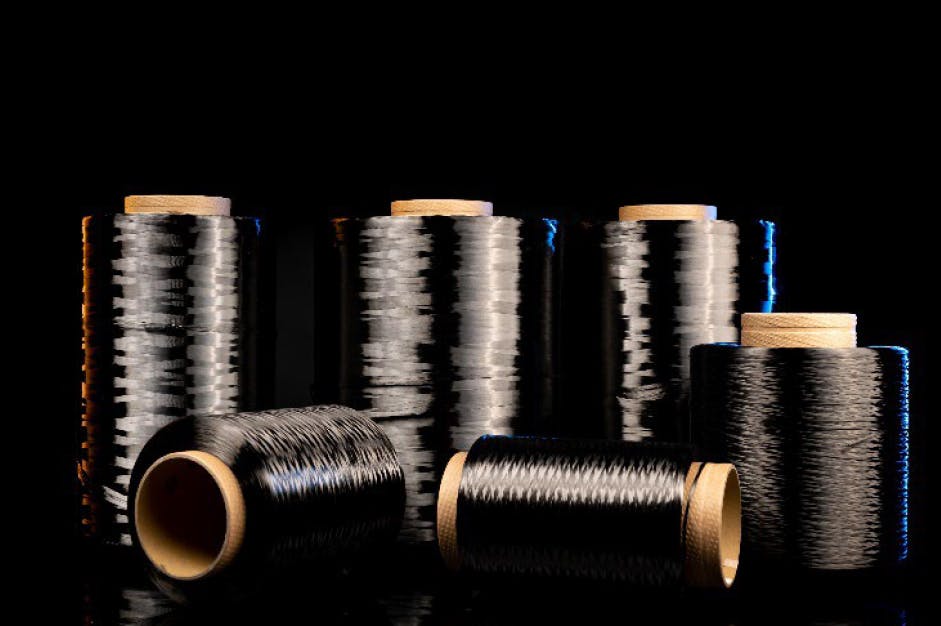
“After 40 years of collaboration, including 15 years on composite cores, Epsilon Composite and Toray CFE demonstrate the strength of a long-standing, innovative and effective industrial partnership, placing the composites sector at the heart of the global energy transition challenge. This industrial cooperation between two industry leaders is fully aligned with the objectives of decarbonizing the economy and strengthening electrical infrastructure.”
Alexandre LULL, Deputy CEO of Epsilon Composite
“We are delighted with the new contract signed by Epsilon for the Dutch market. As a partner, Toray Carbon Fibers Europe guarantees the supply of Torayca® carbon fiber for this long-term project. We are convinced that this innovative HVCRC® technology is contributing to the future of electrification in the European and global markets.”
Armin KLESING, Marketing and Sales Director at Toray Carbon Fibers Europe
Building a resilient grid: Commissioner Pinocci’s vision for composite core conductors and tower raising solutions
An interview with commissioner Randy Pinocci (Montana Public Service Commission)
Epsilon/Ampjack: Commissioner Pinocci, thank you for joining. Your keynote at the Transmission Infrastructure West conference in San Francisco last month was both inspiring and thought-provoking. For those who weren’t in the room, can you provide an overview of the main points you addressed? Specifically, more about your call to replace steel-core conductors, the benefits of composite core technology, potential insurance implications, and the broader vision you shared.
Commissioner Randy Pinocci: It’s a pleasure to talk with you about these critical issues. My keynote was designed to challenge the industry to move beyond incremental changes and embrace bold yet proven solutions.
At the heart of my message was the idea that we must prioritize a Safe, Reliable, and Affordable grid, which I believe is non-negotiable for modern energy infrastructure. This starts with replacing outdated legacy steel-core conductors, a technology that has served its purpose for decades but now represents a major vulnerability, with composite core technology, which is superior in every critical metric. Steel-core systems might have been revolutionary over 100 years ago, but continuing to rely on them like we do today locks the grid into inefficiency, increased risk, and higher operational costs for decades to come.
I also emphasized the need for insurance incentives to drive proactive upgrades on a larger scale. It’s not just about the grid’s safety and efficiency; it’s about practical risk mitigation. The costs associated with replacing steel-core conductors after catastrophic failures, whether due to wildfires, storms, or sag-related incidents, are far greater than the costs of upgrading to composite core conductors today. Utilities and insurers alike need to see these upgrades not as expenses but as investments in the long-term reliability and safety of the grid and the communities it supports.
Why composite core conductors are the superior choice
Epsilon/Ampjack: Composite core conductors have been a focus for Epsilon Composite for decades. From your perspective, what makes them such a transformative technology for the grid?
Commissioner Randy Pinocci: Composite core conductors are truly game-changing, and I’m proud to see companies like Epsilon Composite leading the charge. As I said, they outperform traditional steel-core conductors in every critical metric, offering a scalable solution that aligns with our vision for a Safe, Reliable, and Affordable grid.
Here’s why composite core conductors are superior:
- Superior Sag Characteristics Under Load
- Composite cores offer a true High-Capacity Low Sag or HCLS solution by maintaining safe clearance even under heavy loads and at elevated temperatures. This dramatically reduces the risk of vegetation contact, which is a leading cause of grid associated wildfires. By ensuring conductors stay well above critical clearances and run cooler or more efficiently, utilities can enhance safety and prevent costly fire-related incidents.
- Unlike legacy steel-core conductors, composite cores are engineered to withstand extreme heat without any plastic deformation or loss in strength. During extreme wildfire events and even EF5 Tornado’s, composite core conductors have proven survivability time and again in real world applications, minimizing service interruptions and post-event repairs.
- Higher Current-Carrying Capacity
- Composite core conductors can handle up to twice the current of traditional ACSR conductors. This increased capacity allows utilities to meet growing energy demands without having to build additional infrastructure, providing a cost-effective way to expand grid capabilities.
- Energy Efficiency
- Beyond reliability and resilience, composite core conductors are helping utilities meet carbon efficiency goals. By delivering up to a 40% reduction in line losses, these advanced materials significantly reduce energy waste and associated carbon emissions. This efficiency not only lowers operational costs for utilities but also enables them to recover their investments often times within a matter of years. The result is a grid that is more sustainable and affordable for consumers, what we need.
Why composite core conductors aren’t everywhere. Yet.
Epsilon/Ampjack: Since composite core conductors seem to have so many advantages, the cautious reader might wonder—why aren’t they used everywhere?
Commissioner Randy Pinocci: That’s a great question, and one we need to address head-on. The reality is that innovation in the utility sector often faces barriers rooted in conservatism and a general reluctance to adopt new technologies. Many utilities are understandably cautious, prioritizing proven methods and systems over what might feel like uncharted territory.
There’s also a lack of incentives in some cases, both from regulatory bodies and within the utilities themselves, to move away from legacy systems like steel-core conductors. Add to that a lack of technological awareness, not everyone fully understands the transformative potential of composite core conductors yet.
Another factor unique to the United States is the sheer complexity of undertaking large transmission projects. With thousands of utilities operating across different regulatory jurisdictions, achieving alignment on infrastructure upgrades can be challenging. It’s not that the technology isn’t ready, it’s that the system sometimes slows adoption.
That said, things are changing. Over the past 20 years, we have seen more and more advanced conductors being installed across the world, from highly developed regions to fast-growing nations like Bangladesh, which alone has installed more advanced conductors than all of the United States. These technologies are rapidly becoming the standard for modern grids.
The tide is turning, and the momentum is clear. As awareness grows and utilities see the tangible benefits, we expect composite core conductors to become a mainstay of grid modernization efforts globally and within the United States.
Wildfire risks and proven solutions
Epsilon/Ampjack: Wildfires are clearly a major concern for utilities across the Western US and beyond. How do composite core conductors specifically address the risks associated with wildfires?
Commissioner Randy Pinocci: Wildfires are one of the most pressing threats to grid reliability, especially in fire-prone regions. This is a topic we frequently discuss at NARUC, as it deeply impacts both utilities and the communities they serve. The integration of composite core conductors is a proven strategy for reducing wildfire risks, and I believe this technology could cut wildfire incidents substantially when deployed at scale.
Composite cores combine lightweight design,superior strength,and thermal stability, making them ideal for grid associated fire mitigation. They are typically twice as strong and ~70% lighter than steel-core, reducing stress on structures and maintaining critical clearances as mentioned. Their ability to remain stable under extreme heat minimizes ignition risks during high demand and fire conditions.
Key benefits of composite core conductors in wildfire mitigation
- Reduced Fire Ignition Risks
Composite cores are engineered to maintain superior ground clearance and resist sag under high loads and temperatures. This significantly lowers the risk of vegetation contact, a leading cause of wildfire ignition near electrical networks. By ensuring that conductors remain cooler and well above flammable materials, composite cores directly address one of the most preventable wildfire risks we know of. - Heat Resilience
Unlike traditional steel-core conductors, composite cores are specifically designed to withstand extreme heat without deforming or losing structural integrity. Steel-core systems often fail under such conditions, or sag beyond allowed clearances, whereas composite cores have proven survivability during the most challenging wildfire events. - Post-Fire Survivability
Composite core conductors remain operational after exposure to wildfire conditions, eliminating the need for immediate replacements. This resilience reduces reliance on emergency repair crews and the challenges of sourcing hard-to-find installation equipment during crisis situations. Utilities can restore service faster while keeping costs in check.
Tower Raising: A Key Solution for Grid Resilience and Modernization
Epsilon/Ampjack: Another technology you highlighted was tower raising, particularly Ampjack’s system. Can you explain how this approach complements composite core conductors in wildfire mitigation and grid modernization?
Commissioner Randy Pinocci: Tower-raising technology, including innovations like Ampjack, offers a smart and highly effective solution to one of the grid’s most critical challenges: achieving adequate clearance and simplifying permitting processes. These systems allow utilities to raise existing towers instead of constructing new ones, addressing key safety and wildfire mitigation concerns while minimizing the complexity and cost of grid upgrades.
By adopting efficient permitting practices and leveraging proven technologies like Ampjack’s tower-raising system, we can save time, millions of dollars, and resources across all project aspects. Less costly permitting combined with real technological advancements should be the only way forward.
Key advantages of tower raising
- Increased Ground Clearance
Raising transmission towers significantly reduces vegetation contact, directly mitigating wildfire risks. This increased clearance ensures safer operations, particularly in fire-prone areas with dense vegetation and challenging terrain. - Continuous Operation
Advanced systems like Ampjack allow towers to be elevated while lines remain energized. This eliminates the need for service interruptions during upgrades, ensuring uninterrupted grid reliability and reducing operational disruptions. - Permitting Simplification
By utilizing existing infrastructure, tower raising avoids the lengthy delays and environmental impacts associated with new tower construction. This accelerates project timelines, reduces costs, and helps utilities comply with regulatory requirements more efficiently.
Tower raising, particularly through systems like Ampjack, is an indispensable tool in the grid modernization process and when paired with composite core conductors, the benefits of tower raising are amplified. By addressing clearance challenges while enabling the integration of advanced conductor technologies, this approach represents a forward-thinking strategy to tackle today’s challenges and prepare for the demands of the future.
Montana’s leadership: House Bill 729 and the path forward
Epsilon/Ampjack: Commissioner Pinocci, your work in Montana has been making waves, especially with the success of House Bill 729 and the North Plains Connector Interregional Innovation Project. Can you elaborate on how these initiatives are shaping Montana’s energy future and what lies ahead in 2025?
Commissioner Randy Pinocci: Absolutely, house Bill 729 represents a significant step forward in ensuring that advanced conductor technology is both incentivized and integrated into the modern grid. The bill allows advanced conductors to be rate-based if they meet specific cost-effectiveness criteria, including reduced line losses, enhanced reliability, and another consumer and environmental benefits.
This legislation is transformative because it ties investment in grid infrastructure to measurable efficiency gains. By requiring at least, a 10% reduction in direct current electrical resistance compared to existing conductors, House Bill 729 prioritizes the adoption of cutting-edge solutions like composite core technology. We are now pushing for a 20% reduction in direct current electrical resistance and recognize that we need to set the bar even higher. This is critical for ensuring Safe, Reliable, and Affordable energy for Montanans.
The North Plains Connector is another vital piece of the puzzle. This $700 million interregional project will connect the eastern and western U.S. grids, positioning Montana as a key player in addressing national energy challenges. It’s not just about linking grids; it’s about fortifying our energy infrastructure to handle modern demands while minimizing vulnerabilities. The integration of composite core conductors into these projects will play a pivotal role in achieving these goals by enhancing efficiency and resilience.
In 2025, my agenda focuses on scaling the adoption of composite core conductors and tower raising solutions both within Montana and beyond. It’s about taking proactive steps to modernize our grid while addressing climate-driven challenges like wildfires.
Moreover, we’re exploring ways to incentivize utilities, such as offering insurance breaks for adopting advanced technologies. This aligns with our vision to make grid improvements not just necessary but economically advantageous for all stakeholders. The legislative session in January will be a critical platform for discussing these priorities with utility leaders, policymakers, and technology providers like Ampjack and Epsilon Composite.
House Bill 729 is just the beginning. The success of these initiatives in Montana serves as a blueprint for other states. By identifying high-risk transmission corridors—our so-called “red lines”—and targeting them for modernization with advanced conductors, we can create a safer, more efficient, and sustainable grid across the nation.
To all stakeholders: Commissioner Pinocci invites you to join the discussion later this month, either in person or via Zoom, to provide public comment and support these groundbreaking solutions. Together, we can build a grid that not only meets today’s challenges but also paves the way for a resilient, energy-efficient future.
This is a historic opportunity to lead the country in adopting better technology and improving energy efficiency. By supporting these efforts, we can drive a transformative shift that reduces carbon emissions, enhances reliability, and ensures a stronger, more sustainable grid for generations to come. Contact a Montana legislator to show your support and help make this vision a reality.
The January legislative session: A defining moment
Epsilon/Ampjack: The upcoming Legislative Session seems like a pivotal moment for Montana and the energy sector as a whole. What can attendees expect?
Commissioner Randy Pinocci: The January session will be a cornerstone for advancing wildfire mitigation and grid modernization. It’s a unique opportunity to bring together policymakers, utilities, and industry innovators to address the grid’s most pressing challenges while showcasing proven technologies that can deliver real solutions.
Here’s what we’ll focus on:
- Epsilon Composite’s Advanced Conductors
We’ll highlight how composite core conductors reduce wildfire risks, improve efficiency, and deliver long-term cost savings. These advanced conductors represent the future of grid reliability, offering unparalleled resilience and operational benefits. - Ampjack Technology
Demonstrations will showcase how tower-raising systems, like those offered by Ampjack, complement composite cores by addressing critical clearance issues and simplifying permitting challenges. This pairing of technologies provides a comprehensive approach to grid modernization. - Efficiency Benchmarks
Establishing clear and measurable efficiency standards will be a key topic. These benchmarks are critical for phasing out outdated steel-core systems and accelerating the adoption of advanced technologies like composite cores. By setting robust standards, we ensure that utilities are investing in solutions that meet the grid’s evolving needs.
This isn’t just a legislative session—it’s a call to action. The energy sector is at a turning point, and sessions like this provide the platform to align on strategies that work. I am incredibly excited because this is how we move the needle forward with proven advancements in a space that desperately needs innovation.
A vision for the future
Epsilon/Ampjack: Commissioner Pinocci, we greatly appreciate your leadership and vision for the grid. Before we wrap up, is there anything else you’d like to say about the role of advanced conductors and tower raising in building the grid of the future?
Commissioner Randy Pinocci: I’ll close with this: companies like Epsilon composite are setting the gold standard for grid modernization. Their composite core conductors are proven, scalable, and essential for creating a grid that is both resilient and efficient. These conductors address critical challenges like wildfire mitigation, line efficiency, and operational reliability, making them indispensable for the grid of tomorrow.
Ampjack’s tower-raising technology is another proven solution that tackles clearance issues, streamline permitting, and enhance grid safety. Together, these innovations provide a comprehensive approach to the challenges we face today.
The tools are here, the solutions are proven, and the time to act is now. Together, we need to build a Reliable, Safe, and Affordable grid that meets the demands of the future while protecting our communities, natural resources, and critical infrastructure.
Epsilon/Ampjack: Thank you, Commissioner Pinocci. Your dedication to driving meaningful progress is exactly what the energy sector needs. We look forward to seeing the impact of your leadership at the January Legislative Session and beyond.

Commissioner Pinocci understands the challenges faced by power lines, and is fighting to raise the safety & performance standards in Montana. In fact, I'm surprised this is not the same pretty much everywhere else in the US!
Looking forward to that legislative session.
What types of composite core conductors are commercially viable today?
With all of the recent discussion around “HTLS conductor” & “advanced reconductoring”, it is more important than ever to understand/properly define the different types of overhead conductor technologies in existence today.
Steel core conductor has been the go-to solution for electric utilities for many years now. ACSR was invented over 100 years ago & ACSS over 50, and while they still have a place within utility networks, composite core or “advanced” conductors will forever change the way utilities approach the need for a more capable and dependable grid.
There is a reason the most demanding applications have relied on carbon fiber composites (aerospace, military, and medical to name a few). These materials have an intrinsically low coefficient of thermal expansion (roughly 10x lower than conventional steel) and impressive specific properties in tension (twice as strong as steel for 1/4 of the density). These attributes make composites ideally suited to perform as the strength member for overhead conductor within transmission and distribution networks.
The thermal properties/strength-to-weight ratio of composite conductor core allows for twice the current carrying capacity of conventional steel core conductors and an added ~28% more aluminum content, the conductive substance, without a weight or overall diameter penalty. They are also installed using industry standard guidelines (IEEE-524) & equipment.
Below is an overview of the four technologies that exist today.
Carbon/Glass Fiber Hybrid

Design Concept: The carbon/glass hybrid design combines the mechanical advantages of carbon fibers with the flexibility and cost-effectiveness of glass fibers. This approach delivers a balanced solution suitable for most field conditions, offering a strong cost-to-capacity ratio that has made it the most widely deployed composite core technology worldwide.
Versatility: Hybrid cores can be tailored to meet specific operational requirements by adjusting fiber types or matrix materials. These adjustments allow for a range of performance capabilities, including varying ampacity and mechanical strengths. This adaptability has been a key factor in its broad adoption and consistent performance.
Proven Track Record: With over a decade of qualification through ASTM B987, this technology has established itself as a reliable and trusted solution for utilities seeking to improve grid capacity and efficiency. Manufacturers like Epsilon Composite have developed highly versatile offerings in this category, supporting both standard and customized applications.
All Carbon Fiber with Aluminum Encapsulation
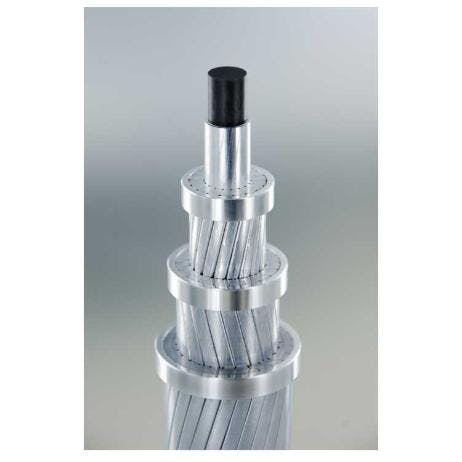
Design Concept: This solution incorporates carbon fiber cores encased in aluminum, providing a higher elastic modulus compared to hybrid designs. Its mechanical rigidity makes it particularly effective in mitigating sag caused by radial ice loads, making it well-suited for cold climates.
Thermal Considerations: To maintain optimal performance, these cores are designed for operating temperatures below 160°C, as higher temperatures can result in epoxy resin off-gassing. This off-gassing can compromise the aluminum encapsulation and degrade the composite core itself through temperature-induced chemical aging. Attention to material quality is critical, as lower-grade products have exhibited off-gassing at even lower temperatures.
Applications: As a complementary solution to hybrid designs, this technology excels in environments where mechanical rigidity is prioritized over thermal constraints. Epsilon Composite has successfully deployed this design in various projects, offering reliable performance tailored to specific regional and climatic needs.
Multi-Strand Composite Core

Design Concept: Multi-strand composite cores consist of several carbon fiber strands coated with galvanic protection layers. This design provides some level of load-path redundancy and offers a familiar, stranded appearance similar to traditional metallic cores, making it more intuitive for some field applications.
Performance Challenges: A significant consideration for this design is the risk of damage caused by increased stress or abrasion at the interface of the strands. Due to small points of contact between strands, high localized pressure can lead to wear, structural degradation, or reduced reliability over time, especially in demanding operational conditions.
Structural Considerations: Often referred to as a "black metal design," this approach essentially replicates metallic conductor concepts without fully optimizing the structural advantages of composite materials. While the multi-strand layout offers flexibility, it may sacrifice axial tensile strength and long-term durability due to off-axis fiber orientation and internal abrasion risks.
Metal Matrix Composite

Design Concept: Metal matrix composites consist of alumina fibers embedded in an aluminum matrix, resulting in a unique material that offers slightly higher thermal ratings compared to polymer matrix composites.
Performance Challenges: The key drawback of this technology lies in its structural fragility. The homogeneity of the metal matrix design can lead to failure under stress, particularly during installation or in high-tension applications. Numerous incidents of breaking conductors have been reported, underscoring the need for careful handling and installation procedures.
Economic Constraints: Beyond fragility, the cost of metal matrix composites is often cited as a limiting factor. At approximately twice the cost of polymer matrix equivalents, these materials are challenging to justify for widespread deployment without significant performance improvements.
Applications: While promising for niche scenarios where thermal capabilities are paramount, these composites face practical barriers due to fragility and high CAPEX requirements.
Conclusion
Advanced conductor technologies are reshaping the future of energy transmission, offering utilities new ways to enhance grid performance while meeting increasing demands for reliability and efficiency. Each solution brings unique advantages and considerations, requiring thoughtful evaluation to match the right technology to specific project needs.
By fostering dialogue and collaboration, the industry can continue advancing toward a more capable and resilient grid.

That's a lot of great information. I appreciate you posting that. For additional information on the subject, I highly recommend reviewing this white paper titled: An Objective Assessment of Conductor Technologies for Transmission Design and Planning, https://www.springerpowerconsulting.com/_files/ugd/8472d0_a58062a55e8b422b96bac4ea59990fec.pdf

Hi Joseph,
Thank you for sharing this insightful article on composite core conductors. I'm curious—are certain types better suited for specific locations or climates, especially considering different weather conditions?
Looking forward to your thoughts!
Epsilon Cable is a global leader in the design and manufacture of high-performance carbon fiber composite materials and solutions. With over 35 years of expertise in composite pultrusion, we deliver innovative products that meet the demanding needs of the energy, aerospace, defense, and industrial sectors.
Introducing Epsilon's Advanced Carbon Fiber Composite Core Conductors
At Epsilon Cable, we are pioneering the future of power transmission with our advanced carbon fiber composite core conductor designs. Our innovative solutions are engineered to meet the evolving demands of the energy sector, providing a technically superior alternative to traditional conductors.
Higher Energy Throughput
Our conductors enable significantly higher energy throughput, allowing for increased power transmission over existing lines without the need for major infrastructural changes. This enhancement optimizes the grid's capacity to meet growing energy demands efficiently within both greenfield and reconductoring applications.
Adaptive Infrastructure Stability
Built to withstand extreme environmental conditions, our conductors offer adaptive infrastructure stability. The lightweight yet extremely strong carbon fiber core reduces mechanical stress on towers and poles, enhancing the grid's resilience against weather events and alike.
Steady Operational Performance
Epsilon's conductors ensure steady operational performance, delivering reliable power when it is needed most. By reducing thermal sag and maintaining structural integrity under varying loads, our composite designs contribute to a consistent and dependable energy supply.
Minimized Electrical Resistance
Utilizing high-conductivity annealed aluminum stranding, our conductors achieve minimized electrical resistance. This reduces line losses and improves overall grid efficiency, optimizing power delivery while supporting clean energy initiatives through reduced waste.
Innovation Powering Clean Energy
With a portfolio of over 100 patents, Epsilon Cable is dedicated to driving clean energy advancements through continuous innovation. Our carbon fiber composite core conductors mark a transformative step in power transmission technology, delivering solutions that combine technical excellence with environmental responsibility. These innovations not only enhance grid efficiency and resilience but also support a more sustainable energy future.
At Epsilon Cable, we are committed to innovation and excellence. Our state-of-the-art manufacturing facilities and dedicated research and development teams ensure we provide solutions at the forefront of composite material technology. We collaborate closely with our clients to deliver tailored solutions that drive progress and efficiency across industries worldwide.
Join us in building a more efficient, resilient, and sustainable energy infrastructure.