FinTimes: "The ‘water batteries’ that could be a crucial complement to renewables."
"Water wheels were first used in ancient Greece, the foundations of modern hydraulic engineering were laid in the 1700s, while electricity was first generated by pumped hydropower stations ~ 120 yrs ago." Now there is growing interest in pumped hydro because of the proliferation of renewables.
During generation of surplus electricity, the extra.quantum is used to pump water from a physically low point to a higher elevation, thus converting the electricity into gravitational potential energy. Historically, pumped storage stations require specific terrain, with the creation or presence of large bodies of water with significant differences in altitude.
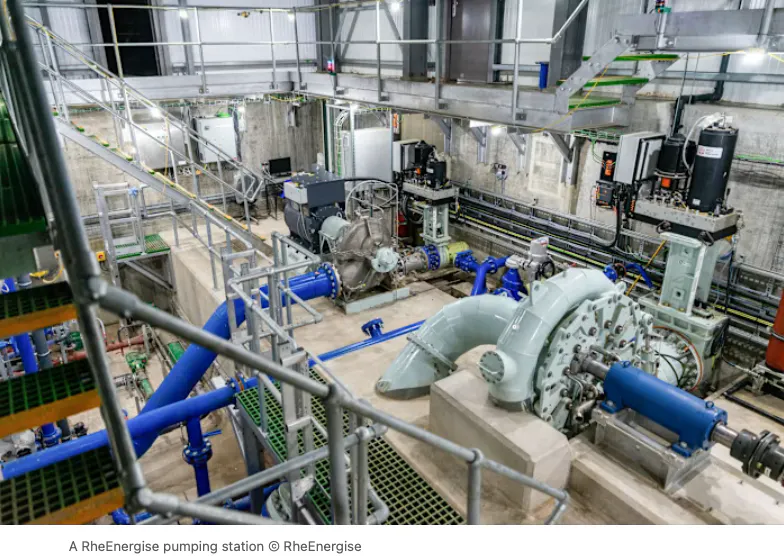
"Companies are also experimenting with using mineral-rich fluids other than water." RheEnergise, a London-based pumped energy storage company, is testing a novel system. "Our fluid is two and a half times the density of water . . . it runs freely like a creamy milk,” says RheEnergise’s chief executive Stephen Crosher. The use of the higher-density fluid allows the company to build pumped hydro stations on hills instead of mountains, expanding the number of sites where stations can be built, plus the footprint is smaller.
The challenges include high upfront capital costs, geographic constraints—including having space for reservoirs at different heights + in locations close enough to the electricity grid, plus managing the environmental + social impacts of construction. “AI, electric vehicles, air conditioning—they are all putting enormous strain on the grid + will require 24/7 reliability,” says Eddie Rich, chief executive of the International Hydropower Association. “Overnight or over seasons where you need long-duration energy storage, pumped storage provides that.”
Globally, pumped hydro already provides 90% of energy storage, as opposed to lithium or other electrochemical batteries, which get most of the press. Wonderful to see feasible hydrologic innovations not requiring such rare geographies.