


Data center developers are falling into a potentially costly site-selection trap: applying a standardized power template - typically standby diesel generators coupled with static UPS systems - to markets that operate under fundamentally opposite grid stress profiles.
In my global baseline study, Two Kinds of Grid Stress, and Why Data Centers Keep Designing for the Wrong One, analysis of 59 national power systems revealed a counterintuitive truth: a country’s share of wind and solar does not directly predict grid instability (rank correlation of -0.47). Instead, grid stress manifests in two distinct forms: chronic and acute, each demanding a completely different onsite power architecture.
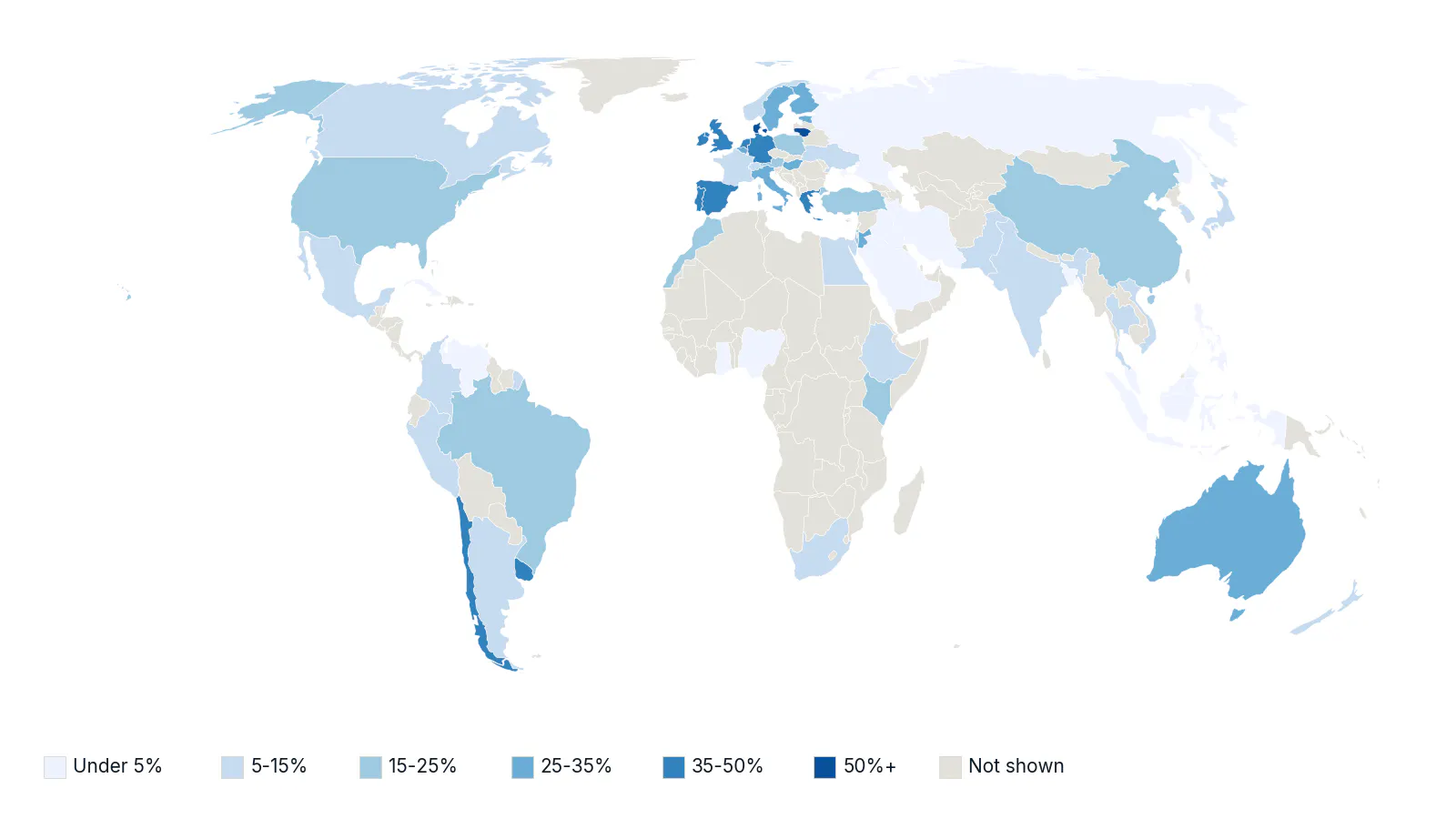
Image: Approximate Wind and Solar Penetration by Country (source- alexmarshallenergy.com 2026)
Designing for acute stress in a chronic market results in rapid equipment degradation and operational outages. Conversely, designing for chronic stress in an acute market leads to stranded capital and years of interconnection delays. For utility engineers, power developers, and data center operators, aligning onsite architecture with local grid physics is no longer optional, it is the single biggest factor governing speed-to-power and long-term asset viability.
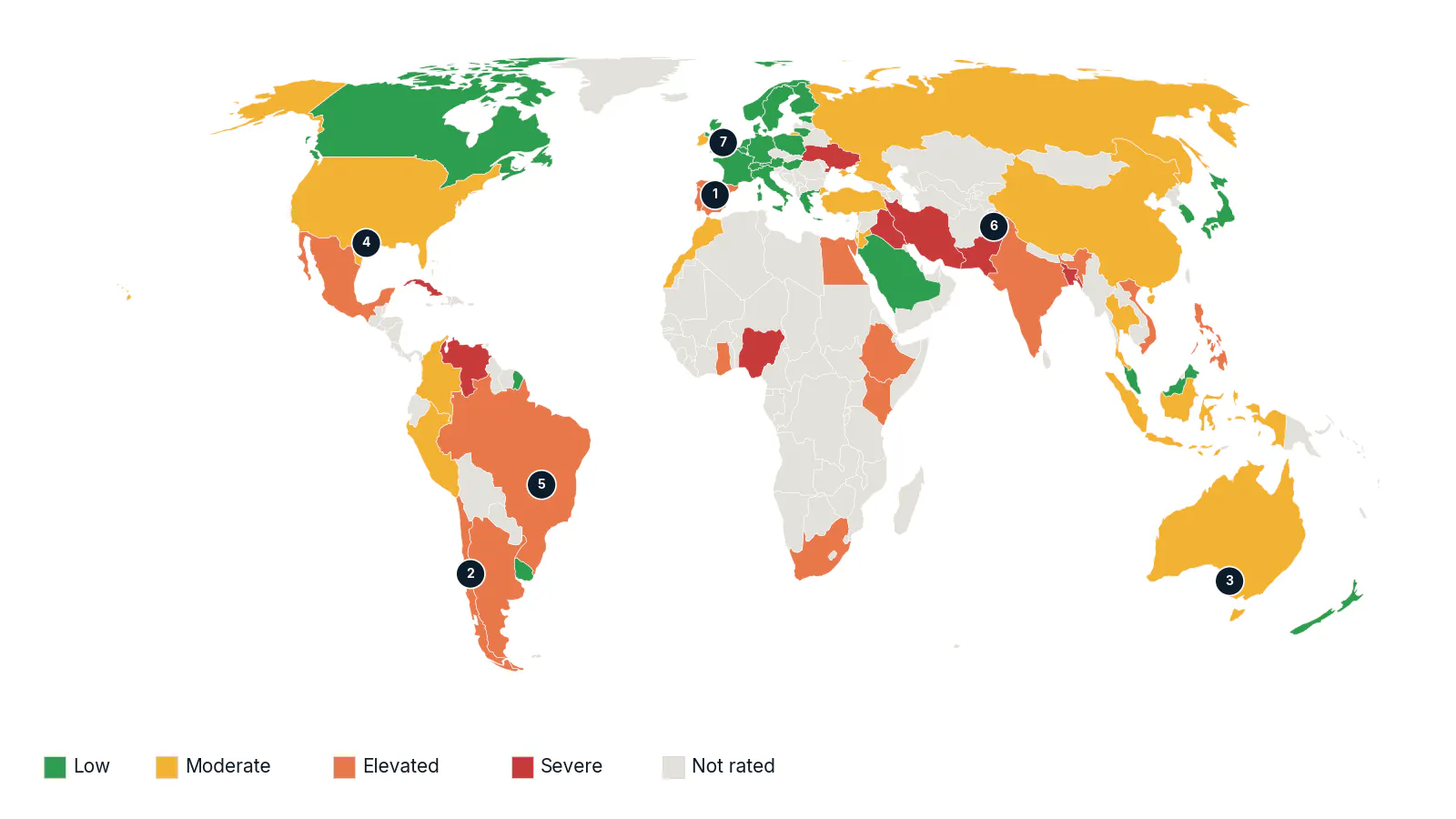
Figure 2: Grid stress by country and notable grid disturbances since 2016 (Source: alexmarshallenergy.com 2026)
1. Chronic Regimes: Onsite Generation as the Primary Engine
In chronic-stress markets (e.g., Nigeria, Pakistan, Iraq, and historic South Africa), grid stress stems from systemic generation shortfalls, loss-making utilities, fragile transmission networks, and fuel supply bottlenecks. Outages are frequent, prolonged, and often scheduled.
In these environments, treating the utility grid as the primary source of power is a design flaw.
The Operational & Architectural Shift
Prime and Continuous Duty Ratings: Standby diesel generators are designed for short emergency bursts (100–200 hours per year). Running standby-rated equipment for thousands of operating hours in chronic markets triggers premature mechanical failure and voids manufacturer warranties. Facilities must deploy continuous- or prime-rated reciprocating gas engines or turbines.
N+1 Generation Redundancy: Redundancy cannot live solely in the UPS layer. Generation assets themselves require N+1 or N+2 configuration on the prime movers to accommodate continuous maintenance schedules without dropping load.
Fuel & Thermal Management as Critical Path: In a chronic market, fuel logistics (pipeline gas pressure, LNG virtual pipelines, or dual-fuel capability) determine uptime far more than electrical switchgear selection. Because running hours are high, incorporating Combined Heat, Power and Cooling (CCHP) to supply absorption chilling pays back rapidly and reduces CO2 emissions.
Speed-to-Power Impact: Off-grid microgrids and islanded prime generation allow developers to bypass multi-year transmission queue bottlenecks, energizing facilities on behind-the-meter power while awaiting ultimate grid connection.
As outlined in Five Nines and Fast Power, when the grid functions as backup, fuel security and continuous engine duty determine five-nines availability.
2. Acute Regimes: From Passive Load to Active Grid Asset
Acute-stress markets (e.g., Iberia, South Australia, Great Britain, ERCOT, PJM) feature modern, highly interconnected grids with high penetration of inverter-based renewables. The grid operates reliably almost all of the time, but low system inertia and reduced short-circuit strength leave it vulnerable to sudden, severe cascade failures.
In an acute market, large data centers are no longer passive off-takers—they are major dynamic loads that can exacerbate grid instability if improperly configured.
The July 2024 Virginia Event & Grid Code Evolution
During a transmission fault in Northern Virginia in July 2024, approximately 1,500 MW of data center load suddenly disconnected and switched to backup generation simultaneously. To the grid operator, this massive, unmodeled loss of demand was equivalent to a major power station tripping offline.
As a result, system operators (such as PJM, ERCOT, EirGrid, and AEMO) are rapidly moving to reclassify large data center loads as systemic stability risks, introducing stringent grid codes.
The Architectural Brief
Dynamic Ride-Through & Inverter Control: Equipment must be specified to withstand voltage sags and frequency shifts without instantly shedding grid connection or dumping load onto backup systems during minor external disturbances.
Grid-Forming Capabilities & BESS: Battery Energy Storage Systems (BESS) equipped with grid-forming inverters can inject synthetic inertia and fast frequency response (FFR) within milliseconds, helping stabilize the host utility line during voltage excursions.
Monetizing Stability for Queue Placement: Developers who offer firm, flexible onsite generation or fast-acting storage as a grid service can assist local utilities in managing acute frequency events, transforming their site from an interconnection liability into a grid-stabilizing asset.
3. The Hybrid Frontier: Navigating Dual Stress Regimes
Some of the fastest-growing data center markets sit at the intersection of both stress profiles, or are transitioning from one to the other:
Ireland: Maintains low outage rates, but faces acute capacity adequacy warnings and strict limits on non-synchronous generation limits (SNSP). Data center demand now accounts for a significant portion of national electricity consumption, placing power architecture directly at the center of planning policy.
South Africa: Historically characterized by severe chronic load shedding. A massive surge in private rooftop solar and industrial behind-the-meter power since 2024 has temporarily eased capacity constraints while introducing new high-penetration solar dynamics.
Pakistan: Heavy adoption of behind-the-meter solar has begun shifting load away from state utilities, eroding utility revenue needed for grid maintenance—potentially deepening underlying chronic stress.
Developers in hybrid frontier markets must design flexible, dual-mode power systems: capable of continuous islanded operation during chronic shortfalls while offering fast-responding frequency and ride-through capabilities when tied to the utility.
4. The Structured Transition Framework
The debate over grid reliability often gets bogged down in pointing fingers at renewable generation. However, high-renewable systems in Denmark, Germany, and the Netherlands consistently maintain top-tier reliability because these nations built renewable capacity alongside robust grid infrastructure and proactive stability controls.
Acute failures occur when synchronous thermal plants are retired faster than replacement stability services—such as grid-forming inverters, synchronous condensers, and flexible gas-fired fast power—are brought online.
Under the Structured Transition Model, data center developers and utility engineers share a common objective:
Audit Site Physics First: Evaluate whether local grid risks stem from capacity deficits (chronic) or low inertia/voltage instability (acute).
Match Asset Life to Real Operating Hours: Ensure prime movers are rated for actual running expectations to avoid unexpected maintenance capital expenditures.
Bridge the Interconnection Bottleneck: Deploy dispatchable behind-the-meter generation and battery storage designed to serve both internal uptime requirements and local system stability.
Community Discussion Prompt
For utility engineers and data center power planners on Energy Central:
Are you seeing large data center loads in your region behave as potential stability risks during transmission faults, or are developers actively bringing grid-forming storage and fast power to the table to help accelerate connection approvals?
Let's discuss below.