A utility executive once told me:
"The outage lasted three hours. The disruption lasted three weeks."
That observation has stayed with me.
When significant operational disruptions occur, the root cause is rarely limited to the event itself.
The underlying exposure often develops long before the outage.
Contractor responsibilities become unclear.
Vendor dependencies increase.
Critical assumptions go unchallenged.
Documentation no longer reflects operational reality.
Individually, these issues may appear manageable.
Collectively, they can create conditions where a single failure produces consequences far beyond the original event.
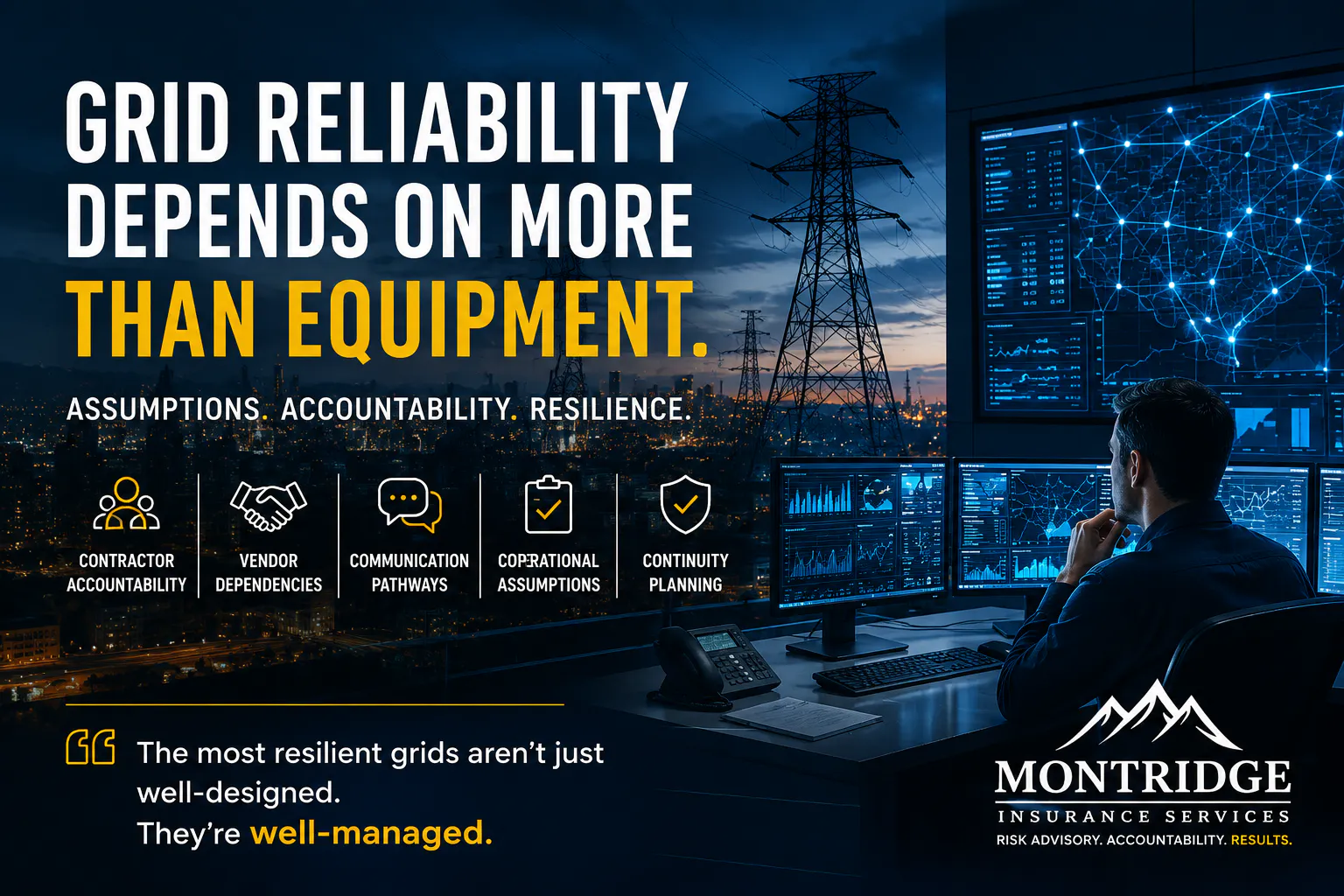
The most resilient organizations don't just focus on equipment reliability.
They continuously evaluate:
• Contractor accountability
• Vendor dependencies
• Communication pathways
• Operational assumptions
• Continuity planning
In my experience, grid reliability is not solely an engineering challenge.
It is also an accountability challenge.
When organizations understand who owns what, who responds when, and what assumptions exist between stakeholders, resilience improves dramatically.
What do you believe presents the greatest long-term challenge to grid reliability today:
Aging infrastructure?
Vendor dependencies?
Workforce shortages?
Cybersecurity threats?
Contractor coordination?
I'd be interested in hearing perspectives from those working directly in grid operations, utilities, and energy infrastructure.