


SPONSORED CONTENT
Across the United States, thousands of dams and navigation structures sit largely underutilized, serving purposes for which they were built decades ago while offering untapped potential for renewable energy generation. As the energy industry looks for practical ways to increase carbon-free electricity without constructing entirely new infrastructure, projects like the Lock and Dam 14 Hydropower Project (Lock 14) on the Kentucky River demonstrate how innovation, collaboration, and thoughtful engineering can breathe new life into existing assets.
Developed by Appalachian Hydro Associates (AHA) in partnership with Berea College, Lock 14 represents more than just another renewable energy facility. It is the next chapter in a vision that began downstream at Lock 12 with the Matilda Hamilton Fee Hydroelectric Station, the first new small hydropower project built in Kentucky in nearly a century. Now, just 35 miles upstream, Lock 14 builds upon that success while showcasing how lessons learned can lead to even smarter, more efficient hydropower development.
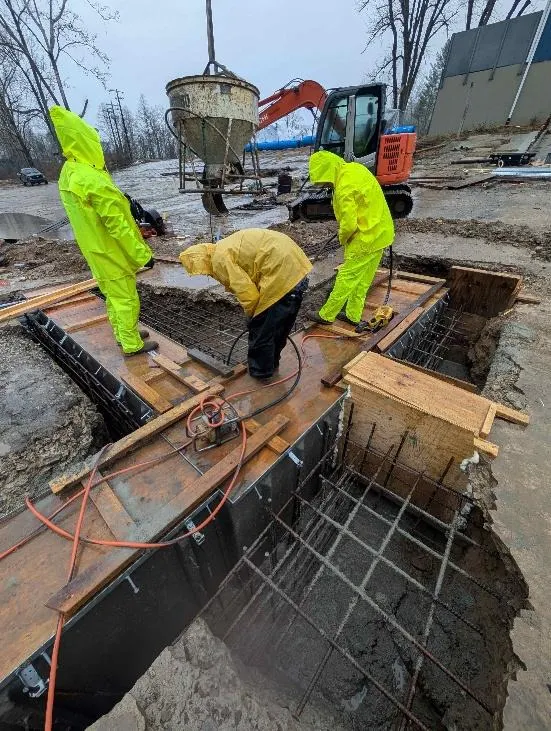
Learning From Success
Every hydropower project presents its own unique challenges, and Lock 14 is no exception. Originally constructed as a navigation lock and later abandoned in the mid-1990s, the structure continues to serve the Kentucky River for water supply and recreation. Rather than allowing this valuable infrastructure to remain dormant, AHA saw an opportunity to transform it into a source of clean, renewable energy while preserving its historic character.
The result is a 3,030-kilowatt hydropower facility capable of producing approximately 30% more electricity than its predecessor at Lock 12. But the increased generating capacity tells only part of the story.
The real innovation lies in how the project evolved.
Rather than simply replicating the Lock 12 design, the project team challenged every aspect of the facility to improve constructability, simplify operations, reduce maintenance, and increase long-term reliability. That philosophy led to a series of engineering decisions that collectively redefine what modern small hydropower can look like.
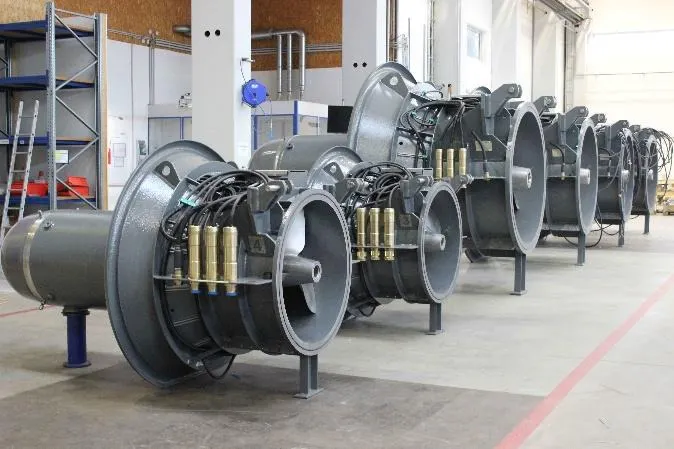
A Different Approach to Small Hydropower
At the heart of the project are six Voith StreamDiver horizontal bulb turbines, a departure from the vertical Flygt turbines installed at Lock 12.
The compact, fully submersible units are ideally suited for low-head sites like the Kentucky River. Their horizontal configuration allows water to pass directly through the turbines while dramatically simplifying the powerhouse structure.
The design reduced concrete requirements for the powerhouse by approximately 40%, lowering both construction costs and the project's overall environmental footprint.
Innovation extended well beyond the turbines themselves.
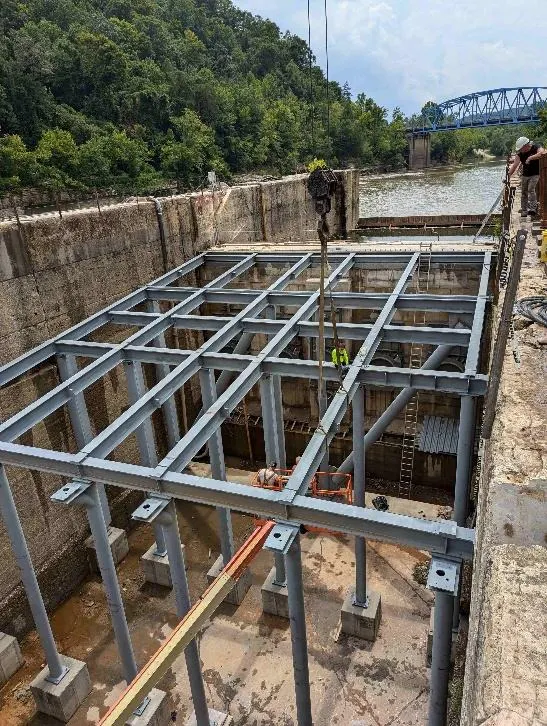
Instead of relying on traditional headgates and mechanical trash rakes, equipment that often requires significant maintenance, the design incorporates the StreamDiver's integrated knife gates along with a submerged horizontal trash rack. A rubber dam positioned downstream maintains the headpond while allowing debris to be flushed naturally through the system, eliminating the need for mechanical debris removal.
The result is a hydroelectric facility that operates almost entirely below the river surface, preserving the appearance of the historic lock while minimizing impacts on flood elevations and surrounding river conditions.
Combined with remote monitoring and controls, the facility is designed to withstand major flooding events and operate with remarkably low maintenance requirements, making it one of the most operationally efficient small hydropower plants constructed to date.
Making Existing Infrastructure Work Harder
One of the most compelling aspects of Lock 14 is that it demonstrates how existing infrastructure can be repurposed instead of replaced.
By constructing the powerhouse directly inside the abandoned lock chamber, the project avoided many of the environmental and construction challenges associated with developing entirely new hydropower facilities. The in-river construction footprint remained largely confined within the existing structure, reducing permitting complexity, minimizing impacts to the river, and helping control project costs.
As utilities and developers nationwide evaluate opportunities to expand renewable generation, this type of adaptive reuse offers an increasingly attractive pathway for future development.
By combining existing infrastructure with innovative turbine technology, simplified operations, resilient design, and long-term sustainability, Lock 14 demonstrates that modern hydropower can be both environmentally responsible and economically practical.
As demand for reliable renewable energy continues to grow, projects like Lock 14 remind us that some of the most promising opportunities aren't found by building something entirely new, they're found by looking at existing infrastructure through a different lens.