


AI isn’t running out of data, it’s running out of electricity.
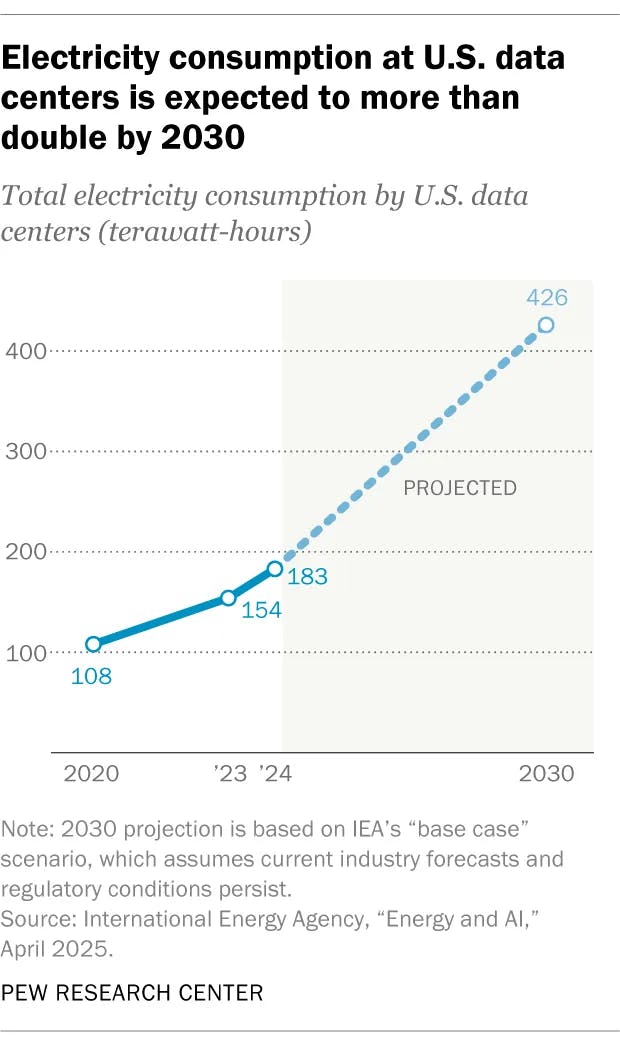
The rise of artificial intelligence is creating a new kind of energy race, one that’s reshaping grids, geopolitics, and who actually pays the power bill. According to PEW Research Center, electricity consumption at U.S data centers is expected to more than double by 2030. The increase in the electricity usage has started hitting the customers bills.
The energy boom behind the AI boom
Tech giants are racing to build new data centers to feed the explosion of AI computing demand. This year alone, U.S. data-center electricity use is projected to jump 22% - the fastest growth rate on record.
But the grid can’t keep up. Power shortages are already delaying projects by two to six years.
We picture AI as an infinite cloud but it’s built on a finite grid.
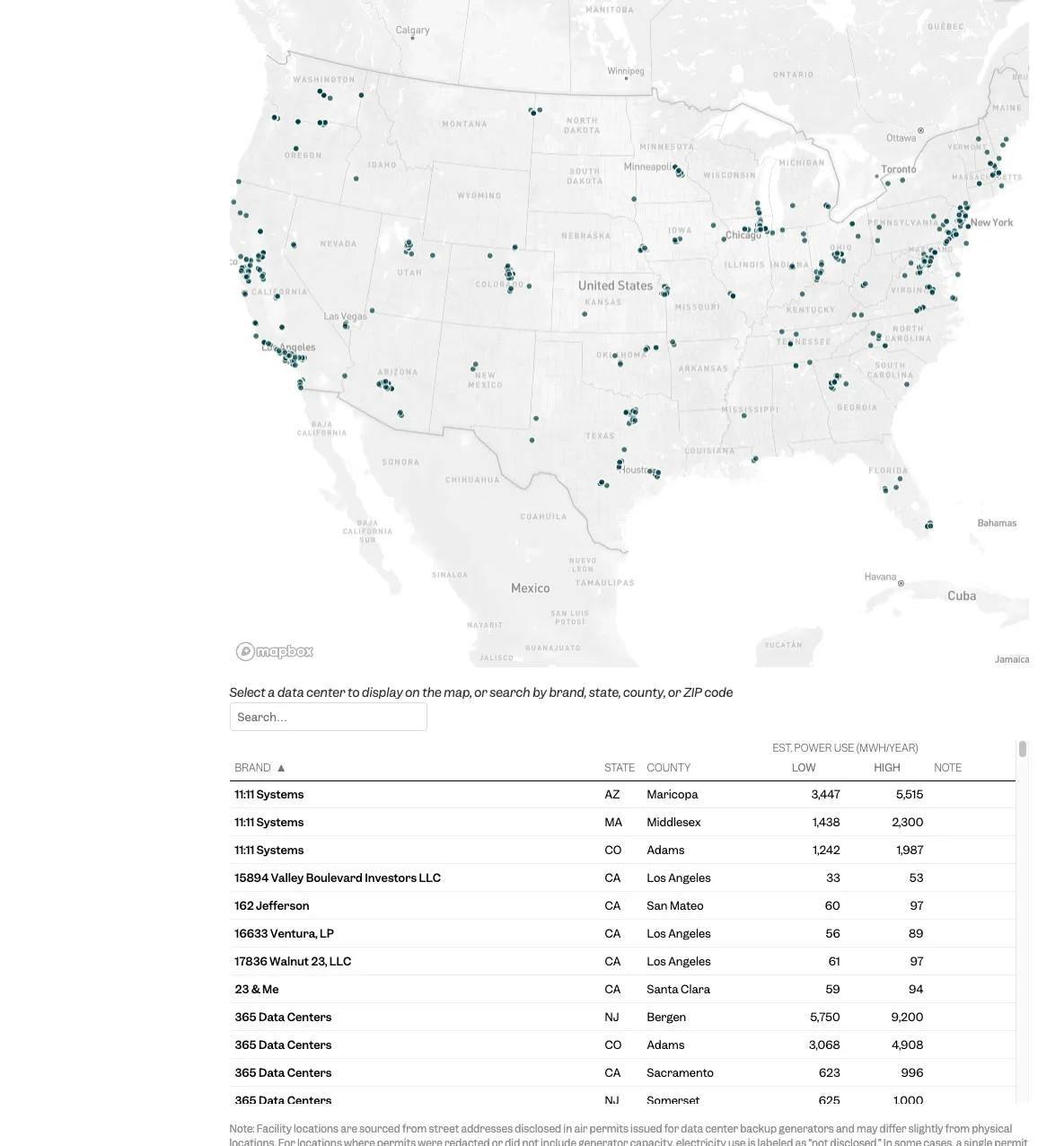
Roughly 1,500 new data centers were announced this year only 25% are actually under construction. Checkout the database and the map created by Business insider to learn about where these datacenters are built and its power capacity.
Business insider says:
“To create the most complete account yet of the location and power usage of data centers across the United States, we seized on a feature that’s consistent across every single facility: the need for backup power”
“Most companies use diesel generators for backup power, and state authorities require those generators to have air permits if they are large enough. We requested air permits from all 50 states and Washington, DC, asking agencies to search permits using industry codes commonly assigned to data centers. We pulled state records, linked hundreds of shell companies to their corporate parents, and took some municipalities to court to obtain public information”
Backup power technologies are becoming more critical than ever to ensure reliability, consistent power supply and minimze the downtime. I will conduct a separate deep dive on the leading players, different technologies and the future of backup power.
So the big questions are:
Can America actually produce and deliver enough electricity for the AI era?
And if it can, who’s paying for it?
OpenAI reportedly wants to build a chip network that would consume 250 GW of power by 2033 and that’s one-fifth of the entire U.S. generation capacity. If OpenAI were a country, it would rank 7th in the world for electricity production ahead of France, South Korea, and Brazil. Even if the U.S. keeps adding power at last year’s record pace (56 GW), OpenAI’s vision alone would swallow half of all new capacity for the next eight years.
Can we build our way out?
For context, if we were to build these datacenter using different energy technologies:
Nuclear: 250 new reactors → $12.5 trillion → 15 years each.
Natural Gas: Only 12.5 GW coming online this year — OpenAI’s target is 20× that.
Solar + Wind: Fastest and cheapest — but politics are gumming up the works.
The One Big Beautiful Bill Act could slash U.S. solar growth by ≈ 20%, adding new permitting hurdles just when we need speed.
The local backlash
Communities are pushing back. Over $64 billion worth of data-center projects have been blocked by residents citing higher bills, environmental impacts, and minimal local jobs. In major hubs, electricity prices have jumped 267% in five years.
Apple’s $1 billion North Carolina data center created < 100 permanent jobs.
For many towns, the math just doesn’t add up: higher rates, little return, and a power drain for something abstract called “AI”
Simplergy take:
As AI-driven data centers consume massive amounts of electricity, there’s an opportunity for innovation in how we manage the surrounding grid stress.
One bold idea: subsidizing distributed energy resources (DERs) like rooftop solar, home batteries, smart thermostats, and heat pumps for the communities living near data centers.
By empowering these neighborhoods with flexible, grid-connected assets, data center operators could help balance local demand, stabilize the grid, and create community-scale Virtual Power Plants (VPPs)
This model turns data centers from energy hogs into catalysts for resilient, community-driven clean energy systems.
AI is now the largest source of investment debt in the U.S. If investors start asking “Where’s the power going to come from?” yields rise, valuations fall, and the AI bubble could burst… not from a chip shortage, but a kilowatt shortage.
AI doesn’t just need intelligence — it needs infrastructure.
The next frontier for AI is in substations, solar fields, and battery farms and all distributed energy resources.
Reference:
https://www.profgmarkets.com/p/ai-s-power-demand-is-driving-up-your-electricity-bill