AAAS: "Halted dam releases threaten Colorado river ecosystems."
"Last week, Lake Mead reached its lowest water level on record, and is now at only 27% of its [design] capacity." It was last full in 1983 + has declined almost continuously over this century, with most of the water going to growing cities + thirsty crops in Arizona, California, and Nevada. "If levels continue to fall, it could jeopardize production of hydropower from the dams, which generate enough electricity for 1.6 million homes."
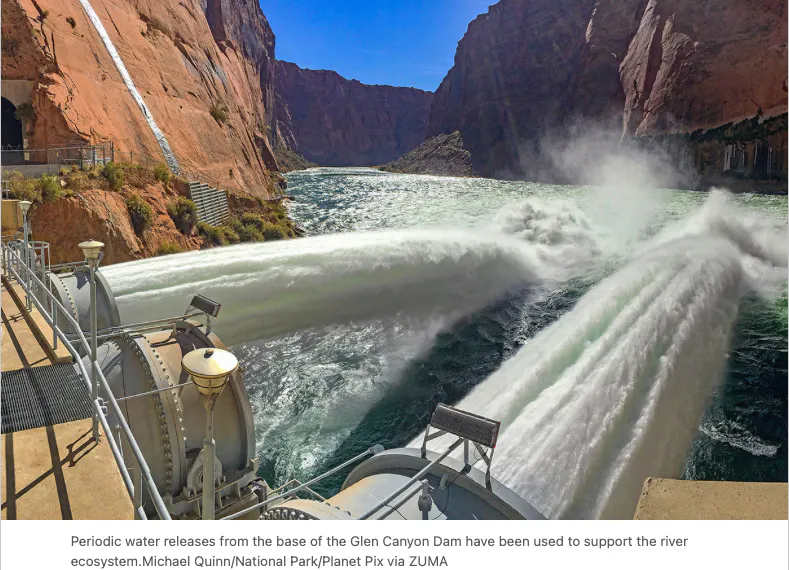
In 2024, the U.S. Bureau of Reclamation (USBR) opened outlets at the base of the Colorado River’s mighty Glen Canyon Dam, unleashing gushers of water in an experiment meant to cool waters downstream. The strategy, called a “cool mix” release, aimed to thwart breeding of invasive smallmouth bass and protect native species. “It was very effective,” says Kevin Bestgen, a fish biologist at Colorado State University, so much so that the release was repeated in 2025.
"But with the Colorado’s reservoirs at historically low levels, there may be little political will to release water to protect ecosystems." In August, USBR, which operates dams on the river, canceled this year’s cool mix release. In April, the agency also nixed one of the periodic “controlled floods,” a much larger cascade intended to redistribute sediment and build sandbars that provide habitat for fish.
"This year saw record low snowpack levels in the Rocky Mountains, which means less water flowing downstream into the two largest reservoirs in North America: Lake Powell behind the Glen Canyon Dam and, [downriver], Lake Mead behind the Hoover Dam." The new management plan gives USBR the right to cut back significantly how much water is released from the reservoirs. "Alongside reliable water delivery, a long-standing USBR priority has been hydropower."
Most people can see the fingerprints of climate change all over this scenario. We are in an era of protracted drought for the southwestern US. This is not manageable unless we fix the climate system.