


If you live in the 13-state plus District of Columbia footprint of PJM Interconnection, the country’s largest grid operator, you’ve probably gotten a dose of adrenaline—or pure anger—as you opened your electric bill over the last year. What you may not know is that many of those scarce dollars coming out of your wallet are going directly into the wallets of data center owner-operators. It’s a form of socialism, yes, but cleverly, for billionaire owners and wealthy shareholders, it works in reverse: privatize the profit, socialize the cost.
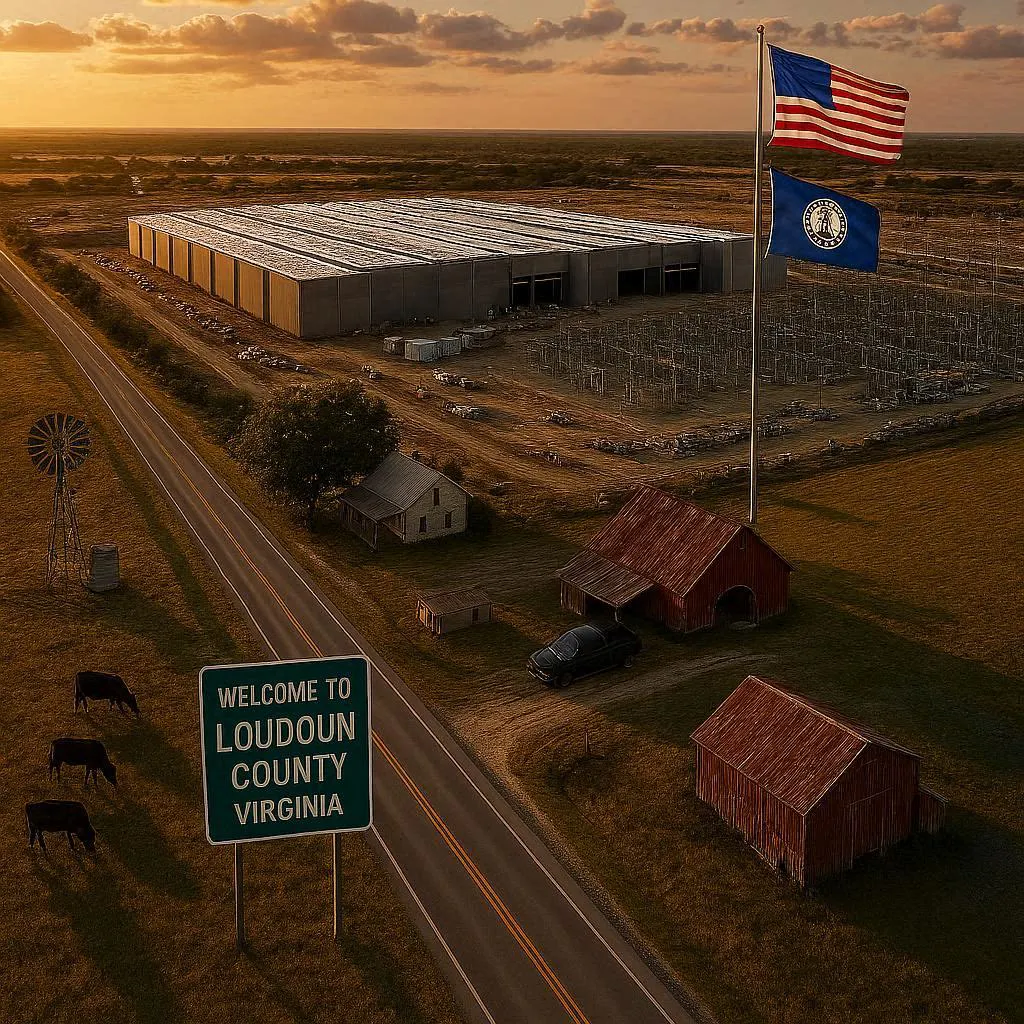
Slightly more fortunately, although the jury hasn’t yet been empaneled, some ratepayers and even entire communities are starting to catch on to the data center scam. From northern Virginia’s once bucolic Loudon County, already the data center “capital” of the country, to central Ohio, where dozens of unmarked data centers, enclosed in tall, black security fences and fortified gates line Interstate 270, local residents are figuring out that there’s a reason their electric bills have gone up 20, 30, and even 40 percent—and it’s not because they’re plugging in 50 more new devices. Or putting up Clark Griswold-worthy Christmas lights and running them 24/7/365. It’s because techbros and their developer minions are putting up power-hogging, “hyperscale” data centers that cost tens to hundreds of millions merely to interconnect to the grid, and then many millions more yearly for the electrons their endless racks of servers consume, adding to the cost of the massive cooling systems keeping them from melting. And we haven’t yet touched on the noise that all of this creates, or the millions of gallons of water they demand, which is then not available to the local community, inevitably driving that cost up, as well.
Certainly not to the liking of data center developers and their techbro masters, communities around the country are waking up to the prospect that they, too, may see their quiet, green countrysides turned into a dystopian hellscape of monolithic white boxes, extending many football fields in length, directly adjacent to electrical substations, the latter often thinly-disguised by shrubs and trees that belie the humming switchgear and step-down transformers, still mostly in plan view. So even in NOVA, where these monsters are already well entrenched, to hundreds of miles away in the Buckeye state, movements are well underway to push back, including birthing legislation to use force of law to say “ENOUGH!” And those states join efforts in Georgia, Maine, Maryland, Michigan, Minnesota, New Hampshire, New York, Oklahoma, South Carolina, South Dakota, Vermont, Virginia, and Wisconsin, which have introduced moratorium bills or regulatory pauses, while local governments in dozens of cities and counties have enacted temporary freezes.
Coming from 30 years in corporate communications and public relations, after several years in the Marine Corps and U.S. State Department, I well understand how and why developers seek professional help to talk to and persuade their communities that data centers bring good things. But I am chagrined to see that even small, local PR firms are setting up “data center practices” to tout jobs, economic development, infrastructure improvements, a patriotic role in “beating China” and “national security,” and even environmental benefits.
In reality, after construction ends there’s just a handful of permanent jobs; the tax breaks go only to the data center owners; new infrastructure will be paid for as always by taxpayers; and the jingoistic flag-waiving fades in the face of pollution, noise, increased electric bills; and reduced property values.
Currently, the majority of new data centers is going up in PJM Interconnection, the Regional Transmission Organization (RTO) which includes all or part of Delaware, Illinois, Indiana, Kentucky, Maryland, Michigan, North Carolina, New Jersey, Ohio, Pennsylvania, Tennessee, Virginia, West Virginia, and the District of Columbia—65 million people over a footprint of 369,000 square miles. And those people are starting to figure out that these behemoths may not, after all, be ideal neighbors. Many of the governors of those states, too, have come to the same conclusion, or at least realized, as Maryland Governor Wes Moore has, that “There’s no clear plan by PJM to address both affordability and reliability,” referring to rapidly rising electric bills driven in large part by data centers, that PJM's leadership appears unable to manage.
And a number of independent organizations, including The Union of Concerned Scientists, have concluded that the unfettered rise of these electronic warehouses is costing ratepayers in PJM states billions, for transmission upgrades that benefit only data center owners.
Read more below, as E&E News tells us "Power prices in the nation’s largest grid market [PJM] jumped almost 76 percent in the first quarter year-over-year, showcasing how energy demand driven by data centers is remaking the economy across the mid-Atlantic and Midwest."
Remaking the economy, indeed.
https://www.eenews.net/articles/data-centers-drive-76-surge-in-pjm-power-prices/