


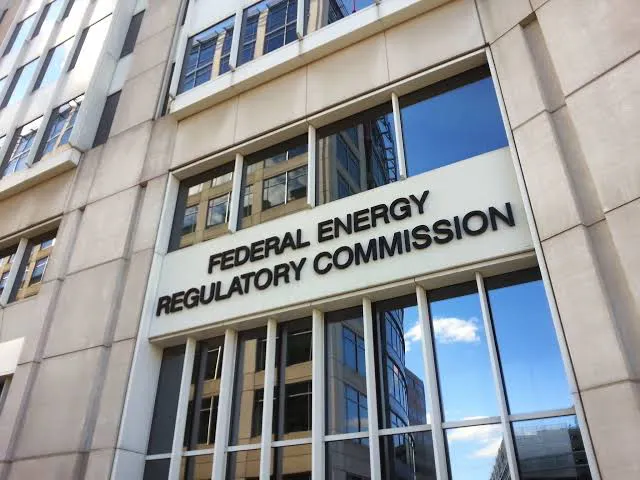
FERC, rather suddenly via its "DOE‑initiated Large‑Load Interconnection ANOPR (June 18, 2026)" is asserting the maximum scope of its Federal Power Act (FPA) authority, with a "Show Cause" order directed at all its jurisdictional RTOs and ISOs, including PJM, ISO New England, NYISO, MISO, SPP, and CAISO.
The order appears to be based on FERC's view that unfettered hyperscale data center load growth has become a problem, and because it involves interstate transmission planning and wholesale market reliability, if falls under federal jurisdiction. The legal basis, apparently, is the FPA's provisions governing reliability, economic efficiency, and the planning and operation of interstate transmission facilities. With this actionl FERC is carefully skirting the line to avoid direct involvement in retail rate design, but making clear that the massive scale of data center-driven loads now produces regional impacts that fall within its oversight. Some state governments and their PUCs will differ, so this may merely be the opening salvo, but in some regions--particularly PJM, where many state governors have angrily clamored for such action--there's strong support for FERC finally taking action.
For now, FERC is seeking to ensure that all grid operator adopt standardized methods for modeling large load additions--unfettered data center growth, obviously--into comprehensive long‑term transmission planning, and conduct interconnection studies that reflect the full, considerable, and increasingly system-burdening impacts of hyperscale data center facilities (some, not all, are AI-specific data centers; others, more traditional corporate backup and cloud facilities). FERC is also preparing to require revisions to cost allocation rules such that new loads driving transmission investments are identified and assigned a proportionate share of the costs. These changes will alter how regional operators evaluate loads, plan networks, and distribute interconnection and transmission upgrade costs.
The technical driver is the unprecedented scale of transmission and interconnection spending required to serve data centers, triggering the need for new substations, high‑capacity feeders, and in many cases new high‑voltage transmission lines. Costs routinely reach into the billions of dollars and are currently socialized across all customers under existing tariffs. Residential and small business customers in PJM, in particular, are highlighted as bearing a disproportionate share of these costs because PJM hosts the largest concentration of new data centers, and its cost allocation rules spread their massive interconnection and upgrade expenses across the ratepayer base, to the great benefit of the billionaire techbros, their shareholders, and data center developers. In Maryland, for example, the issue recently reached a boiling point, as Maryland legislators asserted in a recent filing at FERC: “While PJM’s rules are unfair for many PJM states, they impact Maryland disproportionately simply because Maryland sits next to Data Center Alley in Virginia. Given the projections of massive data center growth — more than 80,000 megawatts over the next 20 years — PJM is likely to bill Maryland customers billions more for future data center-driven transmission costs.”
This creates a structural fairness problem rooted in a mismatch between cost causation and cost responsibility. Hyperscale operators and their investors capture the economic benefits of data center expansion, while ordinary ratepayers absorb the infrastructure costs required to support that expansion. State regulators have faced increasing political pressure, and several states are considering legislation to restrict, pause, or even outlaw new data center development, buttressed by grassroots opposition that has become increasingly well-organized, vocal, and unrelenting. The scale of the impacts has pushed FERC to intervene because the consequences extend beyond individual states and affect the reliability and economic performance of entire regional grids.
To be sure, FERC’s approach will be contested. Some state regulators and legal experts argue that FERC is encroaching on state authority by influencing how costs ultimately flow to retail customers. FERC is attempting to remain within its authority by focusing on transmission planning, interconnection, and wholesale market impacts, but the boundary between federal and state authority will be tested and will likely end up in the courts. The coming rules are also likely to trigger political challenges and consequences within and among the states, yet they reflect a growing recognition that the current framework cannot manage the speed and magnitude of data center driven load growth without stronger federal coordination and basic fairness to ratepayers.