


Utilities have spent years investing in Distributed Energy Resource Management Systems (DERMS), often with the hope that one platform could finally “manage DERs.” But DERMS is not the destination. It’s one piece of a much larger shift: building an operating model that can model, forecast, dispatch, and settle DERs at scale. The real challenge isn’t buying technology; it’s learning to operate with renewables, distributed or not.
Renewables are reshaping grid operations because they behave differently from traditional resources. Their growth, diversity, and variability create new operational requirements that no single system can solve on its own. Understanding that difference is the starting point for understanding why DERMS has struggled, and what utilities must do instead.
Why renewables are changing the operating model
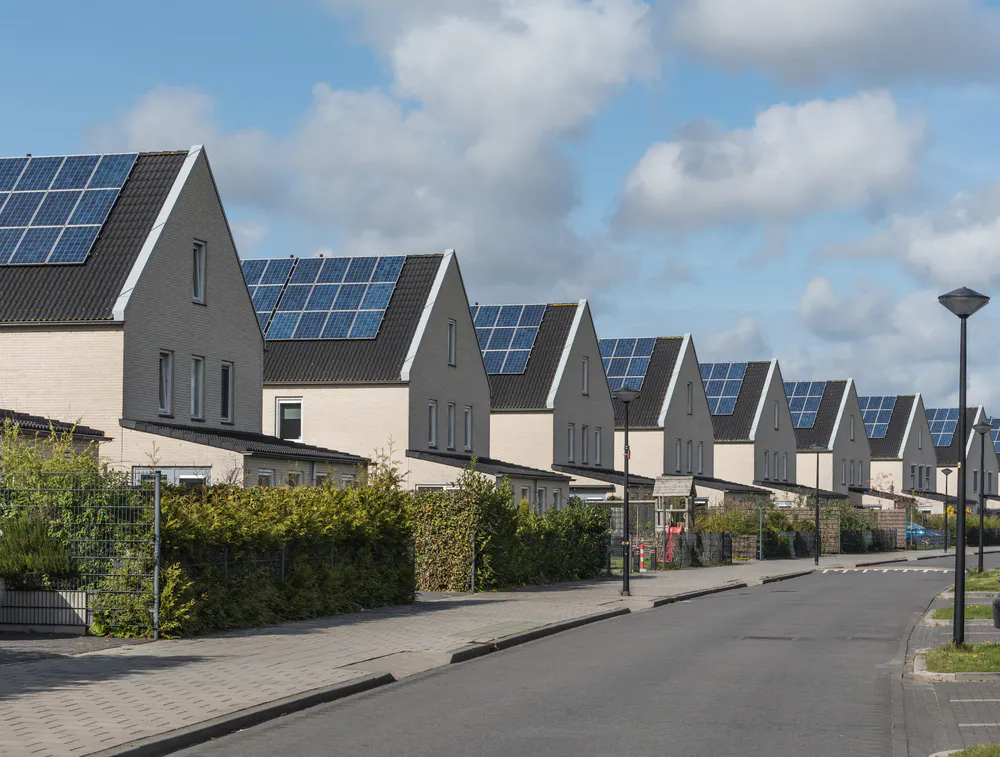
Renewables are entering utility systems in forms that do not fit the old categories. Large solar farms, wind plants, small modular reactors, and multi‑megawatt storage installations connect at both transmission and distribution levels. These resources may be owned by utilities or by third parties. At the same time, customer‑installed resources are growing just as quickly, from residential rooftop solar to behind‑the‑meter systems at data centers.
Their operational characteristics vary widely. Some resources are dispatchable because they include storage or hybrid controls. Others are fully intermittent and respond only to weather and time of day. This mix of sizes, ownership models, connection points, and controllability creates a level of diversity the grid has never had to manage before.
That diversity creates a need far greater than what software selection can solve. It requires the reshaping of the operating model itself. It requires the EMS and ADMS to absorb new components and creates the need for DERMS as a coordination layer, requiring utilities to model, forecast, and dispatch renewable‑based resources in ways that preserve reliability across both transmission and distribution.
Why DERMS hasn’t delivered what utilities expected
Many utilities approached DERMS as a technology purchase rather than as part of a broader operating model shift that defines how DERs would be operated within their system. The expectation was that DERMS would manage DERs automatically, without significant changes to processes, roles, or data flows. In practice, DER integration is not a visibility problem; it is a modeling and dispatch problem. No platform can compensate for missing telemetry, inaccurate feeder models, or unregistered DERs, and these gaps limit the value any DERMS can deliver.
DERMS maturity has also lagged behind DER growth. Most platforms were built for distribution-connected assets like rooftop solar and EVs. They offer limited support for transmission-connected renewables, and their contract and tariff logic remains shallow. That means DERMS often can’t enforce curtailment limits (if at all), performance obligations, or penalty structures, all essential when DERs behave like generators.
Another persistent misunderstanding involves system roles. DERMS is not a real-time control system. EMS and ADMS already provide SCADA, telemetry, and dispatch pathways. They are the authoritative control systems. DERMS should complement them by coordinating constraints, forecasts, and DER availability, not replace them.
The importance of T&D coordination is still evolving. Transmission and distribution operate with distinct but interdependent responsibilities, yet effective DER dispatch depends on shared situational awareness and aligned constraints. This is because transmission and distribution actions influence each other, and most DERMS platforms are not designed to bridge these organizational and technical gaps on their own, which makes coordinated processes and data flows essential.
Common pitfalls utilities still fall into
Even today, many utilities still treat DERs as peripheral or burdensome, rather than as resources that must be operated with intent and rigor. But utilities must model, forecast, dispatch, and settle DERs with the same rigor applied to traditional generators.
Contractual and tariff constraints are another blind spot. DER programs include curtailment limits, performance guarantees, and customer-specific rules. If these aren’t modeled correctly, dispatch becomes inaccurate, and settlement becomes contentious.
Data quality remains foundational. DERMS cannot fix missing SCADA points or outdated feeder models. Without accurate data and models, even the best algorithms produce unreliable results.
Customer engagement often doesn’t get the attention it deserves. DER programs only work when participation is easy, incentives are clear, and expectations are predictable. Demand response fatigue, unclear program rules, and complex enrollment processes all reduce available capacity. Treating customers as active contributors rather than passive participants is essential for building reliable, scalable DER portfolios.
What “Good” looks like in 2026
The utilities making real progress today are shifting from system-based thinking to outcome-based DER integration. They focus on the functions required to operate DERs at scale:
Model DERs, contracts, and tariffs
Forecast DER output and load interactions
Dispatch DERs across T and D subject to contractual limitations
Settle based on actual performance and contractual considerations
This approach recognizes that no single system can do all of this. Instead, utilities are adopting multi-system architectures where DERMS, EMS, ADMS, forecasting engines, contract systems, and settlement platforms each play distinct roles.
EMS and ADMS remain the real-time data acquisition and control backbone. DERMS becomes a planning and coordination layer that informs dispatch rather than executing it. Operators continue to work with a single operational view that includes transmission-connected and distribution-connected renewables, demand response, storage, forecasts, constraints, and dispatch outcomes.
Scalable architecture becomes non-negotiable. Systems must be designed for exponential DER growth — not incremental additions — with data models, forecasting engines, and dispatch logic that can expand as customer-owned assets proliferate.
Customer-centric engagement becomes essential. Enrollment must be simple, incentives transparent, and performance expectations predictable, so that customers are fully informed about their returns. DER programs scale only when customers stay engaged and frictionless participation becomes a core part of the operating model.
T&D alignment rounds out the picture. Shared forecasts, shared constraints, and coordinated dispatch logic allow DERs to support both distribution reliability and transmission-level balancing.
Conclusion
DERMS alone is insufficient. Utilities succeed not because they own a DERMS, but because they can use DERs effectively at scale, in real time, across transmission and distribution, within contractual limits, and with meaningful customer participation.
The system is the means.
The operating model is the method.
The outcome is the point.
A modern utility’s success depends on building an operating model that blends traditional and nontraditional resources, integrates customer‑owned assets, and coordinates multiple systems toward shared objectives. DERMS contributes to this future, but it is not the destination. The outcome matters most, and the operating model is how utilities achieve it.