By Kennedy Maize
Trump’s confusing “war of bad choice” against Iran has produced vivid unavoidable, anti-Trump display ads all across the country — EXXON: $4.20.9, Shell: $4.18.9, BP:$4.21.9; Crown:$4.09.9–and so it goes in terms of the political damage. But where the economic rubber actually hits the road is getting less overt attention: diesel fuel.
University of California Berkeley economist Maximilian Auffhammer writes in a blog post, “Diesel is not just another fuel. It powers the trucks that move nearly everything you buy. When diesel prices spike, owner-operators feel it immediately in their margins, freight rates adjust, and eventually those costs show up in the prices of goods. Trucks are literally driving inflation into your home.”
Retail diesel prices are consistently running at least a dollar a gallon more than regular, 87-octane gasoline across the country. In California, where fuel prices are always the highest in the continental U.S., a Shell station in Rancho Cordova late last month displayed the price for regular petrol at $5.89.9 and diesel at $7.25.9.
Auffhammer notes, “Diesel is deeply tied to global economic activity. When things get tight, prices jump. And when prices jump, the entire logistics chain feels it. Now zoom in on trucking. For an owner-operator, fuel is not some small line item. It is the line item. When diesel spikes, there is very little room to hide. Some costs get passed through and some simply squeeze profits. Either way, the system is under stress. Which raises a natural question: is relying on diesel for long-haul freight actually a smart idea?”
As the Iran attacks drove up fuel prices, major distributors — FedEx, UPS, and Amazon — all announced fuel “surcharges” to reflect the war’s impact on their business. Amazon’s 3.5% hike, which goes into effect April 17, will apply to its third-party sellers and be calculated on fulfillment fees, not on the item’s sale price.
Auffhammer notes, “If you are running a trucking business today, diesel is the safe choice. But from a societal perspective, the picture looks very different.” Diesel trucks emit greenhouse gases and conventional air pollutants. Auffhammer comments, “None of these costs show up directly in the trucker’s balance sheet. This is the classic wedge between private and social costs that we teach in Environmental Economics 101, and it is alive and well on I-5.”
A paper last December in Nature Communications, where Auffhammer was a co-author, makes the case for switching to electric. The private costs of big battery trucks remain higher looking out to 2035. But the social costs are lower, says Auffhammer in his blog: “When you account for climate damages and human health impacts, their external costs are roughly 64 to 69 percent lower today and up to 70 to 80 percent lower by 2035. The improvement comes from the fact that we expect the grid to become cleaner, due to the economics – not the politics – of renewables.”
Some truckers have longed for electric big rigs to replace diesel engines. But with little success. The New York Times recently reported, “Electric trucks are expensive. They can run two or three times the cost of diesel-powered vehicles. They’re also harder to electrify than cars, in large part because of their size — it takes a lot of energy to pull tens of thousands of pounds of cargo.”
The Trump administration’s antipathy toward anything promising environmental improvements has hurt. The Times noted, “In the U.S., the dismantling of electric vehicle tax incentives by the Trump administration and Republicans in Congress has hampered growth.” So has repeal of a California regulation “that would have required half of all new trucks sold to be electric by 2035.”
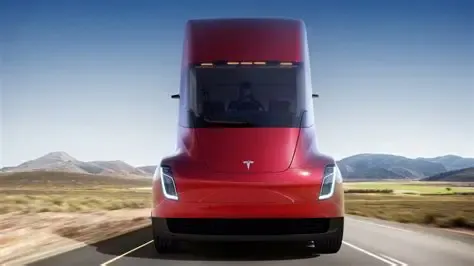
But Trump’s misadventure into civilization change in Iran, and the spike in diesel prices, may have helped the move away from diesel. Tesla, which has long been working on rolling out a commercial electric semi, originally planned for 2022, occurred in February. At the time — an example of the need for journalistic caution — Forbes headlined its story: “Tesla’s Semi Is Finally Hitting The Road. The Timing Couldn’t Be Worse,” adding, “Elon Musk’s long-delayed ‘beast’ goes into production as federal support for EVs withers and rising power costs complicate his claims it will be cheaper to run than the diesel rigs he wants to replace.”
And then along came Iran. Tesla’s timing looks uncanny.
In the meantime, sales of electric big rigs have been booming outside of the U.S., led by China, which has become the worldwide leader in electric vehicles of all sizes and shapes. The Times quoted University of California Davis transportation expert Daniel Sperling, who observed, “There’s a huge amount in China and a lot in Europe, but there’s almost nothing in the U.S.”
According to the International Energy Agency, “Sales of electric medium- and heavy-duty trucks grew for the third consecutive year in 2024 to exceed 90 000 worldwide. Year-on-year growth was almost 80%, a stark contrast to the decline in sales seen between 2018 and 2021. This spurt was largely a result of Chinese sales more than doubling between 2023 and 2024 – more than 80% of all electric trucks sold globally in 2024 were sold in China.”