


As organizations push toward more resilient, efficient, and sustainable infrastructure, Direct Current (DC) lighting has emerged as a quiet but transformative technology. Beyond energy savings, DC lighting provides a strategic advantage that traditional alternating-current (AC) systems struggle to match: a meaningful reduction in operational risk and liability.
At the heart of this advantage is the way DC lighting seamlessly integrates with renewable energy sources such as solar PV, battery storage, and even small-scale wind generation. Because these renewable technologies inherently produce or store DC power, a DC-based lighting system can connect directly to them with minimal conversion losses or dependency on grid stability. The result is a lighting network that remains operational even when the main power grid experiences outages.
Consider a manufacturing plant with mission-critical safety lighting. Under a conventional AC system, a grid failure could plunge essential work areas into darkness unless a diesel generator or large UPS system kicks in—and both systems introduce points of failure. By contrast, a DC lighting system tied directly to on-site solar panels and battery storage ensures that emergency lighting stays illuminated automatically, without transfer switches, fuel logistics, or startup lag. The risk of workplace accidents, equipment damage, and liability exposure is substantially reduced.
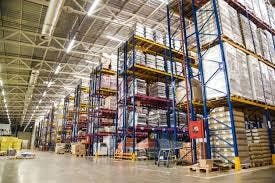
The risk-mitigation benefits extend to commercial buildings, warehouses, data centers, and campuses where uptime is non-negotiable. For example, a distribution center with 24/7 operations can maintain full lighting during seasonal storms or utility interruptions simply by drawing from its DC battery bank. This uninterrupted visibility translates to safer forklift operation, preserved productivity, and lower insurance or regulatory risk. Schools and healthcare facilities—where loss of lighting can endanger occupants or compromise emergency procedures—stand to benefit even more.
Optimizing Load Sharing and Renewable ROI
But enhanced resilience is only part of the story. DC lighting systems enable smarter, more efficient load sharing across renewable power assets, turning lighting from a passive energy consumer into an active player in energy optimization.
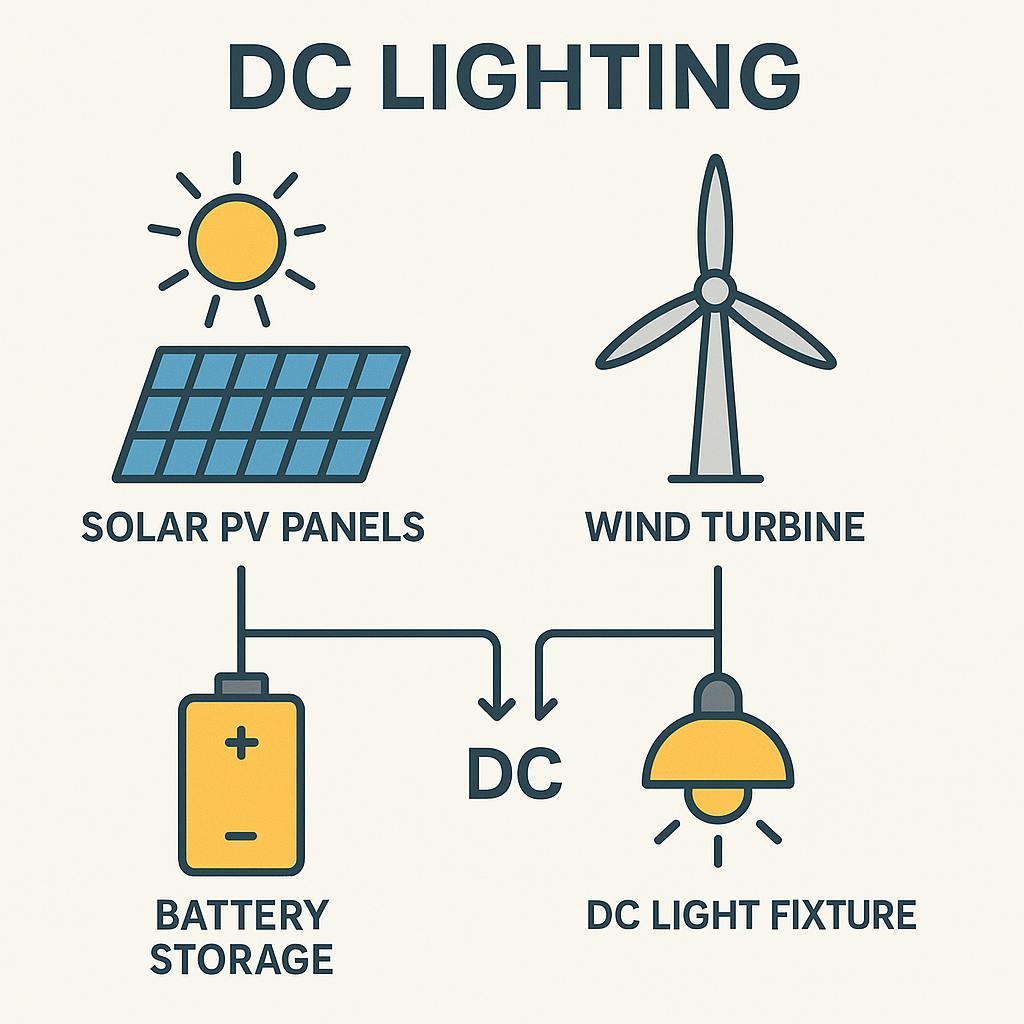
Because DC lighting can match its input directly to solar panels, batteries, or micro-wind turbines, the entire lighting load can be dynamically distributed across whatever renewable generation is available at any moment. This reduces strain on inverters, minimizes conversion losses, and allows facilities to extract more usable energy from their renewable infrastructure.
Imagine a retail store with rooftop solar. During the day, its DC lighting can run directly off solar
power, leaving more stored energy available in its batteries for evening use. Similarly, during peak grid-pricing hours, smart load controllers can prioritize lighting from on-site DC sources, cutting electricity costs without compromising illumination.
In large campuses or industrial microgrids, DC lighting becomes an asset that helps stabilize energy flows. Lighting loads can be shifted automatically to available solar or battery reserves, reducing demand spikes and extending equipment life. Over time, this intelligent load sharing increases overall system efficiency and significantly accelerates the return on investment (ROI) for renewable installations.
A More Resilient, Efficient Future
Direct Current lighting is more than a technological upgrade—it’s a strategic investment in risk reduction, operational resilience, and long-term energy performance. By aligning lighting infrastructure with solar PV, battery storage, and other DC power sources, organizations can ensure safer environments, reduce liability exposure, and unlock the full economic potential of their renewable assets. In a world where reliability and sustainability increasingly define competitive advantage DC lighting provides both.