



SPONSORED CONTENT
This article is co-authored by Gerardo Morales and Tony Gonzalez.
The largest U.S. electric utilities alone are planning to invest close to $1.2 trillion over the next several years.
That figure reflects a bottom-up aggregation of publicly announced capital plans across the industry’s largest players, including several investor-owned and public power entities. It does not represent the full universe of utilities, suggesting that total industry investment is likely even higher.
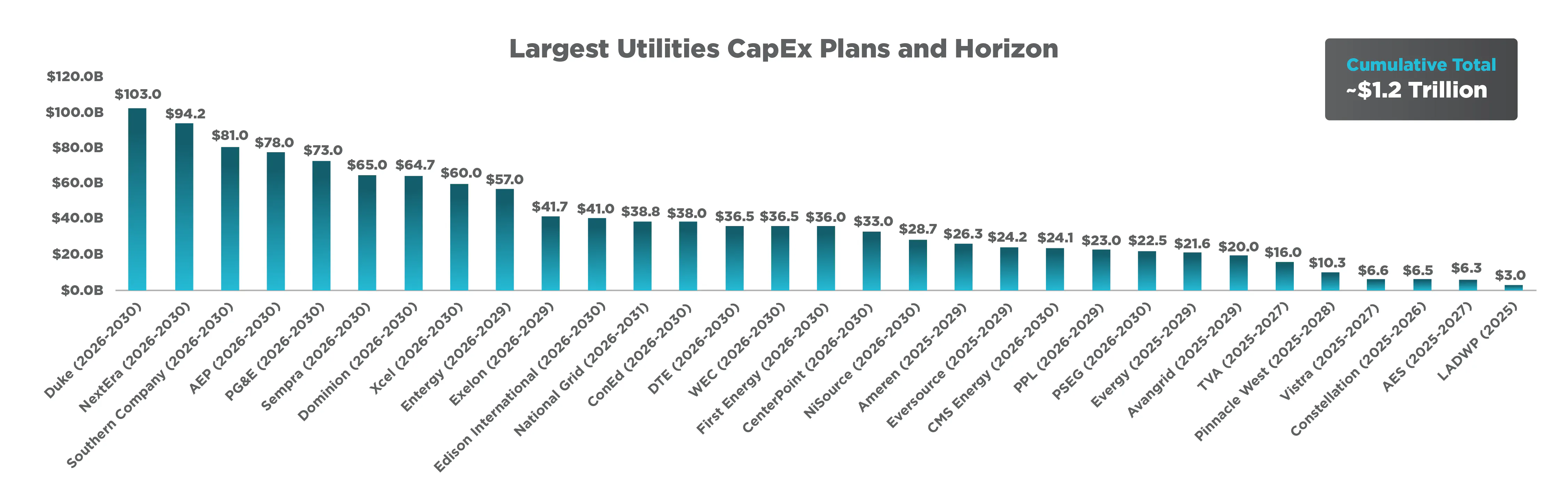
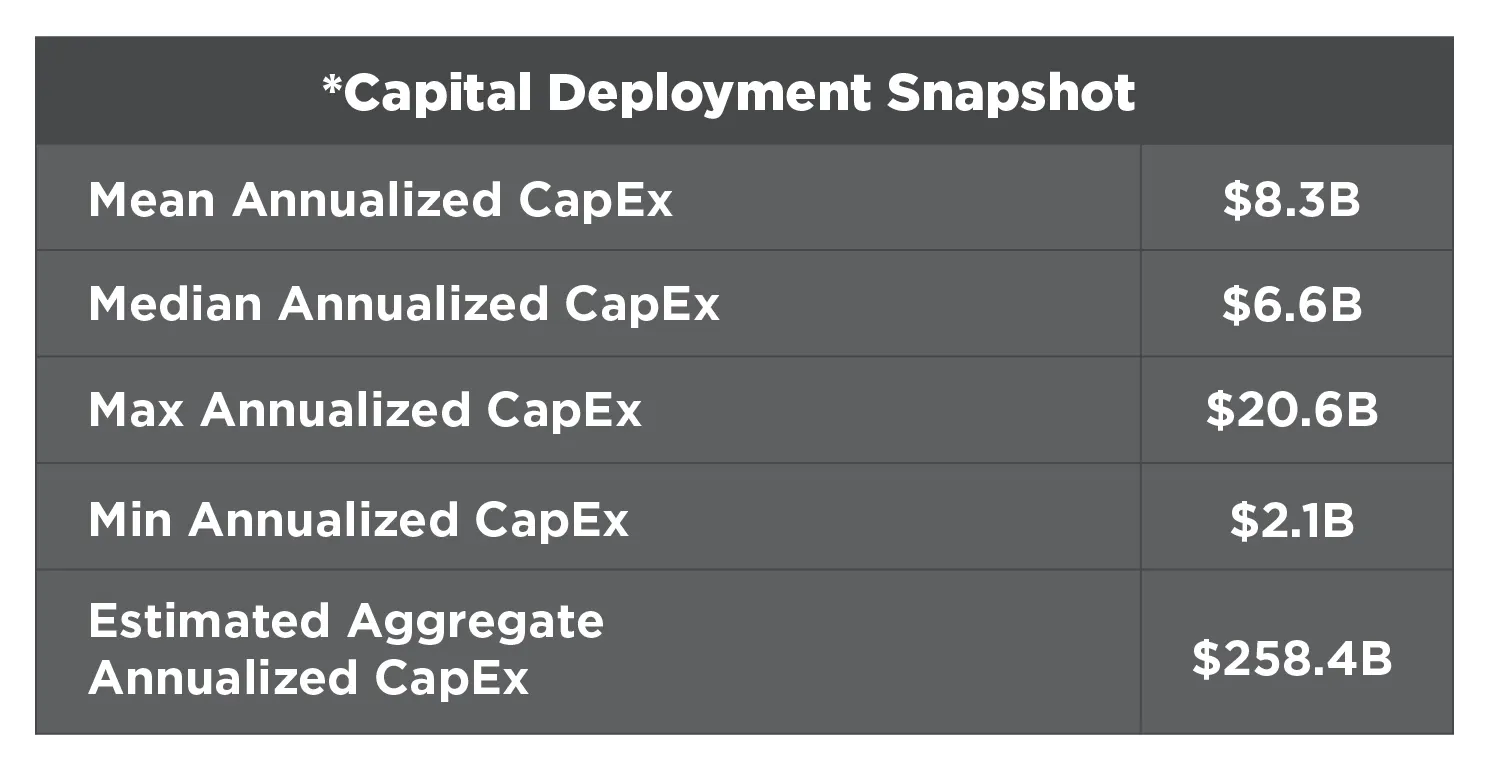
On an annualized basis, this translates to roughly $250 billion per year being deployed across the largest utilities alone. That level of sustained investment has few precedents in the industry. Most of the conversation to date has focused on the scale of that investment. The more important question is whether utilities are prepared to deliver it.
While some utilities are prepared, many are still adapting.
Across the industry, utilities are running into the same constraints. Supply chains for critical equipment remain tight. Contractor capacity is limited. Internal teams are stretched across an increasing number of large, complex projects. These pressures are not temporary. They are structural, and they are intensifying as more utilities ramp up spending at the same time.
What makes this cycle different is not just the scale of investment, but the level of coordination required to deliver it. Projects are more interconnected, timelines are more compressed, and dependencies across internal teams and external partners are greater than in prior cycles.
Yet many utilities are still operating with execution models designed for a different environment.
Planning, resource allocation, and project delivery are often managed in silos. Visibility into performance is fragmented. Decision-making processes are not always aligned with the scale and complexity of current capital programs. These gaps create risk, not at the approval stage, but during execution.
This is where the real exposure lies.
Regulators and stakeholders are also raising expectations. It is no longer sufficient to justify capital investments at a high level. Utilities are being asked to demonstrate that projects are prioritized effectively, that risks are actively managed, and that outcomes are delivered as expected.
The implication is clear. Success in this investment cycle will not be defined by how much capital is approved or deployed. It will be defined by how effectively utilities can execute.
That requires a shift toward a more structured capital deployment model, one that integrates planning, prioritization, resource management, and execution oversight. Utilities that build this capability will be better positioned to manage constraints, adapt to changing conditions, and deliver results at scale.
Based on work with utilities facing similar challenges, one pattern is clear: execution at this scale does not improve through incremental change. It requires strengthening a few core capabilities.
Execution at this scale requires strengthening a few core capabilities to name a few:
Capital planning must become more disciplined and coordinated, with clear prioritization, trade-off evaluation, and sequencing aligned to system needs and resource constraints.
Centralized oversight is increasingly important, as fragmented execution limits visibility and increases risk, making coordinated project delivery models essential.
Resource planning is under pressure, requiring earlier alignment of workforce and contractor strategies to meet growing demand across engineering, procurement, and construction.
Procurement and supply chain management are becoming more strategic, with proactive management of long-lead materials and supplier relationships directly impacting timelines.
Stronger systems and processes are needed to provide visibility into cost, schedule, and risk and support better decision-making across complex portfolios.
Taken together, these are not new concepts, but at this scale, they become essential.
The industry is no longer constrained by its willingness to invest. It is constrained by its ability to deliver.
And in this cycle, execution will define the winners. Those that do not focus on a more integrated execution find that the greatest risk is not underinvestment, but underestimating the difficulty of execution.
If you are interested in how these investment trends vary across individual utilities, including their capital plans, large-load exposure, and what it will take to execute at this scale, the full report is available here.