


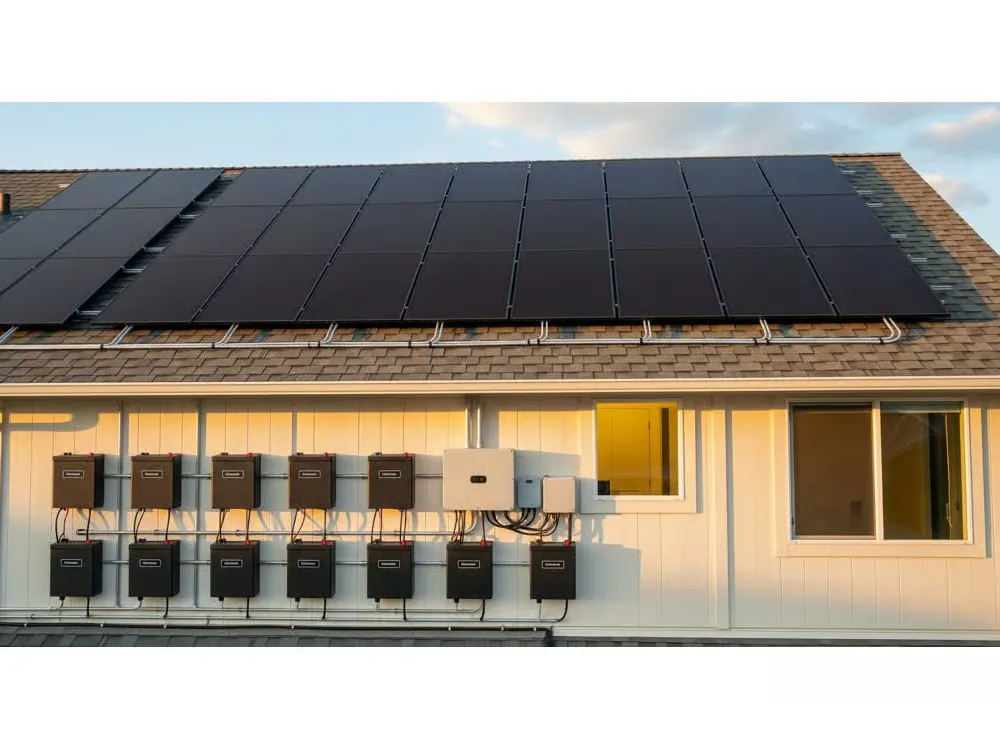
Solar energy system contractors and battery manufacturers have recently expanded their efforts to include battery storage capacity in residential and small commercial solar installations. Some are even teasing the idea of going off the grid. Adding a storage battery to a solar system is not a trivial expense. The typical installed cost of a single Tesla Powerwall 3, with a 13.5 kWh storage capacity, ranges from $12,000 - $16,000. Under cold weather design conditions this battery would power a 3 refrigerant ton (RT) heat pump for approximately 4 hours during a grid failure. Tesla Powerwall 3 battery systems can be configured in up to 4 unit arrays, which could power the 3RT heat pump overnight under design conditions, though at an installed cost of approximately $50,000.
Going off grid, particularly in a northern climate, is a very different proposition. Winter storm Fern blanketed much of the US Northeast with multiple inches of snow and also more than an inch of sleet in some locations. Persistent cold weather allowed the snow and sleet to remain for 10 or more days. In one specific case in Maryland, an 18.5 kW residential solar system “didn’t produce enough output to power a 100-watt light bulb” for 10 days. That solar system is not operating off the utility grid, but it provides an opportunity for an interesting illustration of the requirements of off grid solar system design.
The system owner reported that the solar system, though rated at 18.5 kW, has not ever generated more than 17 kW at peak. On the day of my visit in late March, under conditions of bright sunshine and cold temperatures, the system was generating approximately 14 kW. Power generated in excess of site demand was delivered to and “stored” by the serving utility and redelivered overnight to meet site demand. Had the system not been connected to the grid, storage capacity of approximately 50 – 60 kWh would have been required to store excess daytime system output for use overnight. That would require storage capacity equivalent to 4 Tesla Powerwall 3 units and would have increased system installed cost by approximately 60 – 70%.
However, continued off grid operation over a period of 10 days of very cold weather and continuous snow cover, as was experienced at the site during winter storm Fern, would have required storage capacity of approximately 1,100 kWh, or the equivalent of 83 Tesla Powerwall 3 units, at an installed cost of approximately $1,000,000. System generating capacity would also have to be increased significantly to provide sufficient output in excess of contemporaneous demand to recharge storage rapidly to prepare for potential future adverse weather conditions. The cost of the storage required to power the site through the 10-day solar generation interruption would be approximately 10 times the cost of the solar array.
The situation at this site is a microcosm of the situation for a renewable plus storage grid exposed to the same or similar weather conditions. Source of opportunity power generated by solar, wind or both might be relatively inexpensive, but reliable power from these sources based on battery storage is relatively expensive.
Originally published here.