


After decades of little to no activity in the nuclear energy space, there is a tangible uptick in recommissioning and new projects on the docket that is radically changing the energy landscape. Examples include:
In Michigan, USA, the Palisades nuclear plant is preparing to restart after being officially transitioned from decommissioning to an authorized operational status by the U.S. Nuclear Regulatory Commission (NRC) in late August 2025.
In Iowa, USA, NextEra Energy and Google have partnered to restart the Duane Arnold Energy Center, with an expected completion date of early 2029.
In the UK, the Sizewell C and Hinkley Point C new nuclear power stations with a 3,260 MW generation capacity are planned for completion in the 2029-2031 timeframe.
The Tennessee Valley Authority (TVA) in the southern USA has announced that it has signed an agreement with ENTRA1 Energy to develop up to 6 GW of new nuclear power in the largest U.S. small modular reactor deployment program to date. The agreement calls for ENTRA1 to develop and own six “energy plants” across TVA’s seven-state territory. The nuclear company would then sell their output to the federal utility, potentially enough to power 4.5 million homes “or 60 new data centers,” TVA said in a statement.
As the TVA example illustrates, much of this demand for nuclear energy is being driven by surging need for energy to power the burgeoning AI and data center market. The International Energy Agency (IEA) estimates that electricity demand from data centers worldwide is set to more than double by 2030 to around 945 terawatt-hours (TWh), comparable to Japan’s total load today, The IEA also reports that in the United States, power consumption by data centers is on course to account for almost half of the growth in electricity demand between now and 2030.
A New Frontier Brings New Challenges
The engineering and design requirements for this nuclear renaissance are not trivial. The challenges encompass managing thousands of technical assets, meeting stringent nuclear-specific design standards for both piping and structural systems, and a changing workforce.
On the asset front, there is a need to modernize legacy assets, many of which are 40+ years old. The long life of nuclear power plants with their long asset cycles also requires design and engineering solutions that can manage large data sets and complex designs to mitigate risks of cost overruns or project delays.
The regulatory requirements for nuclear energy are unlike any other segment of the power industry. Safety, licensing, environmental compliance, and document management call for a platform that has nuclear industry standards built into the solution, saving time and ensuring compliance.
And like other segments of the utility industry, nuclear power has its share of workforce challenges. Nuclear and digital skills are in high demand in this growth environment, and this demand will only grow in the years ahead, another call for a robust platform that can manage a variety of operators and operating conditions.
Designing For a Nuclear Future
A 2,700 MW nuclear power plant in the southern USA is an example of how digital design and engineering tools and solutions are a key enabler as nuclear power emerges as a key piece of an “all of the above” strategy to meet increasing load and the desire for clean energy. The project required designing complex piping and structural systems under extreme thermal and seismic conditions, all while complying with the exacting ASME nuclear codes and NRC regulations.
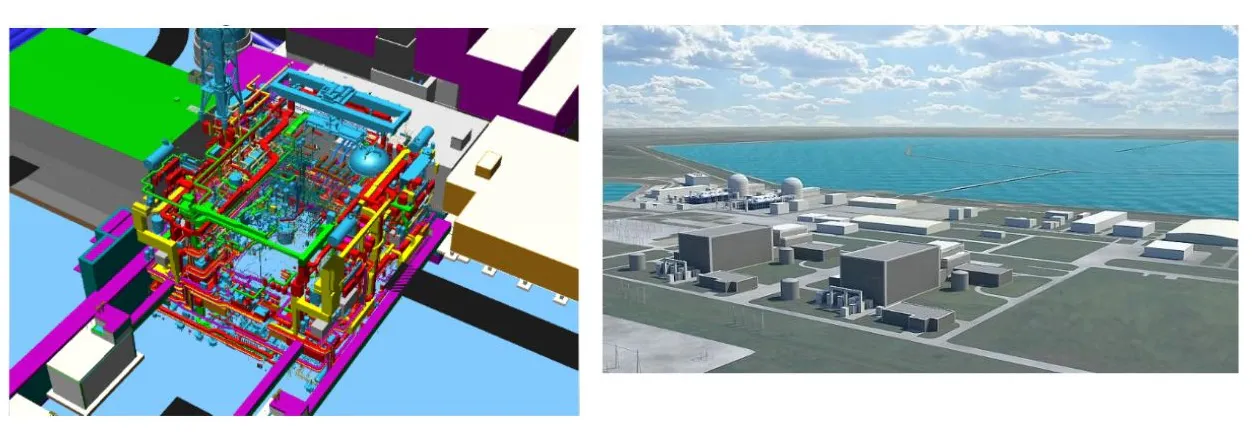
The design team on this massive undertaking used Bentley’s AutoPipe and STAAD.Pro solutions to deliver integrated digital workflows for pipe stress and structural analysis. One problem in large projects like this one is managing data and processes across large, diverse groups that are contributing to its successful design. In this case, the Bentley solutions provided an interoperable environment that enabled more realistic modeling, reduced manual data transfers (less human error), and shorter design cycles.
The result of this approach? Improved design accuracy and compliance, reducing design time from months to weeks. This process also delivered a design product that was more efficient, ensured a higher level of safety, and compliance with the many nuclear design requirements.
As second example that helps provide a more complete picture of the nuclear energy movement is found at Sellafield Product and Residue Store Retreatment Plant in the UK, which houses the world’s largest civil stockpile of plutonium. Here, Bentley partners at Proicere are optimizing the digital delivery of the engineering and planning process for this critical piece of the UK’s energy future.
The Proicere team is using SYNCHRO to digitally visualize, plan, and execute the Sellafield site works, and is managing this project on Bentley’s iTwin platform to perform construction simulations, identifying and mitigating over 160 potential risks. This integrated digital solution has already saved the project over 500 days of rework.
Daniel Ashton, Technical Director, Proicere Digital Ltd., commented on the success of this project: “Bentley’s SYNCHRO has become a key delivery tool for the SRP project, not only changing the way we functionally plan on the project, but also improving project integration and collaboration and aiding the safe operation of the site.”
Moving Confidently Into An Unprecedented Future
These are interesting times in the global energy industry. The AI and data center energy requirements arguably snuck up on the industry. Fortunately, there is a sector that is poised to meet these new demands – with nuclear playing a prominent role - while still moving into a cleaner energy future.
For more insights and information on how advanced digital tools can make your nuclear future a reality, visit Bentley.com.
Bentley, AutoPipe, iTwin, STAAD.Pro, and SYNCHRO are either registered or unregistered trademarks or service marks of Bentley Systems, Incorporated or one of its direct or indirect wholly owned subsidiaries.