


By Kennedy Maize
An administrative law judge for the Michigan Public Service Committee (MPSC) has advised the regulators to kill a plan by Consumers Energy to essentially give away 13 small, elderly hydropower projects to a Maryland based private equity firm, in return buying power from the dams at above-market rates.
The purpose of the deal is to get the Jackson-based utility subsidiary of CMS Energy out from under likely expensive repairs for the federally-regulated and economically marginal dam projects, totaling 132-MW of capacity, when the licenses come up for renewable in the years ahead.
The earthen dams were built between 1906 and 1935. One of the projects, the 9-MW Croton Dam, is listed on the National Register of Historic Places.
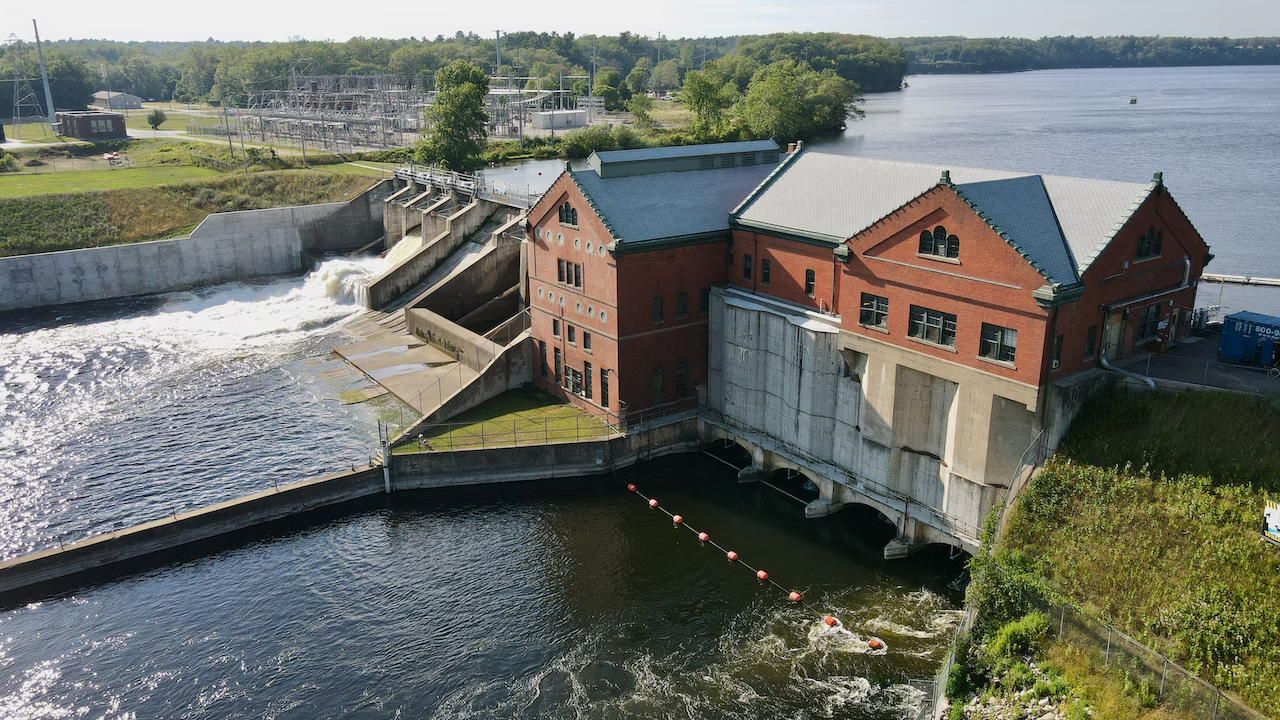
The utility proposal has been wildly controversial, with consumer advocates, environmentalists, and sport fishing interests opposed to the unique arrangement. It requires the commission’s approval and that of the Federal Energy Regulatory Commission.
Under the proposed deal, Consumers would sell the dams for $1 each to Confluence Hydro, a subsidiary of Maryland-based Hull Street Energy.” Consumers Energy would then buy back the power through a 30-year power purchase agreement from the dams at about $160/MWh, or about double the current power price in the region. Those costs would be folded into the company’s rate base and passed to its customers along with a utility profit. According to a report by Michigan media company MLive, the deal could net Consumers Energy $270 million.
The MPSC proceedings included a contentious public hearing, a round of “briefs,” which were not particularly brief, yielding “three public transcript volumes, plus a confidential transcript, which, when combined, total 1,322 pages of testimony,” according to the ALJ’s finding.
MPSC Administrative Law Judge James M. Varsetti in a 312-page opinion recommended that the best course of action to serve the utility’s customers and Michigan’s outdoor environment would be that “the Commission reject the proposed transaction.”
Varsetti was skeptical of virtually every aspect of the utility’s deal with the private equity firm. He rejected numerous ways the companies offered to condition the deal to overcome its shortcomings, including fears about whether the liabilities could revert back to customers in the future.
The deal might not protect Michigan customers and citizens if Hull Street decided to spin off the projects to a third company or fail to maintain and upgrade them. In testimony at a commission hearing, the utility argued that the generous price the company would pay Hull Street would create an incentive to run the plants properly, protecting customers. Varsetti called this “highly problematic.”
Many opponents feared that Hull Street could walk away from the deal if it proved unprofitable, or when the costs of upgrades and repairs come due, abandoning the plants in Michigan and leaving the state with a nasty bag of financial and environmental outcomes.
Vachette sided with opponents, concluding that a deal of the size and scope of the Consumers Energy-Confluence proposal should ensure against such outcomes, not expose taxpayers to possible harm. “This transaction fails that test,” he wrote.
Opponents of the hydro deal praised the ALJ finding. Tom Baird, former chair of the Michigan Natural Resources Commission and former president of the sport fishing group Anglers of the Au Sable, told the Detroit News, “It pretty much tracks what our arguments were all along. It really lays bare all the faults with the proposal for this sale and the power purchase agreement that went along with it.”
Katie Carey, Consumers Energy director of media relations, emphasized in an email that the ALJ “Proposal for Decision” is not binding on the MPSC and that the company plan is “the best choice for our state and should be approved. We believe the judge did not appropriately recognize the major benefits of the sale, starting with the significant cost savings for Consumers Energy customers and protecting the 13 communities and tens of thousands of people who depend on the dams.”