


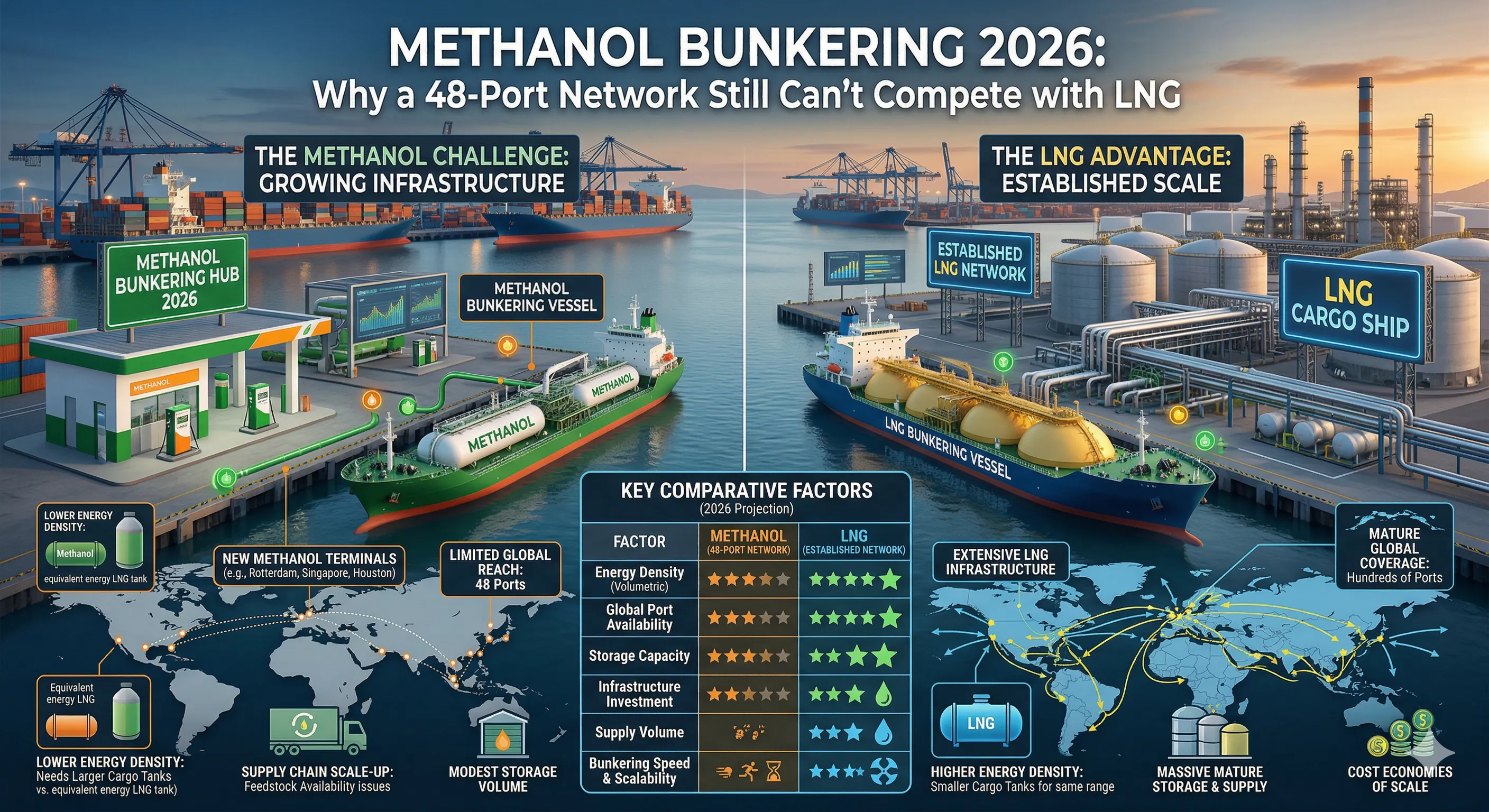
Methanol bunkering ports: 48.
LNG bunkering ports: 222.
The vessel orderbook is running well ahead of the infrastructure required to fuel it. That gap is the actual market signal, and it is more specific than most coverage of methanol's momentum currently reflects.
Onboard engine technology is genuinely mature.
MAN Energy Solutions and Wärtsilä dual-fuel methanol engines are at Technology Readiness Level 8 to 9. Commercially deployed, operationally proven. This part of the chain is not the constraint.
Bunkering infrastructure is at TRL 6 to 7. The UK's first commercial biomethanol bunkering service launched at Immingham in February 2026. Singapore is licensing three methanol bunkering suppliers from January 2026. Methanex launched barge-to-ship operations in the ARA region and South Korea in
September 2025. Real milestones. Still a fraction of LNG's installed base.
Green methanol production is at TRL 5 to 7. The first commercial-scale e-methanol plants came online in 2025. Most large-scale production projects have not yet reached Final Investment Decision.
C2X secured $100 million from ENEOS and Maersk in April 2025. That is a positive capital signal. It does not resolve the supply bottleneck that 400 methanol-capable vessels will create.
The technology mismatch across these three layers is the structural constraint that operators ordering dual-fuel vessels are pricing into their fuel procurement planning right now.
The signal to watch: green methanol production FIDs in 2026.
A wave of FIDs on large-scale e-methanol facilities in the next 12 months is the supply-side confirmation that the vessel orderbook can actually be fueled at commercial scale. Without that confirmation, operators are building flexibility into their fuel options for a reason.
Watch what gets financed, not what gets ordered.