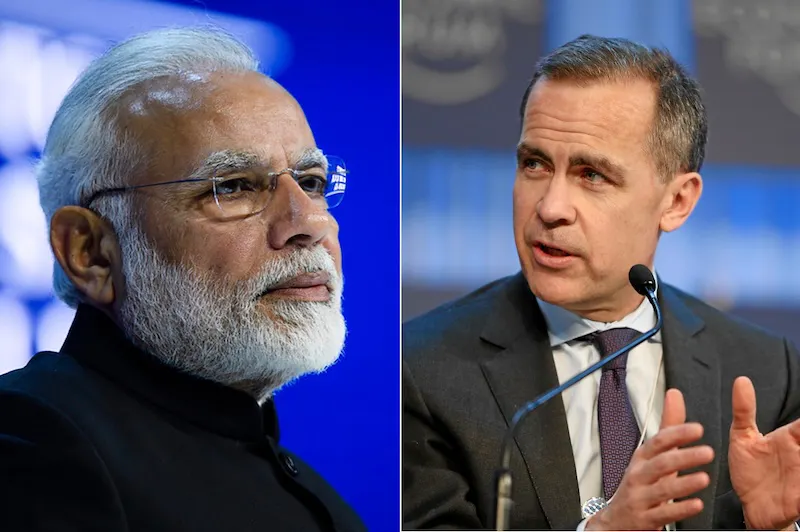
Ahead of Canadian Prime Minister Mark Carney’s expected trade mission to New Delhi March 1-2, his energy minister has been aggressively promoting the potential he sees for liquefied natural gas (LNG) exports to the world’s most populous country—despite mounting signs that demand for the climate-busting fuel may soon evaporate.
Confirmed timing of Carney’s trip was tipped this week by Ontario trade minister Vic Fedeli as part of the PM’s “all-out efforts to diversify Canada’s alliances beyond the United States,” Reuters reports. The plan has been in the works since November, when Carney and Indian Prime Minister Narendra Modi met on the sidelines of a G20 meetings to work toward a new bilateral agreement that would double the countries’ annual trade volume to $50 billion by 2030.
Energy and Natural Resources Minister Tim Hodgson, the PM’s former Goldman Sachs colleague recently profiled by the Globe and Mail as “Carney’s dealmaker”, began focusing the conversation toward LNG in late January, after returning from his own advance trip to the country he described as “one of the most important energy markets in the world.”
Hodgson has been talking up the stock at least since mid-August, when he opined that Canada’s first LNG exports to Germany could arrive in “as little as five years,” despite projections that gas consumption in the European Union will decline.
In the weeks that followed, news reports had Shell and Mitsubishi trying to ditch their investments in the LNG Canada megaproject in British Columbia, colossal fossil ExxonMobil closing a gas deal with Europe that was expected to undercut demand for Canadian exports, analysts persisting in their view that Europe will have no need for new gas supplies, even after banning imports from Russia, U.S. LNG developers scrambling for investment ahead of a global gas surplus, Asian buyers beginning to reduce their LNG imports, and LNG exporters facing a ‘sinkhole’ as the long-awaited global glut took hold.
Read the whole de