


By Kennedy Maize
The Trump administration’s implicit “coal’s costs don’t count” policy advances. The Department of Energy has expanded its assault on electric consumers in the upper Midwest in order to keep a dead coal plant walking. The Environmental Protection Agency has kicked a hazardous and toxic coal ash can down the road to beyond the end of Trump’s White House occupation.
DOE, as expected, expanded its “temporary” order to keep the 1,420-MW, 63-year-old, uneconomic J.H. Campbell plant in Michigan owned by Consumers Energy generating electricity. The utility had planned to shut the plant down in May and had lined up gas-fired capacity and purchased power to replace its capacity. The shutdown had approvals from the state regulatory commission and the regional independent transmission operator.
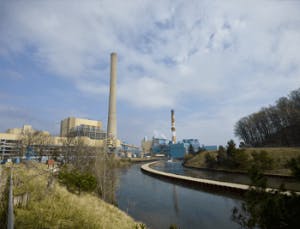
Never mind. Citing alleged reliability concerns, DOE Secretary Chris Wright in May announced a 90-day delay in the shut down. The agency doubled down when the first 90 days allowed under the law expired with another 90-day order. The third consecutive 90-day order came Nov. 19, with Secretary Chris Wright claiming “critical grid reliability issues facing the Midwestern region of the United States heading into the cold winter months.”
In the first order, Wright claimed it was to protect against critical reliability issues in the coming summer heat. Presumably, the second order was to respond to critical grid reliability issues in the moderate fall months. In every case, retail electricity customers are seeing their electricity bills increased as a result. Wright’s presumed infallible weather forecasting, which has yet to materialize, is costing customers some $615,000/day.
It’s not reliability. It’s politics. The president wants to demonstrate to his base that he’s in love with coal, oil, gas, and anything else that doesn’t have any green tint. He believes this appeals to his MAGA base, although there is no compelling evidence nor any indication that he really cares how electricity is made as long as it’s not with the wind.
The White House, working through a sycophant in charge of the energy department, is determined to avoid closing coal-fired plants, damn the costs even if they fall on ordinary folks. Wright is on the record supporting this administration aim. In July, Wright told an audience in coal-centric West Virginia, “I think our biggest impact by far is going to be — there are like 40 coal plants that are supposed to close this year — and our biggest impact is going to be to stop the closure of most of those.”
The latest DOE order runs until Feb. 17. It’s a good bet that DOE order No. 4 will hit the street by then.
At the EPA, where another Trump acolyte — former back-bench New York Republican congressman Lee Zeldin — is in charge, the agency has proposed punting the date for up to 11 coal burning electric utilities to deal with a long-running problem of safe coal ash disposal. The new compliance date moves from October 2028 to October 2031. Comments are due Jan. 7.
The EPA proposal is the latest move by a Trump EPA, going back to his first administration, to roll back federal regulations of power plant coal ash ponds dating from 2015, generally requiring approved lining of the ponds to prevent leakage into the environment. The wrangling has involved numerous rule revisions, multiple court appearances, and now additional EPA actions.
In 2018, the D.C.Court of Appeals overturned the 2015 EPA rules, rejecting an industry challenge and ruling that the EPA regs were not protective enough, siding with complaints from environmental groups. In 2020, EPA under Trump appointee Andrew Miller issued new coal ash regs. Those gave utilities with unlined ash ponds that plan to close their plants by October 17, 2028 authority to continue dumping the ash into the ponds.
Shortly after EPA approved the new rules, 11 power plants applied for the extension. EPA’s Steven Cook, principal deputy assistant administrator for the Office of Land and Emergency Management, said, “President Trump understands that maintaining baseload capacity is critical to providing affordable and reliable energy for all Americans. Today’s proposal offers flexibility for coal-fired power plants, so they have the time needed to meet requirements and can continue to help secure prosperity and energy independence of our nation.”
“Even if the EPA wants to allow coal power plants to further delay cleaning up their coal ash ponds, that is a clear violation of the law” — Earth Justice
Environmental law firm Earth Justice pushed back on the new EPA rules. “Even if the EPA wants to allow coal power plants to further delay cleaning up their coal ash ponds, that is a clear violation of the law,” said attorney Mychal Ozaeta. “The courts have ruled that they cannot continue to put toxic coal ash into holding ponds that are leaking toxic contaminants into groundwater. None of these power plants are able to qualify for these extensions, regardless of what the EPA says.”
Earlier this year, EPA gave Wyoming and North Dakota authority to regulate their coal ash ponds instead of the feds. Commenting on the Wyoming order, Zeldin said, “Today’s approval of Wyoming’s coal combustion residuals program is a win for cooperative federalism.” It’s no coincidence that the North Dakota regulatory reward came in the state where Interior Secretary Doug Burgum was the Republican governor.
A major hole in the coal ash regulations going back to the 2015 rules is a knotty question of how to deal with unlined ash dumps at plants that went out of service prior to 2015. The rule exempted these ash ponds. The 2020 EPA regs also failed to deal with them, which Earth Justice estimates at “over 60 million cubic yards of this type of coal ash at 19 former power plant sites so far….” EPA has says it intends to issue a rule dealing with these legacy ash ponds in January.
The Quad Report
