


By Kennedy Maize
The U.S. Department of Energy’s 90-day orders to keep coal-fired generating plants running “have been used almost exclusively to prevent the retirement of aging, uneconomic coal units—some of them currently inoperable—by the electric utilities that own them. Yet the plant owners, state regulators, and power grid operators all refute the DOE’s characterizations of power emergencies, citing years-long planning to provide replacement power and the cost and unreliability of the units being closed.”
That’s the finding of a new study by the Institute for Energy Economics and Financial Analysis of the Trump administration’s project to prevent coal plant closures during the president’s current term of office. The result of the multiple, repeating orders, says the study, has had no impact on the overall reliability of the U.S. electric system, but has cost consumers dearly.
Ohio-based IEEFA describes itself as “a global team of energy finance analysts, communications experts, and management professionals, based in Asia, Australia, Europe, North America, and South Asia. Each team member brings specialized experience, whether in investment decision-making, utility resource planning, banking, economic policy, public relations or campaign development.”
According to the study by analyst Seth Feaster, ratepayers of the companies getting the DOE orders have already faced at least $300 million in extra costs through mid-May. He adds that the costs “are rising by more than $30 million per month, and could soar much higher if extensive repairs are made at some units.”
If the political aim of the DOE orders had been to help a struggling coal mining industry and coal miners, that hasn’t worked, according to IEEFA. The analysis notes that “coal mining has barely benefited: The total amount of coal used by the plants under the emergency orders amounted to less than 1% of the coal used by all U.S. plants to produce power in the same period.”
The DOE orders rest on assumptions that the coal plant owners have mindlessly decided to close coal-fired power plants as a result of pressure from environmental groups and Democratic state governments, without regard to reliability.
That’s bogus and ill-informed, according to IEEFA, pointing out that “the plant owners, state regulators, and power grid operators all refute the DOE’s characterizations of power emergencies, citing years-long planning to provide replacement power and the cost and unreliability of the units being closed.”
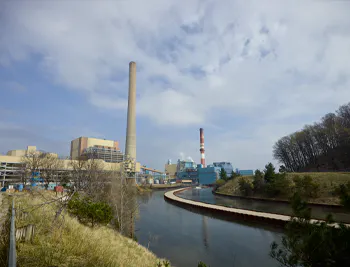
The analysis illustrates the malign impact of DOE’s apparently politically concocted orders with the first: Consumers Energy’s Michigan J.H. Campbell plant, which has now been operating under the order for more than a year. The three-unit, 1,332-MW plant, originally scheduled to close at the end of May 2025, has now cost the company and its customers at least $185 million over the first 10 months of the rolling 90-day orders. “Executives have said they expect the orders to continue for the duration of the Trump administration, and the costs will keep growing as a result,” says IEEFA.
The report outlines how the forced operation of the plants runs up costs: “Many of the units covered by the orders have generated power only rarely, but they continue to incur expenses for maintenance and repair, fuel storage, pollution-control supplies, employee retention, property taxes, and higher legal and corporate costs involved with complying with the federal orders.”
IEEFA highlights TransAlta’s Centralia plant in western Washington state south of Olympia, where the company says fixed costs of keeping the plant running were $20 million for the first three months of the DOE order and are accumulating at $6.2 million/month. IEEFA notes, “So far, it appears the plant has not run at all since December, which is a good thing for consumers.” But the clock kept ticking on the costs as a result of the DOE order.
The economics in the Northwest rule against running the Centralia plant. According to TransAlta, restarting the plant “would initially cost $83.44 a megawatt-hour (MWh) before rising to $113.49. That’s far higher than the $27.60/MWh wholesale average price in the Northwest in the first quarter, according to the Energy Information Administration (EIA).”
The plant went into service in 1972, located near a surface coal mine opened in 1970 to supply the plant. The mine closed in 2006, forcing TransAlta to buy coal on the open market.
The IEEFA report makes an observation that appears not have penetrated the thought processes of the DOE officials who concocted the coal plant orders, particularly Secretary Chris Wright: “For utilities, the retirement of any power plant is an economic decision designed to save the company and ratepayers money as they shift electricity generation to more efficient, more cost-effective, and more reliable sources of power. Such decisions are driven by long-term planning processes supervised by state regulators that have jurisdiction over utilities that provide power to customers.”