


“Failure Mode and Effects Analysis (FMEA) is a structured, systematic method used
to identify how a process, product, or system might fail, why it might fail, and what the
consequences of those failures would be. The goal is simple: find weaknesses before
they become real problems, prioritize them, and implement actions that reduce risk.”,
Microsoft Copilot
Solar and wind generator manufacturers and developers are currently conducting
Failure Mode and Effect Analysis (FMEA) on large industrial solar and wind installations
in the field. This is a very expensive way to conduct FMEA and has the potential for
significant adverse impact on utility power grids.
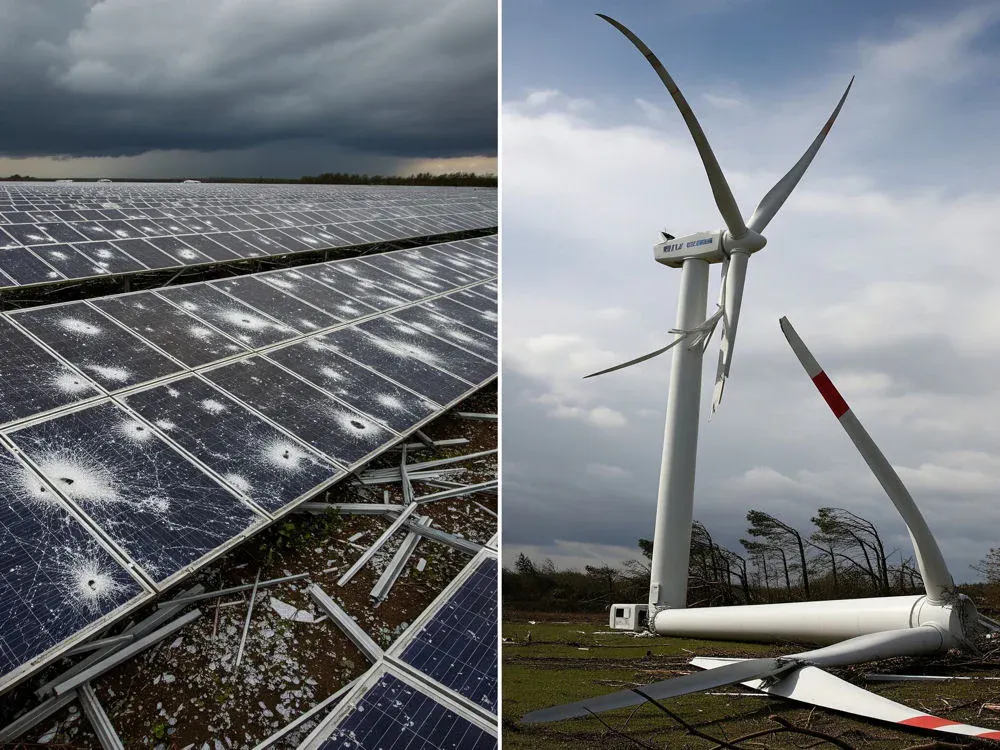
The commentary “FMEA – Components” discussed several component failure modes,
specifically wind and hail damage to solar collectors, wind and lightning damage to wind
turbines, and turbine blade failures and battery fires resulting from manufacturing
defects. Renewable generation facilities.also experience system level failure modes of
various types which result in more extensive effects.
The multi-hour system-wide blackout on the Iberian Peninsula has been subjected to
extensive FMEA efforts. The blackout was triggered by a frequency oscillation in the
output of an inverter at a large solar installation. The oscillation occurred during period
when the grid was powered primarily by renewable generation sources. The oscillation
caused other renewable generation sources to trip offline to protect themselves, causing
a cascading loss of generation capacity. The resulting blackout resulted in several
deaths and major societal disruption. The FMEA indicated that the outage resulted, in
part, from the presence of insufficient inertia on the grid.
Australia has experienced several instances of renewable grid failure due to renewable
grid isolation from the conventionally powered grid. The renewable generation system
inverters required connection to the conventionally powered grid for frequency and
voltage stabilization. The failure of multiple transmission towers resulted in islanding of
the renewable generation. The effects of these failures were multi-day blackouts
resulting in significant inconvenience and economic loss. This failure mode will likely
persist until renewable generation facilities are equipped with grid-forming inverters
capable of reliably supporting islanded renewable grids.
El Hierro Island has a grid system designed for 100% renewable plus storage operation.
While the system is capable of supporting the island grid with renewable generation
plus pumped storage for brief periods, it is not capable of year-round 100% renewable
supply. The system is supported by diesel generators to “fill in the blanks”. In this case,
the failure mode is a combination of insufficient generation and insufficient storage as
the result of system under-design. The effect is the frequent operation of the diesel
generators.
The FMEA challenge is to understand the various system level failure modes and to
adapt system designs to minimize the potential for system level failures and the
resulting societal effects. The most fundamental challenges are: assuring that the
generation infrastructure is sufficient to meet grid demand, including storage charging,
under normal weather conditions; that the storage capacity and operating
characteristics are capable of supporting the grid during extended periods of reduced
generation; and, that the grid will continue stable operation under all conditions.
Originally published here.