


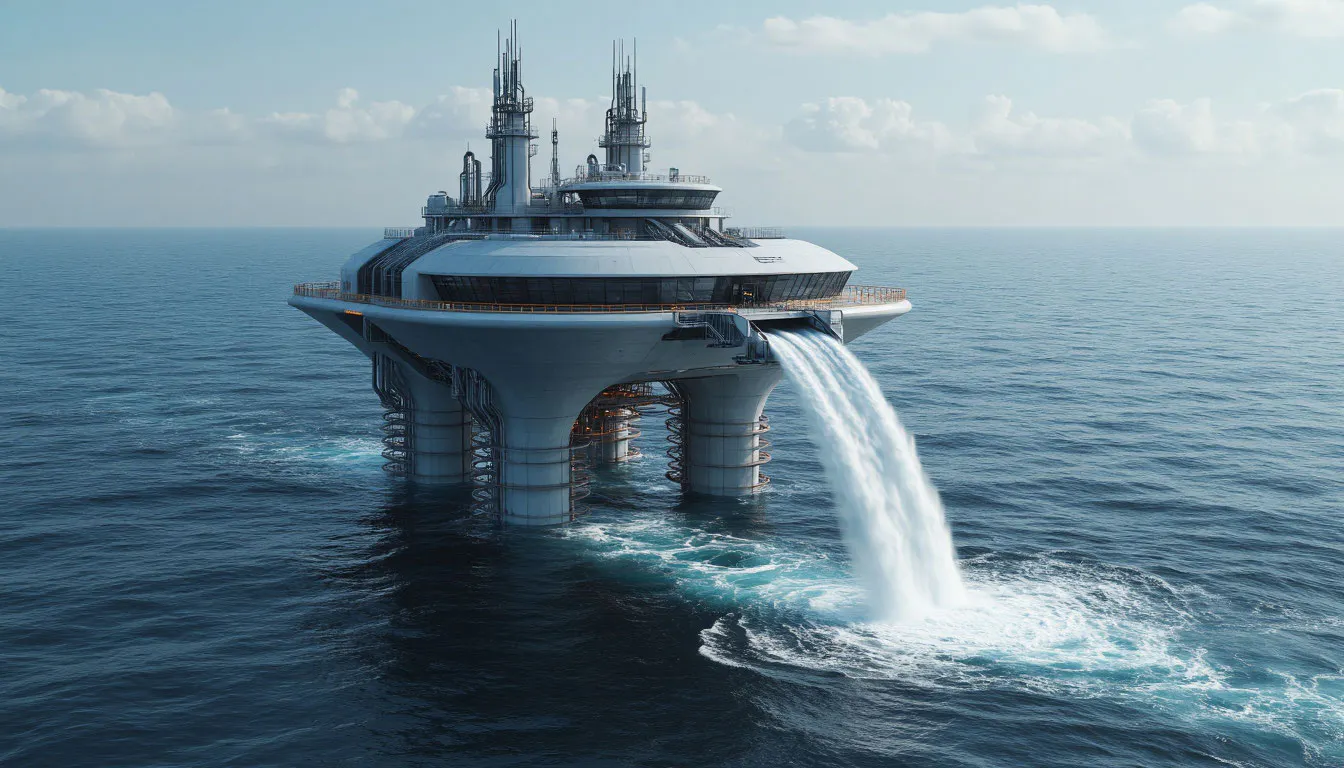
There are known world accidents of expensive equipment for offshore platforms due to incompetent equipment design. These include:
1. Piper Alpha platform, North Sea
Date: July 6, 1988
Location: North Sea, United Kingdom
Cause: Gas explosion that led to a major fire
Results: 167 dead, the platform is completely destroyed.
Note: The deadliest accident in the history of offshore oil production.
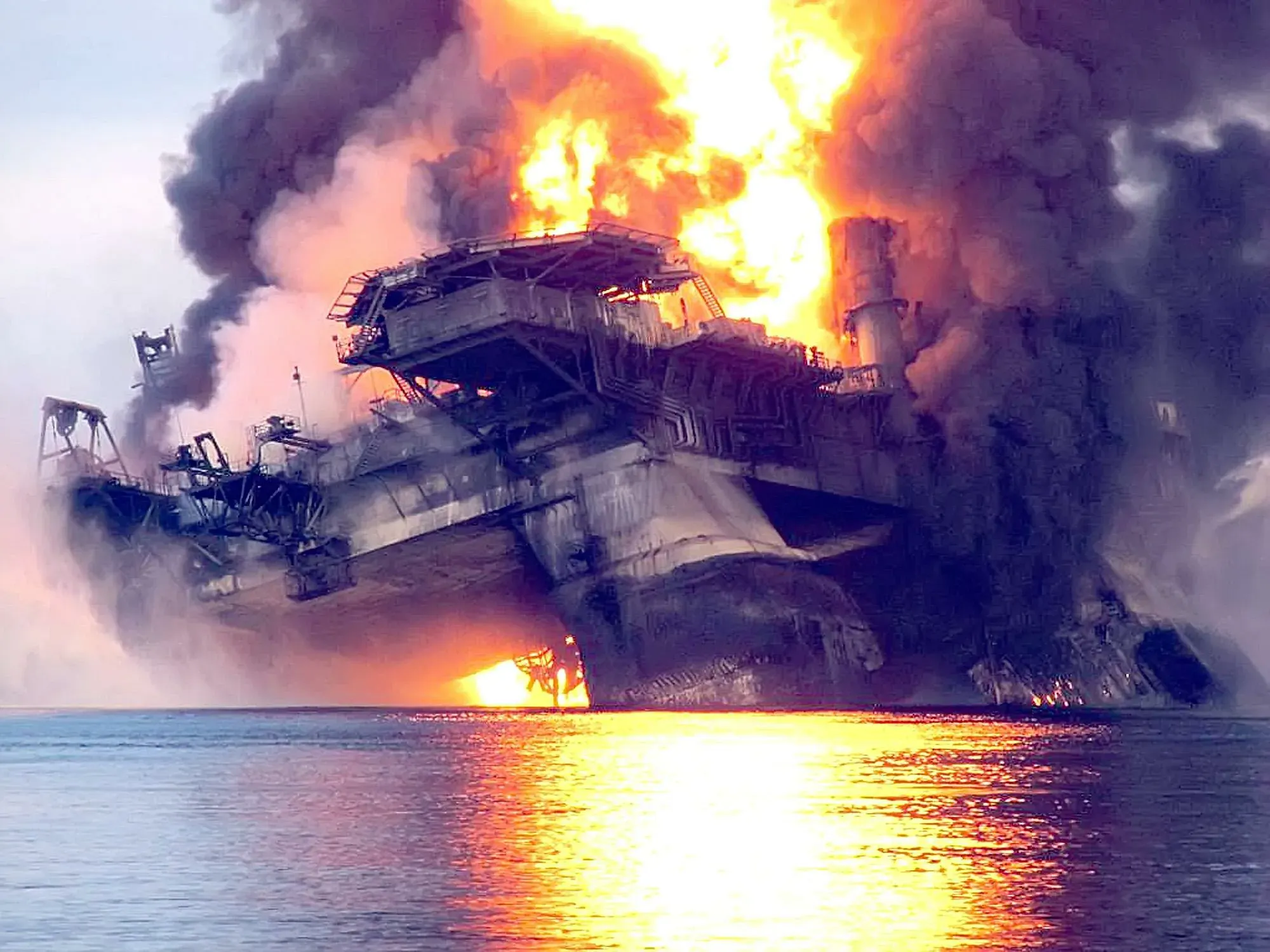
2. Deepwater Horizon, Gulf of Mexico (BP)
Date: April 20, 2010
Location: Gulf of Mexico, United States
Cause: Gas explosion followed by fire
Results: 11 dead, the largest oil spill in the ocean, the destruction of the platform.
3. Alexander L. Kielland, North Sea
Date: March 27, 1980
Location: North Sea, Norway
Cause: Broken support, platform overturned, fire
Results: 123 dead out of 212 on board.
4. Mumbai High North, India
Date: July 27, 2005
Location: Arabian Sea, India
Cause: Collision with a support vessel, gas leak and severe fire
Results: 22 dead.
5. Enchova Central, Brazil
Date: October 1984
Location: Atlantic Ocean, off the coast of Brazil
Cause: Gas explosion and fire
Results: 42 fatalities (two accidents: 1984 and another fire in 1988).
6. Usumacinta, Mexico
Date: October 23, 2007
Location: Gulf of Mexico
Cause: Severe storm, fire due to gas leakage
Results: 22 dead.
7. Bohai 2, China
Date: November 25, 1979
Location: Yellow Sea
Cause: Storm, damage, fire
Results: 72 dead.
8. Statfjord A, North Sea
Date: 1980
Location: North Sea, Norway
Cause: Explosion and fire
Results: 5 dead.
9. Bravo Platform, North Sea
Date: 1977
Location: North Sea, Norway
Cause: Large fire
Results: The platform was badly damaged.
10. Disaster on the Glomar Java Sea platform, South China Sea
Date: October 25, 1983
Results: The platform sank after a storm and a partial fire. 81 dead.
West Delta 32 disaster, Gulf of Mexico.
The West Delta 32 oil platform was engulfed in flames on the morning of November 16, 2012. According to sources, there were about 24 workers on the platform at the time of the incident, 11 of whom were injured and two were missing.
.
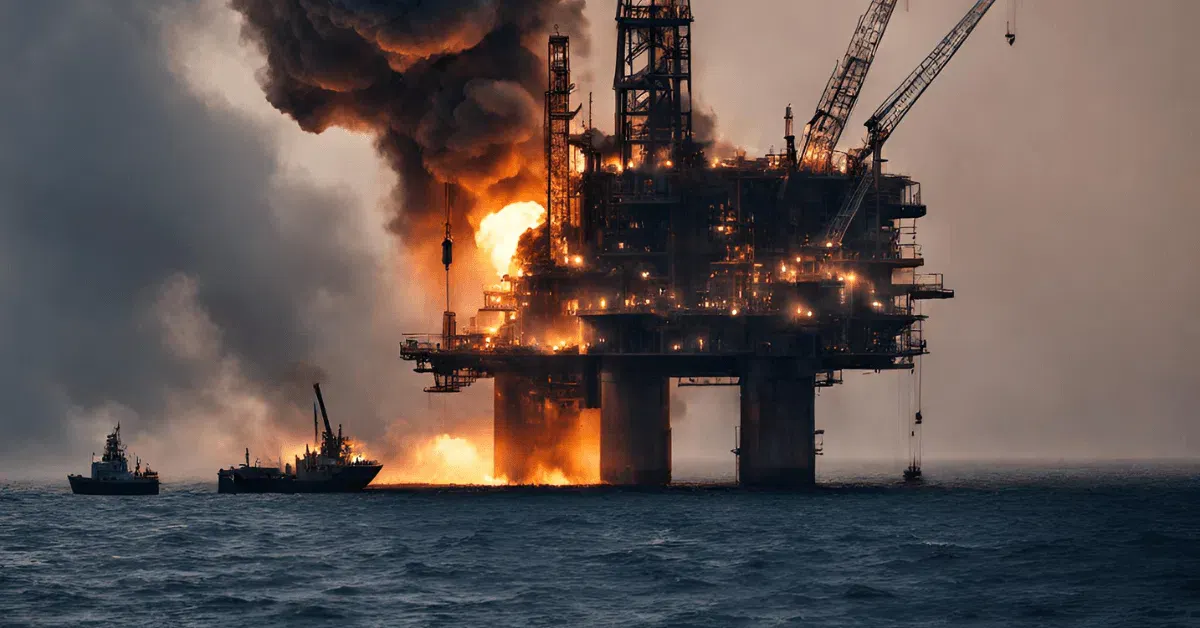
As you can see, any emergency situation on an offshore platform causes a gas leak, and then a small spark and explosion, causing colossal damage to the company's property and unmeasured payments from insurance companies. What fire barriers are provided for in modern design on offshore platforms?
1. Physical Separation and Placement
Placement of diesel generators, power panels and other energy sources in special emergency compartments, at a distance from field pipelines and oil/gas tanks.
Firewalls between power supply units and industrial installations.
2. Fireproof coatings and insulation
Use of fire-resistant materials for cables, panels, enclosures of power plants.
Use of thermal insulation that slows down the spread of flames.
3. Automatic fire detection and extinguishing systems
Smoke, temperature, flame detectors (provide early detection).
Automatic (or remotely controlled) gas, powder, foam or water extinguishing systems in rooms with critical equipment.
"Deluge" systems are nozzles for instant flooding of large areas with water or foam in case of fire.
4. System redundancy
Separation of main and backup generators into different compartments.
Redundancy of power supply so that an accident or fire in one compartment does not leave the platform without power.
5. Emergency Power Supply
Use of emergency batteries and UPS (Uninterruptible Power Supplies).
External input is the ability to receive energy from other vessels or shore infrastructure for the duration of the fire fighting.
6. Organization of ventilation and cut-offs
Automatic fire-retardant valves and shut-offs in the ventilation system prevent the penetration of fire and combustion products from one compartment to another.
7. Fire pumps and special tanks
Water tanks and backup pumps that provide water supply when the main system is turned off.
8. Security Zones
Energy Isolated Rooms are special rooms with their own fire and emergency systems.
9. Mandatory training and evacuation protocols
The crew is undergoing exercises to localize and extinguish fires at key power plants.
Bottom line:
Ensuring fire resistance, automating detection and elimination, power redundancy, physical isolation and strict protocols make offshore platform power systems as safe as possible from fire. This minimizes the spread of fire and maintains a vital power supply even in severe accidents.
Here is a comparison of direct losses from fires and the cost of construction for the largest offshore platforms that have been involved in serious accidents (data from open sources, official investigations and industry analytics):
1. Piper Alpha (North Sea, UK)
Construction (early 80s): ≈ $1.4 billion (in 1980s prices, including infrastructure).
Fire losses: USD 3.4 billion (insurance payments, debris clearance, loss of equipment, damage to production, compensation to families).
Additionally: Up to 10% of the production of the entire North Sea at the time of the accident was lost.
2. Deepwater Horizon (Gulf of Mexico, USA, 2010)
Construction: US$≈560 million (2001)
Losses from fire and oil spills:
Direct destruction of the platform – $560 million.
BP's total losses (fines, spill response, compensation): over USD 65 billion.
Pure fire: material losses immediately after the disaster are about 1 billion US dollars (platform, equipment, production).
3. Alexander L. Kielland (Norway, 1980)
Construction: ≈ 100 million US dollars.
Losses from the accident (liquidation costs, production losses and compensation): USD ≈ 200 million (Lloyd's Register Index).
4. Mumbai High North (India, 2005)
Construction: USD ≈ 250 million.
Losses: USD ≈ 350-400 million (infrastructure replacement, production losses, overhauls, and firefighting).
5. Enchova Central (Brazil, 1984 and 1988)
Construction: USD ≈ 300 million
Losses: USD ≈,200 million (after a major fire again, the platform was to be written off).
6. Usumacinta (Mexico, 2007)
Construction: ≈ 100 million US dollars.
Losses: USD ≈,250 million (SME maneuvers, loss of drilling equipment, production losses).
7. Bohai 2 (China, 1979)
Construction: ≈ 75 million USD
Losses: estimated about USD 100 million.
8. Statfjord A (Norway, 1980)
Construction: ≈ 1 billion USD (Most expensive structure at the time of construction).
Losses from the accident: ≈ USD 30-50 million (local fire, the platform was restored).
Summary table:
Platform
Construction cost, $ million
Losses from the accident, $ million
Losses/Construction (%)
Piper Alpha
1400
3400
>240
Deepwater Horizon
560
>1000 (straight) (65,000* with a fine.)
>200
Alexander L. Kielland
100
200
200
Mumbai High North
250
350–400
140–160
Enchova Central
300
200
67
Usumacinta
100
250
250
Bohai 2
75
100
133
Statfjord A
1000
50
5
* Including environmental losses and fines (Deepwater Horizon)
Comments
In many cases, the losses far exceed the cost of construction, due to loss of equipment, environmental damage, compensation to families, lawsuits, production downtime, and the need to build a new platform.
BP Deepwater Horizon is the most expensive man-made incident in the history of mankind.
The Piper Alpha remained the most tragic in terms of the number of human casualties and direct damage to the North Sea oil industry.
Yes, it is true that as the electricity supply becomes more complex and diversified, the likelihood of natural disasters increases. That is, only a comprehensive solution to security problems can protect the property of oil and gas mining companies from losses.
I propose to consider the concept:
Hydroelectric power plant using HYPOT technology (deep/bottom hydroelectric power plant - an autonomous external energy source located outside the oil platform itself) - as the key to complete electrical safety of the oil platform, including in case of emergency fires.
How does the HYPOT autonomous HPP protect the platform's power supply from fire?
1. Electricity comes from the outside, not generated on the platform
Traditionally, energy is produced on the platform itself - diesel generators, gas turbine units, often combined with technological infrastructure and located in common volumes with pipelines and tanks.
The HYPOT HPP (seashore, bottom) is located physically outside the platform - for example, on the seabed or under water near the platform, at a distance of hundreds of meters or more.
In the event of a fire on the platform, no part of the power plant is directly exposed to burning, explosion, pipe breakage, or fire.
2. All generation and main power units are protected by the marine environment
Water will perfectly dissipate heat and extinguish a local fire. The underwater station itself cannot catch fire.
All electricity is supplied through power cables (waterproof, protected from fire, with provided armor) - a cable fire inside the platform is minimally likely, and damage is quickly localized by automation or replaced by part of the cable route.
3. No need to store and use fuel on the platform
The absence of large reserves of diesel fuel, gas tanks and fuel and lubricants for autonomous generators sharply reduces the fire hazard of the platform itself.
There is no need to lay fuel pipelines, place fuel tanks - these are the main sources and accelerators of fire in case of accidents!
4. Redundancy of external power supply
It is possible to build several bottom hydroelectric power plants in parallel - even if one transmission cable is damaged, the rest continue to supply the platform with energy.
In the event of a platform disconnection from one cable, instant switching to another source without the need for emergency self-power, which is important if the fire spreads rapidly.
5. Separation of emergency and main power by cable
Ability to lay an emergency, fire-resistant cable to power critical systems (fire extinguishing, alarm, evacuation, communications) independently of the main process cable.
Prospects for the preservation of the platform's property and equipment
Reducing the risk of total losses: in the event of a major fire, equipment, personnel and raw materials are affected, but the HYPOT HPP remains operational outside the affected area and can trigger extinguishing, alarms, lifeboats, communications - even after the destruction of diesel generators and the entire superstructure of the platform.
The probability of complete destruction of the platform is reduced:
After the fire is extinguished, it is possible to quickly restore power supply (and equipment operation) if the platform structure remains physically intact.
Due to the safety of the rescue and evacuation system, the chance to minimize human casualties increases.
The property of the platform is better preserved: the absence of fuel systems and fuel and lubricants on board reduces the likelihood of a large-scale explosion and destruction of the supporting structures.
Which inevitably depends on the platform:
Safety of cable routes and switching devices: if the fire spreads to the cable entry points, the systems must be fire-proof and quickly restarted.
If the fire is caused by the destruction of the very base of the platform (for example, a gas explosion at the base), then the subsea hydroelectric power plant can also get into the affected area – therefore, HYPOT hydroelectric power plants are designed with removal and independent protection.
Inference
An autonomous bottom/offshore hydroelectric power plant using HYPOT technology is the best way to completely eliminate the threat of loss of power supply and the death of backup energy sources in the event of a fire on an offshore oil platform.
It remains to ensure fire protection of cables, create redundancy of energy transmission - and it can be argued that a fire will no longer lead to a complete technological disaster on the platform
Risk Assessment and Feasibility Study for Offshore Platform Construction with HYPOT Power Supply
Construction and Operation Risks
Technological Risks:
For Diesel Generators:
High fuel consumption (200–300 g per kWh) and dependence on regular fuel supplies.
Risk of malfunctions due to corrosion, saltwater exposure, and extreme conditions.
Need for regular maintenance complicated by the platform’s remoteness.
For HYPOT Hydroelectric Power:
The technology is relatively new and requires thorough testing in real conditions.
Dependence on hydrodynamic conditions (current speed and direction, pressure differentials) affecting energy generation stability.
Risk of structural damage during storms or collisions with underwater objects.
Environmental Risks:
Diesel Generators: emissions of harmful substances and risk of fuel spills during accidents.
HYPOT Hydroelectric Power: potential impact on marine ecosystem through artificial whirlpools and pressure differentials.
Geological and Climatic Risks:
Landslides, earthquakes, and extreme storms can damage the platform and underwater structures.
Corrosion of metal pipes and connecting parts, especially in saltwater.
Safety Risks:
Risk of hydrocarbon leaks and explosions, as seen with Deepwater Horizon.
Drilling and extraction accidents, including uncontrolled gas releases.
Need for reliable emergency response and personnel evacuation systems.
Comparative Feasibility Study
Criteria
Diesel Generators
HYPOT Hydroelectric Power
Capital Costs
Relatively low but require regular fuel deliveries.
High due to technology complexity and need for site-specific research.
Operating Costs
Significant due to fuel and maintenance costs.
Potentially lower with stable operation but require monitoring and maintenance investments.
Reliability
Depends on logistics and equipment condition. Risk of disruptions during fuel supply interruptions.
Depends on hydrodynamic conditions and structural reliability. Requires backup systems development.
Environmental Impact
High carbon footprint and pollution risk during accidents.
Potentially more eco-friendly using renewable energy source, but requires ecosystem impact assessment.
Scalability
Easily scalable by adding generators.
Requires detailed analysis of conditions for each specific location.
Recommendations for Risk Mitigation
For Diesel Generators:
Implement equipment monitoring systems and failure prediction.
Provide capacity redundancy and fuel reserves.
For HYPOT Hydroelectric Power:
Conduct detailed studies of hydrodynamic conditions and geological features of the deployment area.
Develop emergency shutdown and overload protection systems.
Test the technology in pilot projects before large-scale implementation.
Conclusion
The choice between diesel generators and HYPOT hydroelectric power depends on specific project conditions:
Diesel Generators may be preferable for quick deployment and in areas where fuel logistics is feasible. However, they are less environmentally friendly and require significant operating costs.
HYPOT Hydroelectric Power is promising for long-term use in areas with stable underwater currents but requires substantial investment in research and development.
To minimize risks, a comprehensive analysis should be conducted, including assessment of climatic, geological, and environmental factors, along with developing a detailed emergency response plan.
Calculation of Benefits from Building Deepwater Horizon Class Offshore Platforms with Diesel and HYPOT Power Generation
Comparison of Technologies
Criteria
Diesel Generators
HYPOT Generation
Capital Costs
Relatively low but require regular fuel deliveries.
High due to technology complexity and need for site-specific research.
Operating Expenses
Significant due to fuel and maintenance costs.
Potentially lower with stable operation but require monitoring and maintenance investments.
Accident Risks
High risk of fuel leaks, emissions, failures due to corrosion and extreme conditions.
Risk of structural damage during storms, collisions with underwater objects, dependence on hydrodynamic conditions.
Environmental Damage
Emissions of harmful substances, risk of fuel spills during accidents.
Potential impact on marine ecosystem through artificial whirlpools and pressure differentials.
Legal Risks
Fines for environmental pollution, compensation payments to affected parties.
Possible lawsuits for violation of environmental norms during new technology implementation.
Consideration of Complex Emergency Situations
The Deepwater Horizon disaster demonstrated that even modern platforms are not immune to accidents. The main causes of the disaster included:
Ignoring warning signals (pressure surges) due to tight deadlines and cost-cutting on safety.
Use of low-quality cement for well cementing.
Design flaws that allowed methane to spread through the ventilation system.
BP’s losses after the accident amounted to:
Over $61.6 billion for cleanup, compensation, and fines.
Loss of reputation and decrease in market value.
CEO dismissal and asset sales to cover expenses.
Benefits and Risks
Advantages of HYPOT Generation:
Use of renewable energy source (hydrodynamic forces).
Potential reduction in fuel supply dependence.
Lower carbon footprint with stable operation.
Risks of HYPOT Generation:
Need for thorough testing in real conditions.
Dependence on hydrodynamic conditions that can change.
Possible environmental impact on marine ecosystem.
Advantages of Diesel Generation:
More developed and understood technology.
Quick deployment and operation capability.
Risks of Diesel Generation:
High operating costs.
Significant environmental damage during accidents.
Dependence on fuel supply logistics.
Recommendations
Thorough modeling and testing of HYPOT technology under various conditions before large-scale implementation.
Enhanced safety systems and monitoring for both generation types, including pressure sensors, emergency shutdown systems, and regular equipment checks.
Consideration of environmental and legal risks in project planning, including creation of funds for potential accident response.
Comparison of long-term costs considering potential fines, compensation payments, and reputation damage.
Conclusion: HYPOT generation can offer long-term benefits in terms of reduced operating costs and environmental impact, but requires significant investment in development and risk mitigation. Diesel generators remain a more predictable but less advantageous option in terms of ecology and sustainability. The final decision should be based on detailed feasibility study considering project specifics, regional conditions, and company’s readiness to manage risks.