


By Kennedy Maize
Last July, President Trump announced he had reached a massive trade deal with Japan that would lower the tariffs he had imposed on the country. In return, Japan would, among other concessions, make a “massive” $550 billion investment in the U.S., although the details were sketchy.
In September, Commerce Secretary Howard Lutnick and Japan trade negotiator Ryosei Akazawa signed a “memorandum of understanding” detailing the deal. The money would come to the U.S., according to the MOU, before the end of Trump’s second administration, or by the beginning of 2029.
In October, Bloomberg reported, Carl Coe, Department of Energy chief of staff, said the federal government would use the Japanese money “to buy and own as many as 10 new, large nuclear reactors” including up to $80 billion to buy new Westinghouse AP1000 reactors.
Addressing a Tennessee business conference, Coe acknowledged the unprecedented move for the federal government to own and operate commercial power plants. “The role of having the government involved in private markets is sacrosanct — you just don’t do it,” he said. “But this is a national emergency.”
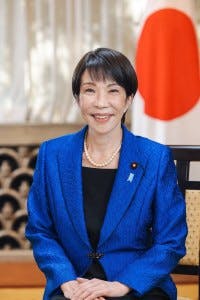
Detailed scrutiny of the U.S.-Japan deal suggests there is less than meets the eye, that it represents considerable hype and lots of pitfalls. The most thorough scrutiny comes from the Federal Reserve Bank of St. Louis in a November 24 analysis.
According to the Fed, the structure of the deal “makes Japan’s commitment resemble a loan rather than an equity investment, since Japan does not become a shareholder in the projects. The interest rate of this ‘loan’ is called ‘deemed interest rate,’ which is based on a benchmark rate plus a spread that depends on the project’s risk profile.
“Once the principal and accrued interest are fully repaid, Japan begins receiving returns through its 10% profit share. Nevertheless, it remains unclear what would happen if Japan were unable to fully recoup its deemed allocation amount. In that case, the ‘loan’ would likely become unrecoverable, and Japan would have to write it off.”
Raising $550 billion would be difficult for Japan, as its economy is not very strong at the moment. The country’s economy shrank 1.8% in this year’s third quarter, according to the Financial Express, blaming the impact of Trump’s tariffs. Part of the deal with the U.S. lowers the tariffs from 27.5% to 15%.
The St. Louis Fed noted that $550 billion “is equivalent to about 12% of Japan’s 2024 GDP, raising the question of how the government can mobilize such a large sum in U.S. dollars.” According to the Hudson Institute, Tokyo will sell government bonds, obtain government loans in yen, and transfer funds from Japan’s foreign currency reserves.
The St. Louis Fed concludes, “Japan’s investment—or loan—appears to carry substantial risk without adequate compensation. As a result, if fully implemented, this deal could generate significant revenue for the U.S. government at the expense of the Japanese government and, ultimately, Japanese taxpayers. However, it remains far from certain whether Japan will fully invest the $550 billion, as the country may instead choose to opt out and accept a higher tariff.”
Another problem with the Japan deal if it actually developed as the administration suggests: what federal government agency would own and operate large commercial nuclear power plants?
It won’t be DOE. According to a recent analysis by the Hogan Lovells law firm, “DOE may authorize reactors only for its own programs or internal missions and may not use this authority to demonstrate commercial suitability or to operate a reactor as part of a commercial power enterprise. This authority arises because DOE is not a “person” under the AEA (42 U.S.C. § 2014(s)), a status reinforced by Section 110(a).”
As for the Department of Defense, “DoD generally has greater flexibility than DOE to treat a reactor as part of a national-security mission, while DOE’s authority is tightly circumscribed by statutory limits on commercial demonstration and electric-utility use.”
In any case, reactors owned and operated by the federal government would need approval from the U.S. Nuclear Regulatory Commission. The deal might also require action by Congress to authorize a commercial federal nuclear power program to compete with the private sector.
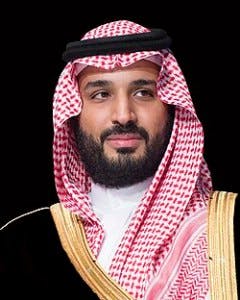
Then there is the trillion-dollar “deal” the White House announced last month after Trump and Saudi Arabia’s Crown Prince Mohammed bin Salman met in the gold-dripping Oval Office. It has far less detail and more smoke-and-mirrors than the Japanese construct. Fox News commented, “Yet beneath the impressive headline figure lies a familiar reality: much of the promised investment exists only on paper, and experts caution that the actual cash flow could take years to materialize.” If ever.
The alleged Saudi deal originated in January and Trump’s inaugural, when MBS pledged $600 billion in U.S. investments. Trump upped the ante by $400 billion when he visited Riyadh in May. The New York Times reported: “Then the president said he would ask the crown prince to round that figure up to $1 trillion. And bring down the price of oil — the source of the kingdom’s vast wealth — to boot.”
The deal makes absolutely no sense for the Saudis. Their economy is in the dumper, with a predicted fiscal deficit of 3.3% of Gross Domestic Product for 2026, according to their finance ministry. The Saudi sovereign wealth fund — which finances its foreign investments — is $925 billion, less than what it says it will spend in the U.S. alone. The nation’s 2024 GDP was $1.24 trillion.
Low oil prices, which Trump says he wants the Saudis to lower, are killing the kingdom, which recently embarked on a large domestic spending program known as the “Vision 2030” plan, aimed at diversifying the economy away from oil. The current world price of Brent crude is about $62/barrel, with experts predicting it will slide down to around $60/bbl or below for 2026.
It costs the Saudis about $10 to produce a barrel of oil. State oil company Saudi Aramco’s “breakeven price” — the amount it needs for the government to balance its budget — is $92/bbl, according to the International Monetary Fund.
Just what would a Saudi “investment” in the U.S. mean? Simon Henderson of the Washington Institute for Near East Studies told Fox News, “The term investment implies long-term capital, but in this case it really means purchases like aircraft, tanks, even computer chips. And those figures, $600 billion, a trillion, who really knows how accurate they are, or over what time frame?”
In short, Trump’s deals with Japan and Saudi Arabia fit his deal-making lingua franca: fakery, flim-flam, and plenty of diversionary hand waving.
