


By Kennedy Maize
The evidence has become clear. The Department of Energy’s orders to elderly, uneconomic coal-fired power plants to keep running is about politics, not grid reliability. It’s also a familiar case of hubris, where alleged “conservatives” get to Washington and decide they know more than locals about local conditions.
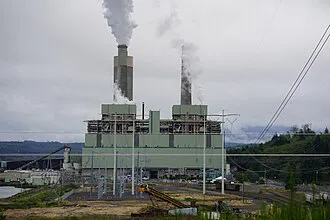
Consider TransAlta’s Centralia plant in Washington state, which has just received its second “emergency” 90-day order to keep running. Issuing the second order, Energy Secretary Chris Wright boasted, “The last administration’s energy subtraction policies had the United States on track to likely experience significantly more blackouts in the coming years — thankfully, President Trump won’t let that happen.” The sycophancy is empty, as is the case with many of Wright’s recent comments on energy issues.
During the first 90-day DOE order, the 739-MW, 54-year-old plant never sent power to the regional transmission grid. The plant was in cold shutdown. TransAlta plans to convert it to natural gas. It won’t run during the second 90-day order. There was not even a hint of a reliability problem in the hydro power-rich region during the first 90 days.
DOE’s order, issued under an emergency provision — Section 202(c) — of the Federal Power Act, clashed with a 2019 state law calling for the plant to shut down by the end of 2025. Doubling down in the dispute with DOE, the state legislature this month passed and the governor signed a new law that the Washington State Standard news service described as making it “prohibitively expensive to generate electricity from burning coal. It does so by removing tax and regulatory exemptions agreed to 15 years ago as part of the coal phaseout deal between TransAlta and the state.
“For starters, the state’s hefty sales tax will be levied on any future coal deliveries. Also, from now on, TransAlta will have to purchase climate pollution allowances at the state’s periodic cap-and-trade auctions to cover emissions if it burns coal.”
At the bill signing ceremony, Washington’s Democratic Gov. Bob Ferguson said, “Washington is not going backward on clean energy,” adding that the new law “keeps the state on track to phase out coal power as we have been planning to do so for the last 15 years.”
The Northwest’s electricity mix is dominated by hydro, a cheap and flexible resource, much of it owned by the federal government’s Bonneville Power Administration. In Washington State for January-March 2026, the generating mix consisted of hydro (18, 215 GWH), gas (285), nuclear (1,000), wind (903), solar (19), other (252), net imports (1,8095), and coal (0).
Then there is Colorado’s Tri-State Generation and Transmission Association, Inc., a rural electric public power system that owns the coal-fired Craig generating station on the Yampa River, along with the Platte River Power Authority. Tri-State got the same order at the same time as the Centralia DOE order, for its Craig 1, a 446-MW vintage 1980 unit planned to shut down at the end of 2025.
The plant has not operated since DOE ordered it to stay in service. In an email, Tri-State’s Amy Robertson told The Quad Report, “At this time, Craig Unit 1 has not been called on to run since the 202(c) order was issued. We have not received any communication from DOE related to an additional 90 day order. The order expires on March 30th.”
In Michigan, Consumers Energy has been keeping its uneconomic 1,500-MW J.H. Campbell plant running under three consecutive 90-day orders since last May and is likely to get another this spring. DOE repeatedly cited potential weather emergencies that never materialized and its forecast came against the position of the Midcontinent Independent System Operator (MISO), which dispatches the plant. The utility says running the plant is costing customers in the Upper Midwest $30 million/month.
In addition to Campbell, two other coal-fired plants have been operating under DOE orders: Southern Indiana Gas and Electric’s 1966-vintage, 90-MW F.B. Culley plant and Northern Indiana Public Service Co.’s Schafer units 17 and 18, both with 423-MW of capacity, which came into service in 1983 and 1986.
In its March monthly meeting last week, the Federal Energy Regulatory Commission approved two orders allowing the owners of the Culley and Schafer units to pass the DOE-imposed costs onto MISO’s customers.
DOE’s coal plant order regime, orchestrated by Deputy Energy Secretary James Danly, is under legal challenge. The controversial Danly is a former Trump-appointed Federal Energy Regulatory Commission general counsel, later a commissioner, and briefly (77 days) FERC chairman. Danly was a frequent contributor to the “Count on Coal” blog, commenting on coal and reliability. The DOE orders echo his earlier private citizen blog comments.
Danly’s interpretation of 202(c) and the DOE’s orders are getting legal challenges. Both Washington Attorney General Nick Brown and the national environmental law firm Earth Justice have sued DOE over the orders in the federal Ninth Circuit Court of Appeals.
Brown’s lawsuit argues that DOE’s order “is unlawful, internally inconsistent, misguided, and based on incorrect assertions about the Northwest’s power infrastructure and operation. DOE’s assertions of unfettered authority to usurp state and regional power planning based largely, if not entirely, on generalized long range concerns directly conflict with the Federal Power Act. That Act, confirmed by decades of DOE’s own exercise of authority under the Act, expressly limits DOE’s authority to actual emergency situations involving war or the sudden and unexpected loss of power. Neither situation exists here.”
The environmental lawsuit raises the same issues as Brown’s petition. It says 202(c) “applies only to imminent, unexpected shortfalls, not to the Department’s preference for specific types of energy generation. In purporting to find an emergency, the Department claims an emergency exists in the Northwest based on the federal agency’s misunderstanding or mischaracterization of two third-party studies, a couple executive orders containing no relevant facts, and the Department’s own error-riddled and widely panned study. There is no evidence of an emergency.”
A January article in Corporate and Business Law journal of Arizona State University’s law school examines DOE’s new interpretation of Section 202(c). It concludes that “using Section 202(c) to manage long-term generation portfolios represents a sharp break from historical practice. By transforming wartime emergency power into a tool for managing energy policy and plant retirements, DOE risks exceeding the Secretary’s statutory authority. In a post-Loper Bright legal environment, courts are less likely to defer to expansive agency interpretations untethered from statutory text and historical use. That shift may open the door to serious challenges to this controversial use of emergency powers.”
