


By Kennedy Maize
The Trump administration is implementing a stealthy nationwide policy to prevent any existing coal-fired electric power plant from closing. It is working through the Department of Energy with a series of orders to electric utilities, state regulators, and regional energy systems, using concocted emergencies. The DOE orders are leaving local retail electric customers paying the price.
On December 30, DOE announced it was ordering Colorado’s Tri-State Generation and Transmission Association, a rural electric cooperative that operates three coal-fired units in Craig, Colo., on the Yampa River in the central part of the state, to keep its 446-MW, vintage 1980, unit 1 in service. The G&T co-op announced in 2016 that it would close the plant on December 31, 2025.
The plant, jointly owned by a regional consortium of public power systems, was out of service when the order came down, pending repairs. Responding to DOE, Tri-State said, “As a not-for-profit cooperative, our membership will bear the costs of compliance with this order unless we can identify a method to share costs with those in the region. There is not a clear path for doing so, but we will continue to evaluate our options.
“As a result of the order, retaining Unit 1 will likely require additional investments in operations, repairs, maintenance and, potentially, fuel supply, all factors increasing costs. Tri-State is continuing to review the order to determine how best to comply while limiting the costs to its members, and the impacts to its employees and operations.”
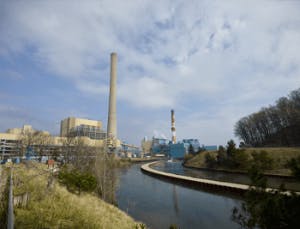
The DOE announcement was the fifth last year ordering a coal-fired plant scheduled to close imminently to keep generating. Last May, DOE ordered Michigan’s 63-year-old, 1,500-MW J.H. Campbell coal plant to stay in service for 90 days, claiming it was needed to keep the region from suffering summer electric shortages. DOE has subsequently issued new 90-day orders to keep the Campbell plant from closing, again claiming issues of reliability problems without any evidence that keeping the plant in service prevented generation shortages during the previous orders.
The plant’s owner, Consumers Energy, says the outage is costing customers across the upper midwest some $30 million per month. The utility had acquired new capacity, mostly gas-fired, to replace Campbell at a lower cost. Consumers were left holding the messy financial bag of costs of replacement while the coal plant continued to operate.
On December 24, DOE issued orders to keep two coal-fired plants in Indiana planned for closure to stay in service for 90 days. The order targeted CenterPoint Energy’s ancient, 90-MW F.B. Culley Unit 1 and two units totaling 846-MW at Northern Indiana Public Service Company’s R.M. Schahfer plant, which went into service in 1983 and 1986.
The Culley plant, which went into service in 1966, has been unreliable in recent years, showing its age and suffering repeated outages. The utility has long intended to close the plant, aiming for a 2023 shutdown. Then the company in its latest integrated resource plan moved the date to 2025. Indianapolis clean energy consultant Ben Inskeep commented on Twitter, “The DOE just issued illegal orders to raise your electric bill to subsidize failing and expensive coal plants, including one that broke down nearly six months ago and hasn’t generated any electricity since.”
On December 17, DOE ordered Canada’s TransAlta to keep its 730-MW Centralia coal-fired power plant near Hanford, Wash., commissioned in 1972, to stay in service beyond its 2025 closure. DOE used the standard boiler plate language in all of its closure orders, which claim the orders are based on its analysis of the impact of the closures on reliability of electric service.
All of DOE’s orders to keep coal plants running cite section 202(c) of the 1920 Federal Power Act, which gives the federal government limited emergency authority, the habitual claim of the Trump administration when it wants to do something that would be an illegal outreach in normal times. The DOE orders also routinely cite the agency’s July “Resource Adequacy Report,” which takes a top-down, long-range look at reliability to come up with a pre-determined outcome, that the U.S. faces severe electric reliability issues across the board at all times.
The DOE report does not take into account the views on the ground by the owners, operators, regulators, regional transmission operators, and retail customers that have an actual stake in the outcome of the agency’s actions, contradicting the “Washington knows best” DOE report. The agency launched the orders without formally consulting with those who are impacted on the ground. DOE conducted no administrative proceedings.
The energy agency is likely to renew each of the latest closure orders as they expire, which it did with the initial Michigan shutdown. The conclusion that DOE intends to prevent any U.S. coal plants from closing during Trump 2 is inescapable.
DOE’s orders are political, not remedial. The specter of rolling blackouts all across the country, at all times of the year, is, to borrow from Trump’s lexicon, a “hoax.”

The orders appear to have originated not with Energy Secretary Chris Wright, who is named in all of the DOE news releases, but by James Danly, deputy secretary. He’s a former Trump-appointed Federal Energy Regulatory Commission general counsel and later a commissioner and briefly FERC chairman. Danly was a frequent contributor to the “Count on Coal” blog, commenting on coal and reliability. The DOE orders echo his earlier private citizen blog comments.
Danly has a skewed view of “dispatchability” not shared by actual system dispatchers, which Wright parrots. Danly and Wright’s views on how to send out power to the grid reflects a rigid view of generating capacity that does not reflect the interaction of capacity, economics, and dynamic timing that is the actual practice.
On December 19, the state of Michigan filed suit against DOE in the U.S. Court of Appeals for the D.C. Circuit, seeking to overturn the J.H. Campbell orders. The suit has not yet been set for oral argument. Minnesota, Illinois and a bevy of national and regional environmental groups joined the suit. Consumers Energy Company, the Campbell plant’s owner and operator, and the Institute for Policy Integrity at New York University School of Law, joined as friends of the court.
The lawsuit says, “There is no Section 202(c) emergency,” adding, “The Department’s only claim of imminent crisis—a supposed summer 2025 shortage—fails because the record reflects no such shortage. As the Department recognized, both Campbell’s owner and grid operator obtained ‘sufficient capacity’ for the summer, a finding that is irreconcilable with the Department’s claimed emergency. The few sources the Department cites to establish an emergency undermine its claim.”