


By Kennedy Maize
President Trump professes to love coal and has expressed his ardor through executive orders, in his “One Big Beautiful Bill Act,” and through actions at the Departments of Energy and Interior. Given coal’s history over the past couple of decades, are those agency actions likely to make a significant difference in coal’s economic prospects in the coming years?
The Department of Energy announced late last month (Sept. 29) that is going to pour $625 million into projects to boost the staggering U.S. coal industry. That’s a pittance compared to the billions of dollars DOE has put into nuclear power, including $3 billion in the final year of the Biden administration.
DOE says it wants to spend the coal dollars on:
$350M for projects to recommission or modernize coal power units.
$175M for coal power projects aimed at rural communities.
$50M for wastewater management systems enabling “coal plants to extend their service life, reduce operational costs, and enhance commercial byproduct recovery.”
$25M for dual-firing retrofits so plants can “seamlessly switch between fuels, achieve full steam capacity, and economic flexibility to extend plant lifespans.
$25M for development and testing of natural gas cofiring systems to keep boiler efficiency and reliability when burning 100% natural gas.
In announcing the cash for coal, Secretary Chris Wright (or more likely a ghost writer) said, “Beautiful, clean coal will be essential to powering America’s reindustrialization and winning the AI race. These funds will help keep our nation’s coal plants operating and will be vital to keeping electricity prices low and the lights on without interruption. Coal built the greatest industrial engine the world has ever known, and with President Trump’s leadership, it will help do so again.”
There is unintended irony in Wright’s statement. A pioneer of the natural gas fracking technology at his Liberty Energy company, Wright probably did more than any government, state or federal, or environmental organization, to render coal uneconomic. Low-cost natural gas made many existing coal-fired plants unable to compete in electricity markets and put many new coal plants off the table.
Trump’s coal-centric policies have some congressional Republicans wary, as Politico reported. Rather than trying to pick energy winners and losers, these GOP members prefer an “all of the above” strategy. Sen. Thom Tillis of North Carolina told reporter Timothy Cama, “It could take two, three years to actually get investment up to any level of significance for our generation assets.” Tillis has also been critical of the administration’s war on renewables. Alaska Sen. Lisa Murkowski, who said she supports coal, said, “It’s not as easy as it sounds, just putting money into a sector that’s seen the shuttering of coal plants for a host of different reasons.”
GOP Reps. Nick LaLota and Nicole Malliotakis of New York, along with Brian Fitzpatrick of Pennsylvania (an important coal state) were the only Republicans who voted against turning DOE’s advisory National Coal Council into a legally established entity. LaLota told Politico, “While I support clean coal, my vote was a reflection of my preference for an all-of-the-above energy strategy, including not pulling the plug on offshore wind projects that are already 70 percent complete.”
The Interior Department has also been working to push Trump’s pursuit of a 19th-century coal economy. On the same day as DOE’s coal announcement, Interior said it’s Bureau of Land Management “is making up to 13.1 million acres of federal coal available for lease, lowering royalty rates to strengthen competitiveness, and streamlining approvals for projects in Montana, Wyoming, Tennessee and beyond. These actions follow passage of the One Big Beautiful Bill Act, which directs the Department to make additional acres of coal available for development and provide regulatory certainty for producers.”
Interior’s efforts haven’t been going very well. Just days after Interior’s touting its actions to benefit coal, Reuters reported, “The Trump administration has postponed a scheduled sale of coal leases on federal lands in Wyoming two days after a failed auction in Montana.”
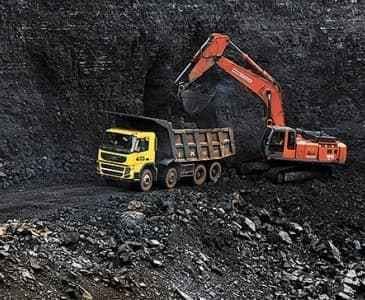
Interior offered 167 million tons of coal in Montana’s Powder River Basin, BLM’s biggest coal lease sale in over a decade according to the Associated Press. The offer was adjacent to the Spring Creek Mine, owned by the Navajo Transitional Energy Company (NTEC), which was the only bidder.
The tribal-owned company offered $186,000 for the coal, or a tenth of a cent per ton. Interior rejected the bid. According to the AP, “At the last successful government lease sale in the region, a subsidiary of Peabody Energy paid $793 million, or $1.10 per ton, for 721 million tons of coal in Wyoming.”
Interior then quietly postponed a scheduled sale of 365 million tons of coal on 3,500 acres is Douglas and Converse counties in Wyoming ‘s Powder River Basin. According to Reuters, BLM said it would schedule a new data for the Wyoming sale “but did not give a reason for the postponement.”
Predictably and with a straight face, Interior blamed Democrats for the failure of its Montana lease sale. “While we would have liked to see stronger participation, this sale reflects the lingering impact from Obama and Biden’s decades long war on coal which aggressively sought to end all domestic coal production and erode confidence in the U.S. coal industry,” the agency said in an email to WyoFile.
The Quad Report: to subscribe, for back issues, and a searchable archive.