


By Kennedy Maize
The Colorado River is dying. Water levels in government-made lakes Mead and Powell have sunk to heretofore unimaginable lows in a decades-long drought. They are now more than two-thirds empty.
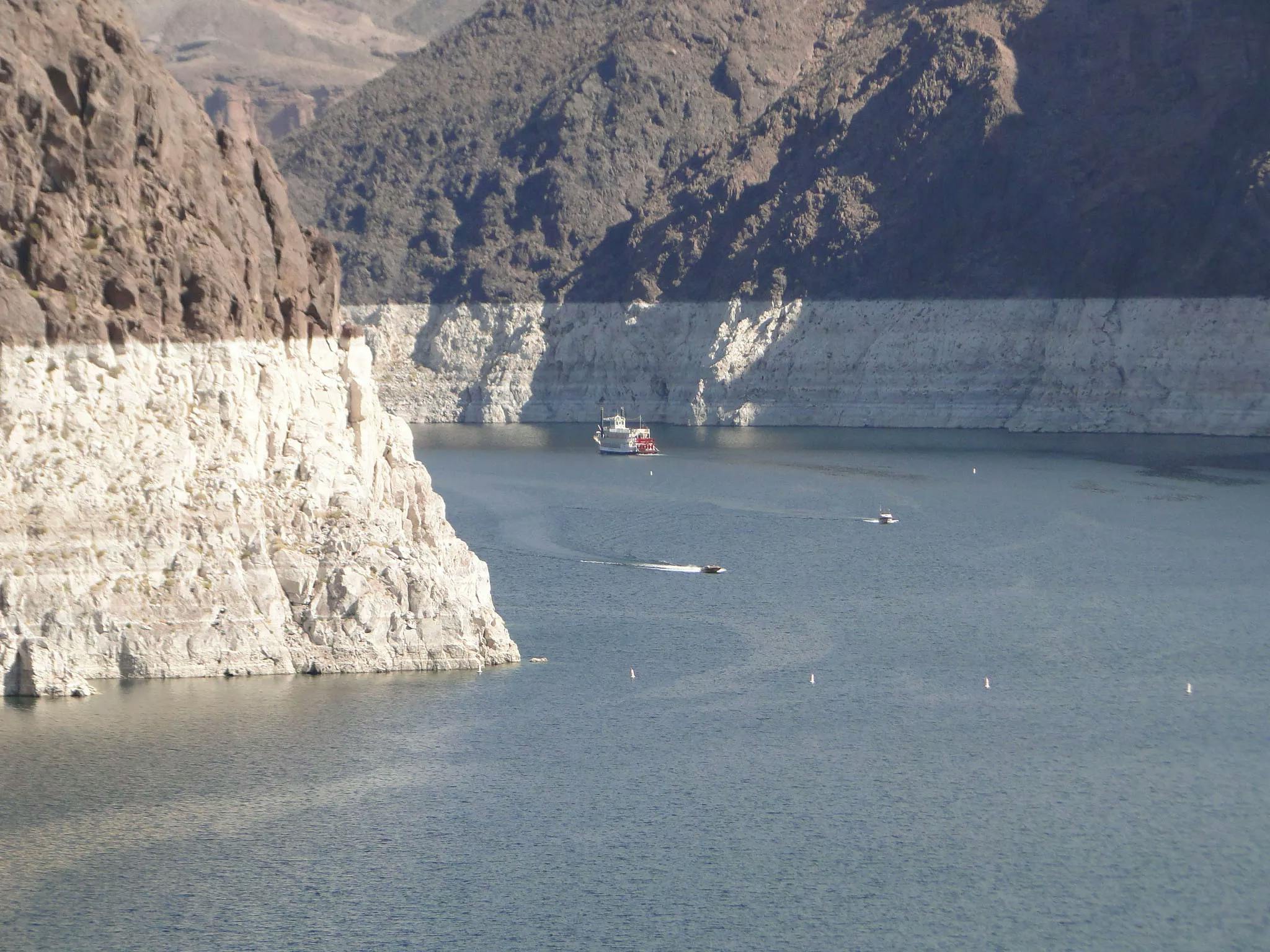
The giant river system spans two Mexican states, seven U.S. states, and 29 Indian tribes. The federal government owns the U.S. portion of the river system, including two large hydroelectric plants. It is an economic and personal boon for over 40 million Americans, managed through the Interior Department’s Bureau of Reclamation. The river provides drinking and irrigation water, recreation, and electricity.
Hoover Dam’s Lake Mead in Nevada and Arizona powers a hydroelectric generator with 2,078-MW capacity, operating at an 18% capacity factor. Lake Powell in Utah and Arizona behind the Glen Canyon Dam supplies water to a 1,320-MW hydropower plant operating at 41% capacity.
The century-old arrangement of shared governance among the states and BuRec — the 1922 Colorado River Compact — has failed. The river system is in crisis. The Trump administration is to blame.
That damning conclusion is inevitable. The seven basin states have long been divided into two camps: the four upper basin states — Colorado, Utah, Wyoming, and New Mexico — that largely provide the water, and the three lower basin states — Arizona, Nevada, and California — that consume it. It is no surprise that the states primarily represent their local interests. When they are unable to reconcile their differences, it is Interior’s job to bring them together.
A 2007 management arrangement driven by then eight years of drought –with modifications in 2012, 2019, and 2023— kept the river system interests in balance. Today, the states have been unable to come to a deal after wrangling for well over a year. The current deal expires October 1, the beginning of the 2027 “water year”.
Getting a new water-sharing agreement into place will require considerable time once the basin states and BuRec reach agreement. A new compact agreement likely will constitute a “major federal action” by Interior, requiring a full-fledged rulemaking, including an environmental analysis and opportunities for parties to comment. That process itself could take a year.
Each basin state believes it is shortchanged in the existing compact water allocations in the midst of the diminishing water resource. As AZCentral describes the impasse: “The Lower Basin states say they’ll accept cuts, but only if the headwaters states make concessions of their own. Those states say they have nothing left to give.”
Last month, the basin negotiators got together at an annual water confab at Caesars Palace in Las Vegas. Nothing new resulted, according to multiple reports. The Washington Post reported (Dec. 22), “More recently, the pace of meetings has accelerated, with weekly videoconference calls. The Interior Department has proposed a multiday gathering in January to try to hash out a deal, according to negotiators.”
The parties now face a BuRec-imposed deadline of February 14 to come up with a deal or DOI is threatening to impose a solution. That’s supposed to scare the states into reaching an agreement. It isn’t working.
The bureaucratic sabre rattling from Washington is only the latest from Interior. In June, BuRec told the parties to cut a deal by November 11or face the dreaded takeover. Thanksgiving and Christmas have come to pass and 2026 is upon us. The February threat appears empty.
As the crisis has tightened, Interior has been feckless. The White House has been obstructive.
BuRec is a wreck, operating without a Senate-confirmed director during the entire second Trump administration. Last year’s ultimata came from BuRec acting director Scott Cameron, who has been acting from day one of Trump Two. The BuRec portion of Interior’s web site contains no biographical information for Cameron. A search for “Colorado River Compact” produces nothing since the Biden administration’s 2023 short-term rescue of the compact.
A bio from Congress provides some background on Cameron. According to the bio, he has worked as a staffer to Rep. Jim Weaver (D-Ore) and Sen. Chic Hecht (R-N.V.) and in the Office of Management and Budget, and as a career civil servant. He has a BA in biology from Dartmouth and an MBA from Cornell.
While BuRec has been pushing for a water supply agreement, Interior Secretary Doug Burgum has shown no apparent interest, instead concentrating on slathering President Trump with praise, pondering wind mills, and attending ribbon cuttings and ground breakings.
Meanwhile, the White House has complicated the controversy. In June, Trump nominated Ted Cooke, former general manager of the Central Arizona Project water distribution agency, to head BuRec. When he left the CAP in 2022, he was succeeded by Brenda Burman, who was BuRec commissioner in the first Trump administration.
On September 16, the White House withdrew the Cooke nomination without explanation. Cooke told The Arizona Republic that the White House told him the decision was due to “paperwork problems” with his vetting documents. Cooke called that bogus, “a cockamamie excuse,” adding, “This decision was made in August that I had to go because of objections by the Upper Basin, and they tried to sweep the politics under the rug.”
The Senate Energy and Natural Resources Committee has jurisdiction over BuRec and would have to approve a nominee to be director. Utah Republican Mike Lee chairs the committee. New Mexico’s Martin Heinrich is the ranking Democrat on the committee.
There has been no action from either Interior or the White House on another BuRec nominee.
